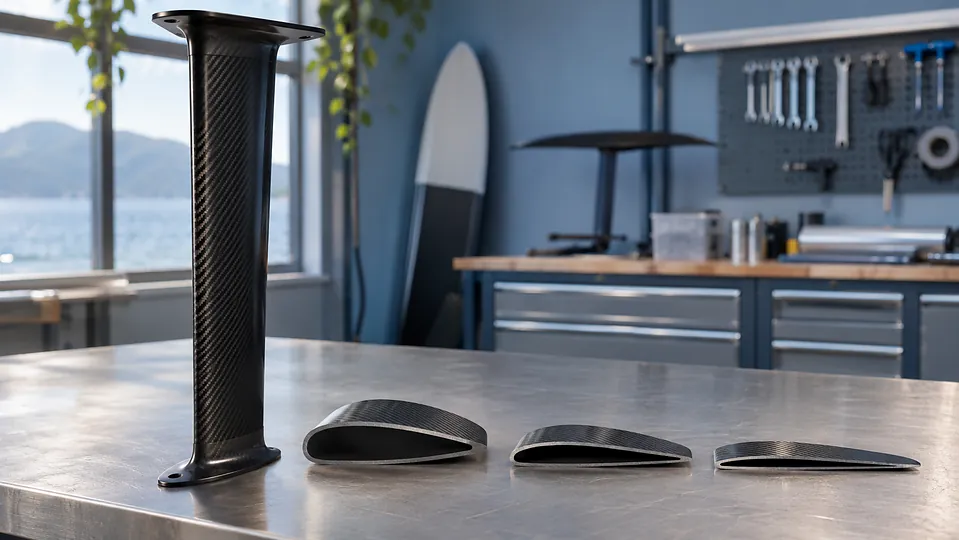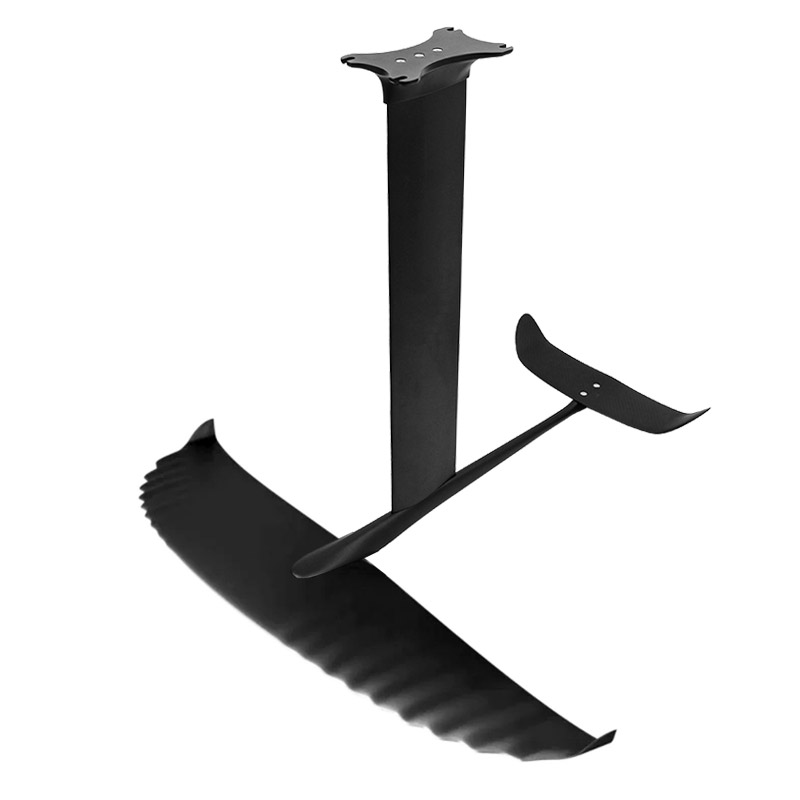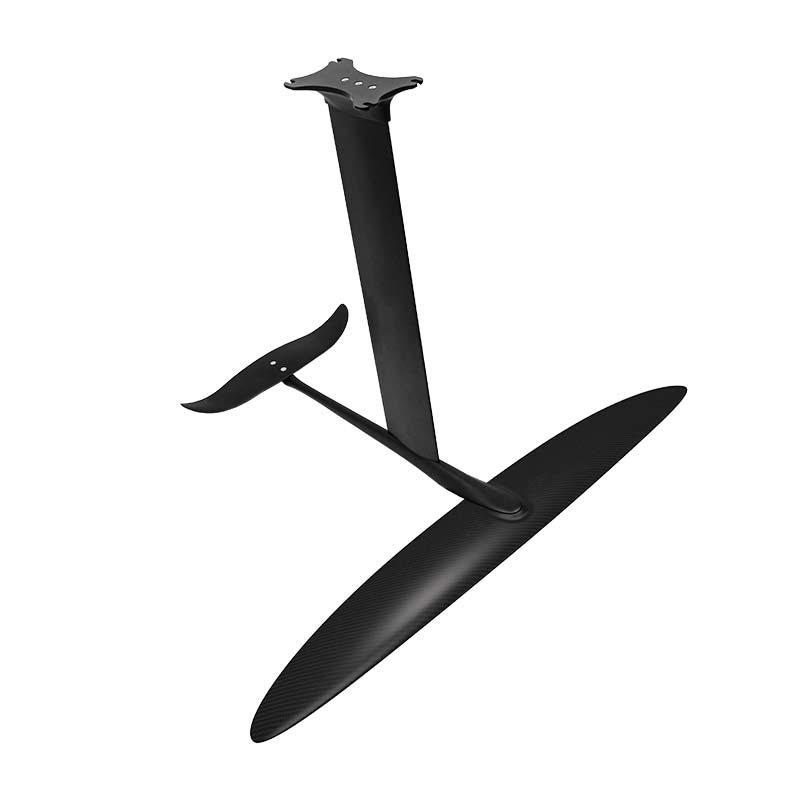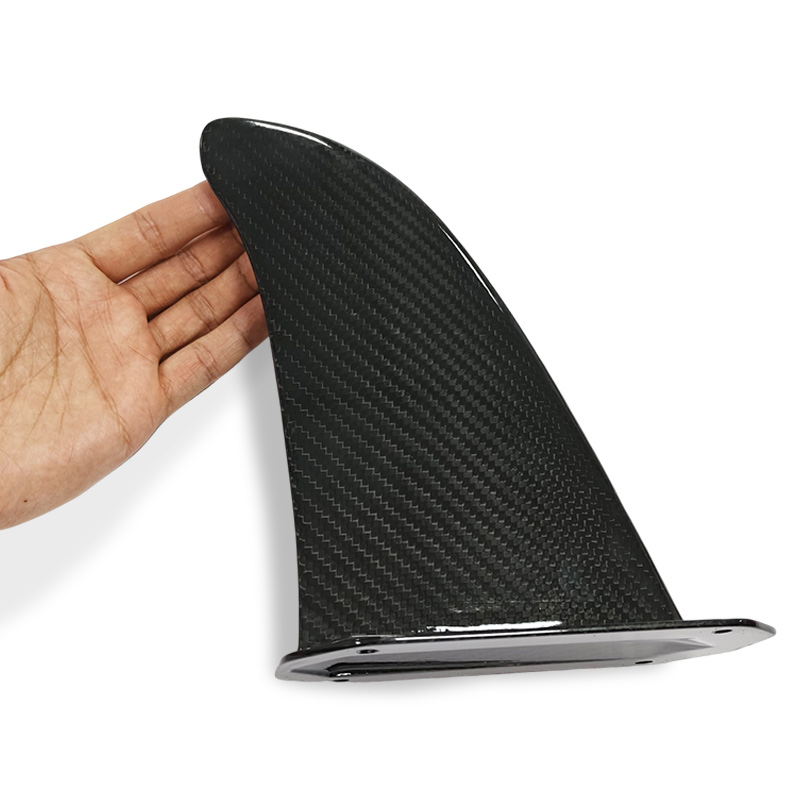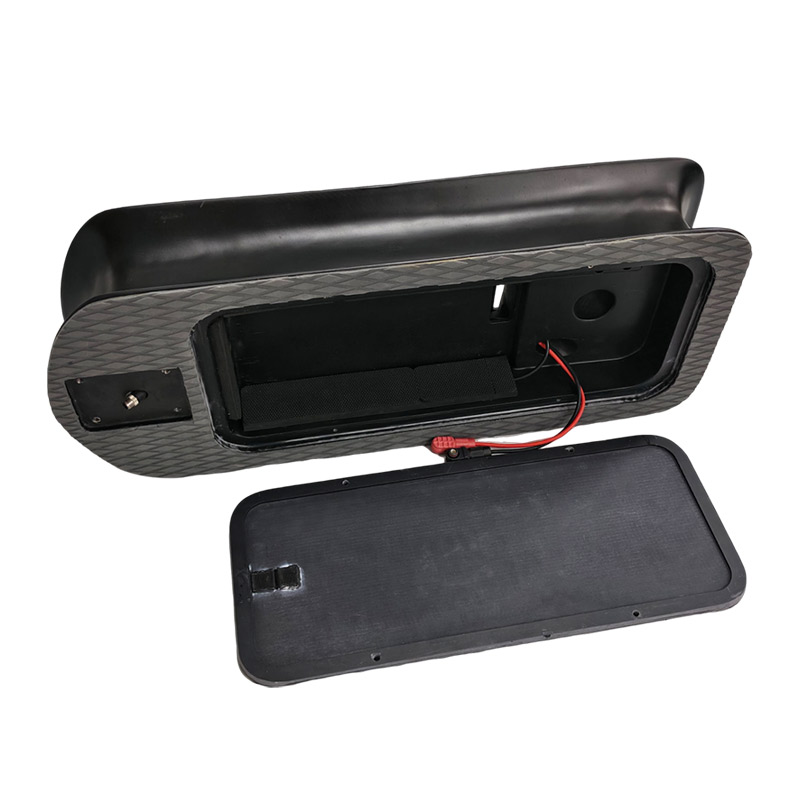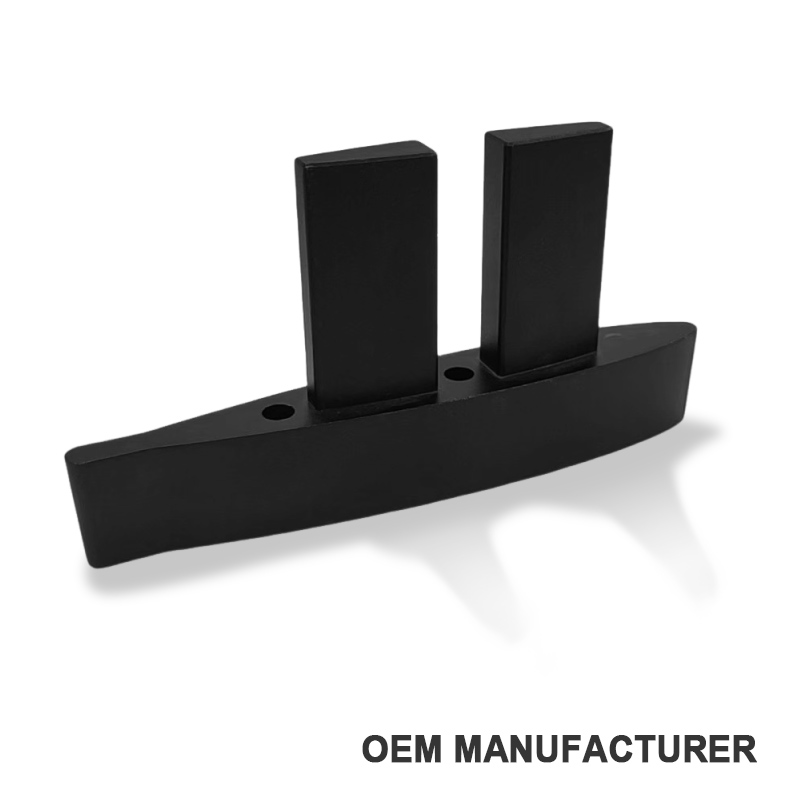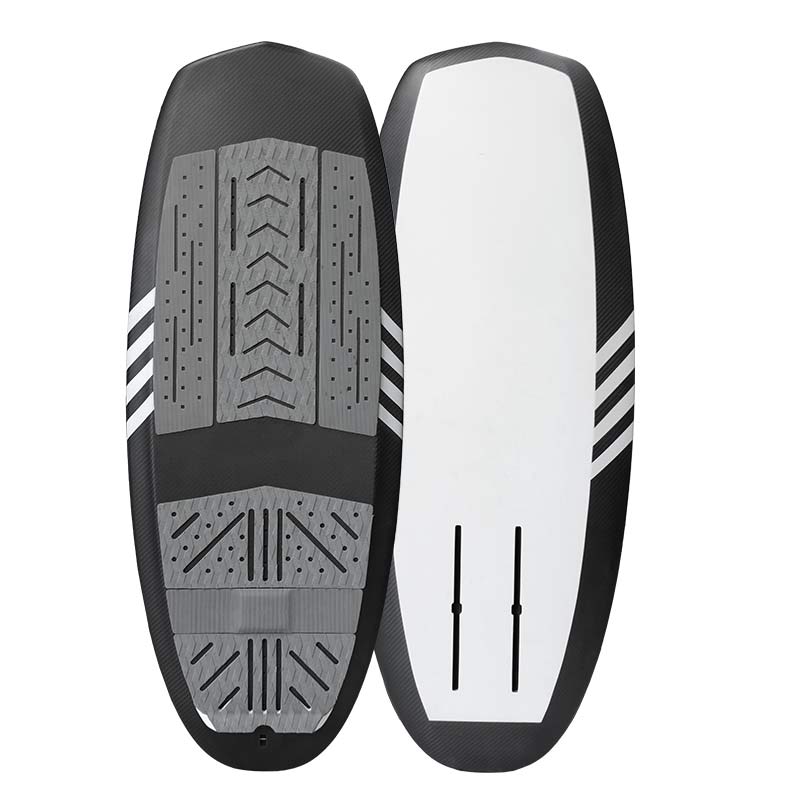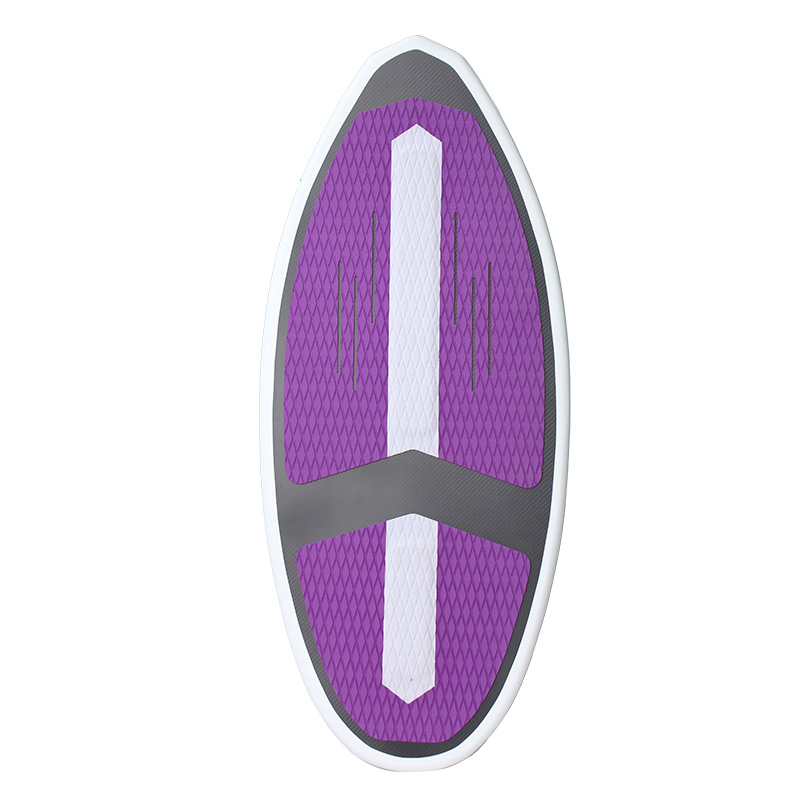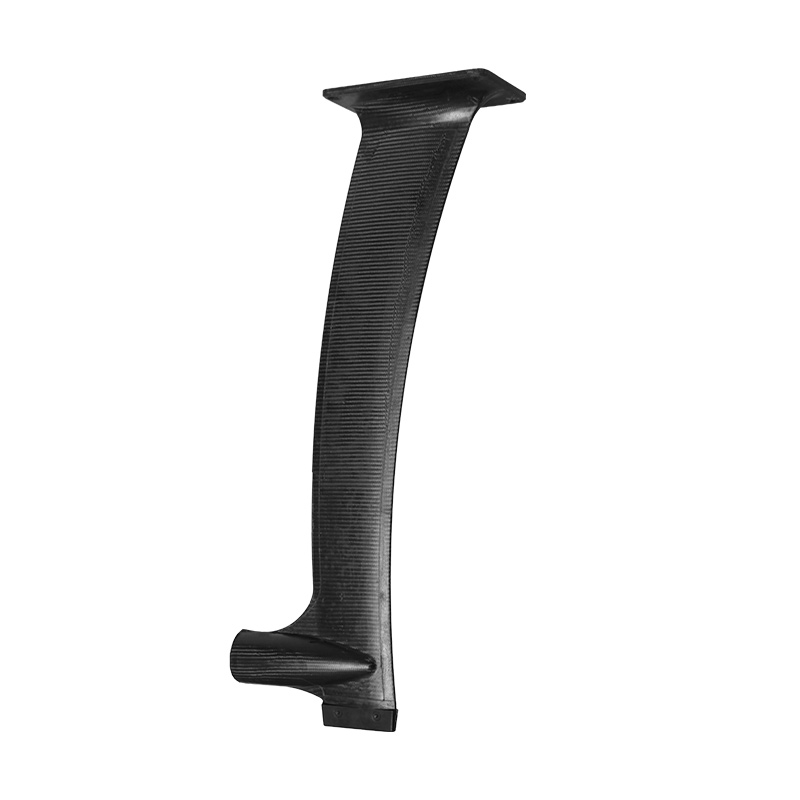
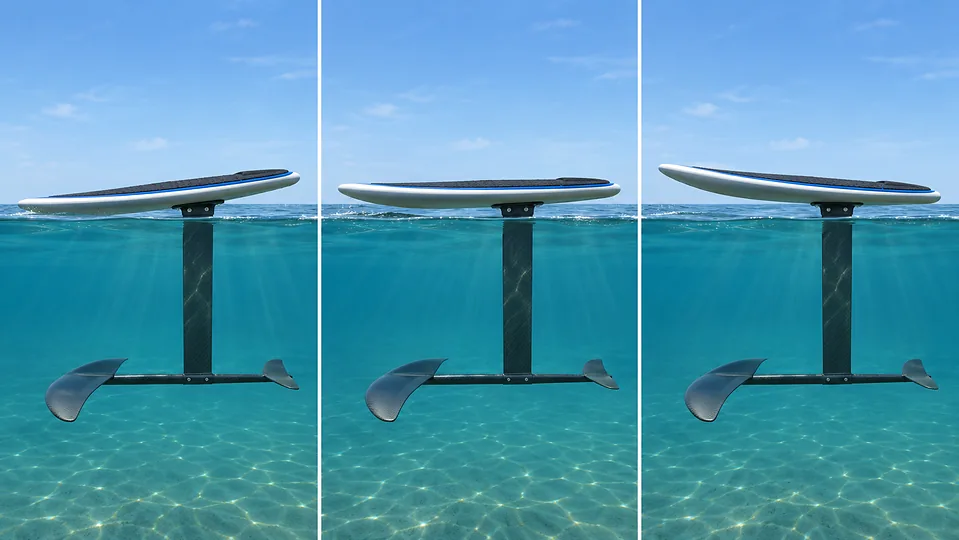
Hydrofoil mast rake is the angle that sets the board’s attitude relative to the complete foil assembly. A baseplate rake shim tilts the mast, fuselage and wings together relative to the board. It can change whether the board flies nose-high or nose-low, how touchdowns meet the water and where the rider feels pressure—but it does not perform the same job as sliding the mast in the tracks or changing stabilizer incidence.
The three-adjustment rule
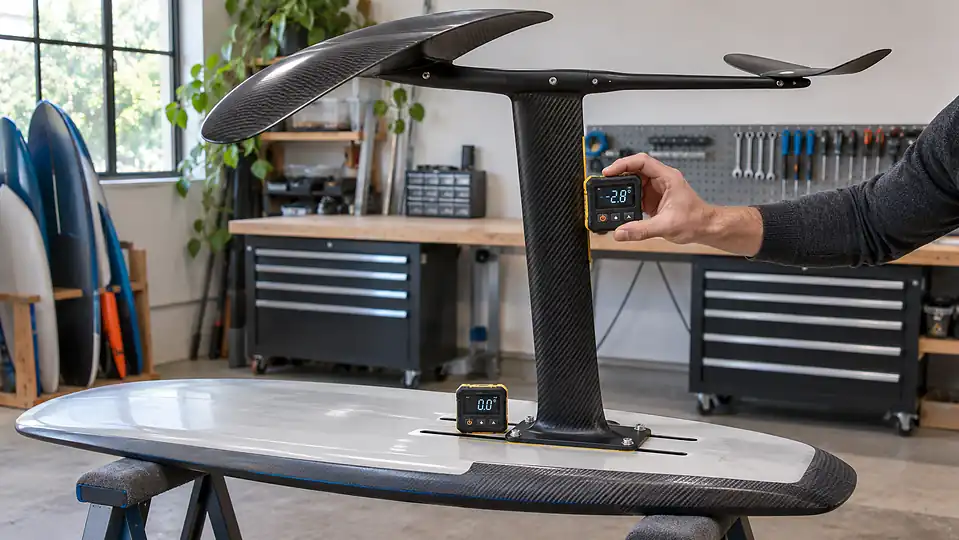
Move the mast to change where the foil sits under the rider. Shim the baseplate to change board attitude relative to the whole foil. Shim the stabilizer to change the front-wing/stabilizer relationship. Diagnose first; adjust only one of these at a time.
There is no universal “best” rake number. Brands measure from different surfaces, use different positive/negative conventions and design boards, tracks, fuselages and wings as systems. Copying a rider’s angle without copying the reference method can produce the opposite result.
Rake, Track Position and Tail Incidence Solve Different Problems
These controls interact in the finished ride, which is why riders often confuse them. Separating their primary effects prevents a stack of changes that hides the original problem.
| Adjustment | What physically changes | Use it to investigate | Do not assume |
|---|---|---|---|
| Mast forward/back in tracks | Foil system position relative to feet and board | Where lift and foot pressure sit under the stance | That track movement corrects board flight attitude |
| Baseplate rake shim | Angle of the entire foil assembly relative to the board | Nose-high/nose-low flight and touchdown attitude | That the shim changes wing-to-tail incidence |
| Stabilizer shim | Relative incidence between stabilizer and front wing | Pitch balance, front-foot pressure, sensitivity and drag | That every brand defines “positive” the same way |
AXIS explains in its setup notes that a baseplate shim can correct a board that consistently flies nose-up or nose-down, while its rear-wing shims alter the force balance between wings. The Unifoil shimming guide similarly describes a baseplate shim as tilting the entire foil system. Use these as conceptual references, then follow the instructions for the system actually being assembled.
If the issue is mainly section drag, stiffness or ventilation behavior, rake is probably not the first diagnosis. Start with our guide to hydrofoil mast profiles and the explanation of hydrofoil ventilation.
Define the Reference Before Quoting an Angle
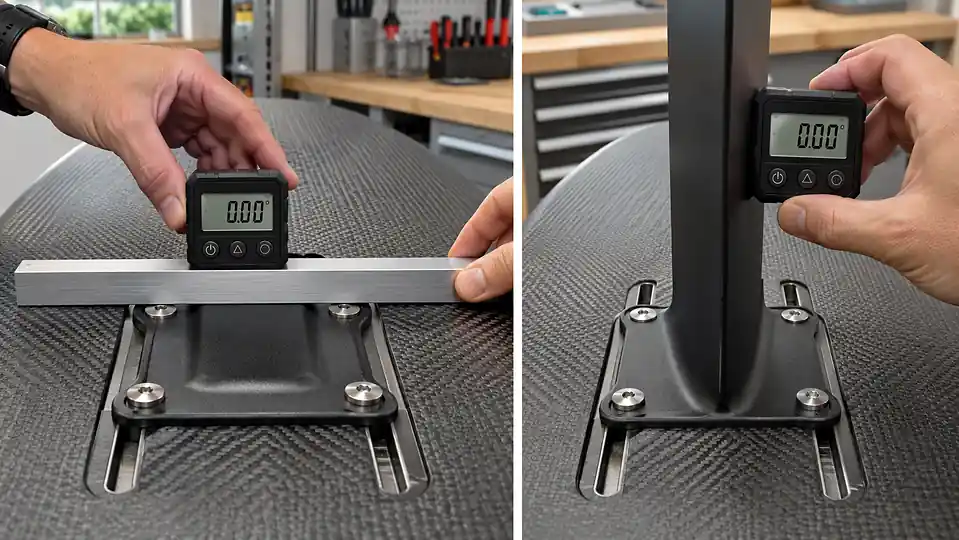
A number without reference surfaces is incomplete. “Two degrees” might describe mast-to-deck, mast-to-track, fuselage-to-board or a phone reading taken on a curved deck. It may also include manufacturing tolerances, board rocker or an inclinometer that was never zeroed.
Record four items whenever you measure hydrofoil mast rake:
- Board reference: track plane, a specified flat near the tracks, deck datum or another manufacturer-defined surface.
- Foil reference: mast face, fuselage datum or a dedicated measurement fixture.
- Direction: which edge of the shim is thicker and whether the board nose is expected to rise or fall.
- Sign convention: the exact meaning of positive and negative in that brand’s documentation.
SABFOIL’s first-setup guide illustrates why system context matters: it recommends different track positions and shim starting points for two fuselage cases. The useful lesson is not the specific number; it is that board, fuselage and wing package must be treated together.
Read the Ride Before Reaching for a Shim
| Observed behavior | Possible rake-related clue | Other causes to exclude | Useful verification |
|---|---|---|---|
| Board flies persistently nose-low | Board/foil angle may not suit the combined system | Stance, mast position, excessive speed, tail incidence | Side video at steady flight plus manufacturer baseline check |
| Touchdowns catch the nose first | Flight attitude may leave too little nose clearance | Board rocker, touchdown technique, wave face and speed | Compare repeated gentle touchdowns on the same water state |
| Board flies excessively nose-high | Too much board nose-up attitude may be built into the combination | Rearward stance, mast too far forward, stabilizer force | Return all settings to documented baseline before shimming |
| Front leg burns but board attitude looks normal | Rake may contribute, but it is not proven | Mast placement, tail shim, footstrap position, wing choice | Test track position separately before changing two angles |
| Pitch hunts up and down | Poor overall attitude can reduce the usable control range | Short fuselage, small stabilizer, rider input, ventilation | Check the fuselage-length and stabilizer baselines first |
No single symptom proves the cause. Film several passes from the side at a steady speed, note water state and wing set, and look for a repeatable board attitude—not one dramatic touchdown.
Measure Hydrofoil Mast Rake With a Repeatable Baseline
- Assemble the approved combination. Use the intended mast, fuselage, wings, baseplate, board and hardware. Mixing systems changes datums and may invalidate published instructions.
- Inspect the mounting interface. Remove sand, salt and raised debris. The plate and shim must sit fully supported; our article on foil track box installation explains why local load paths matter.
- Support the board without twisting it. Use stable padded supports and keep the measurement area unloaded.
- Zero the inclinometer on the chosen board datum. Photograph or record the exact location so the measurement can be repeated.
- Measure the foil datum. Use the manufacturer’s mast face or fuselage reference. Repeat the reading after removing and replacing the tool.
- Record the complete configuration. Include board, foil, wing, stabilizer shim, track mark, baseplate shim orientation, fastener length and torque specification.
A phone can reveal relative change, but a rigid digital inclinometer on clean, defined surfaces is more repeatable. Neither tool makes an undefined reference valid.
Board Rocker Can Make the Same Foil Angle Feel Different
The tracks are embedded in a board, not suspended in a universal flat plane. Tail rocker, bottom contours, track-box installation angle, deck stance and volume distribution all influence how the board sits above the same flying foil. Moving one foil between two boards can therefore change the visible nose attitude even when the mast and wing package are untouched.
This is also why measuring from a random patch of deck can mislead. A domed deck may not be parallel to the track plane, and a bottom with tail kick does not provide one continuous datum. Use the reference surface specified by the board maker, or create a documented production datum that can be repeated on the CAD model, mold, finished board and inspection fixture.
The SURF iQFOiL trimming discussion demonstrates the practical use of an inclinometer to change the angle between board and foil mast. Its exact setup belongs to that discipline and equipment family; the transferable method is to measure a known relationship and compare controlled changes.
Change One Small Variable, Then Re-Test the Same Task
Begin from the foil manufacturer’s recommended setup. If the combination is unsupported, contact the board or foil supplier before inserting an improvised wedge. When a rake change is appropriate, use a purpose-designed full-contact shim compatible with the plate and tracks.
- Save the original measurement, track position and tail-shim state.
- Change only the baseplate shim; do not move the mast or alter the stabilizer in the same test.
- Confirm correct bolt engagement, specified tightening sequence and torque.
- Test in familiar, moderate conditions with the same wing set and stance.
- Compare steady flight attitude, foot pressure and controlled touchdowns.
- Stop if the plate rocks, fasteners bottom out, track hardware deforms or the board laminate shows distress.
Use a short test log instead of memory
For each run, record the baseplate shim, track mark, stabilizer shim, wing set, rider stance, estimated speed range and water state. Add three observations: steady board attitude, front/rear foot pressure and touchdown contact point. Video from the same side and height is more useful than clips taken from changing angles.
Run the original baseline again after the modified setup. If the behavior does not return, another variable changed—hardware may have settled, conditions may differ or the original diagnosis may be wrong. A reversible A/B/A sequence turns hydrofoil mast rake tuning into evidence instead of a chain of impressions.
Why Improvised Washers Are a Structural Warning
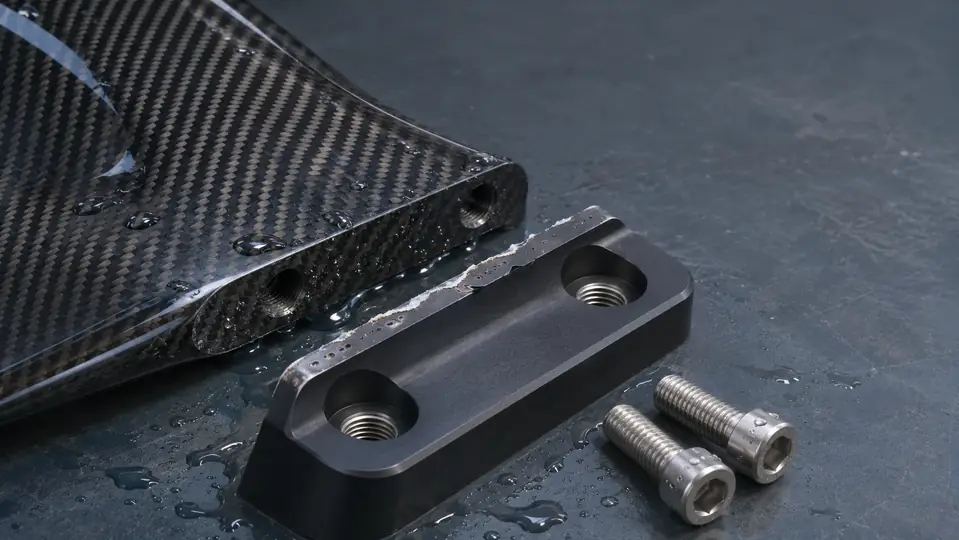
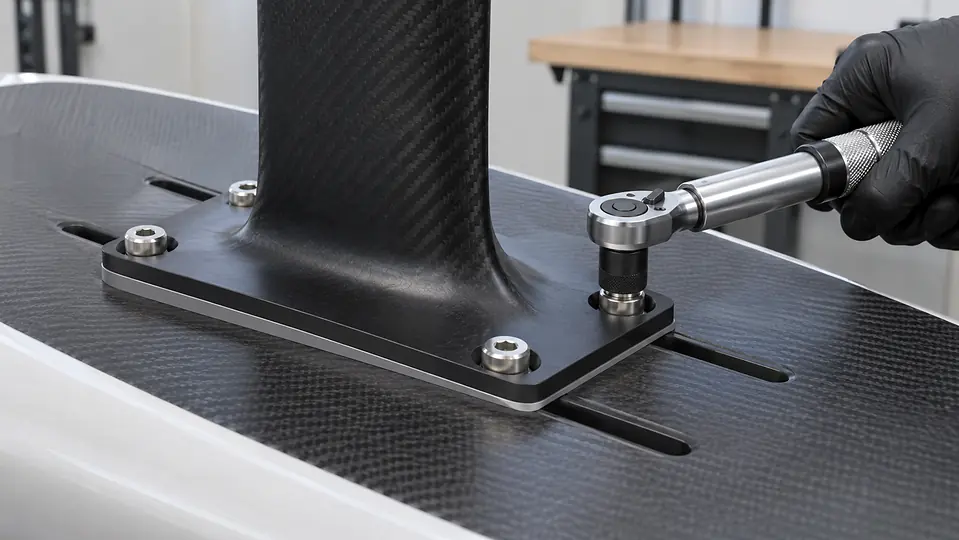
A baseplate transfers bending, torsion and impact loads into the track box and surrounding laminate. Placing small washers under one edge can concentrate compression, leave part of the plate unsupported and change bolt bending. A wedge also changes how much thread reaches the track nut.
Do not compensate with unverified longer bolts: excessive length may bottom out before clamping the plate, while insufficient engagement can damage threads or release under load. Use only hardware, corrosion control, torque and shim geometry approved for the interface. Inspect after the first short session and at normal maintenance intervals.
Rake Cannot Fix Every Foil Setup Problem
If the front wing is wrong for the rider and speed range, changing board attitude will not create the missing span, area or section behavior. Compare the intended use in our high- versus low-aspect hydrofoil guide.
If pitch response is too lively or too damped, review stabilizer size and tail incidence. If the foil only feels wrong after combining a board and foil from different systems, obtain both manufacturers’ mounting references before treating the shim as a universal adapter.
What Board and Foil Developers Should Put on the Drawing
For an OEM or custom project, “standard foil tracks” is not enough to control the finished geometry. A practical interface specification should include:
- track position and angle relative to a defined board datum;
- local rocker and laminate reference around the mounting zone;
- baseplate footprint and acceptable shim footprint;
- fastener specification, engagement range and torque source;
- target mast or fuselage datum angle with tolerance;
- approved foil, wing and stabilizer combinations used for validation;
- measurement fixture and inspection method.
This separates design intent from rider tuning. Brands developing a compatible board or foil interface can review Unitysurf’s hydrofoil components and contact the manufacturing team with actual datums and use cases.
Questions About Foil Rake
Is mast rake the same as mast track position?
No. Track position moves the whole foil forward or backward under the rider. Rake changes the angular relationship between the board and foil. Both affect what the rider feels, but through different geometry.
Is a baseplate shim the same as a stabilizer shim?
No. A baseplate shim tilts the full foil assembly relative to the board. A stabilizer shim changes the relative angle between the stabilizer and front wing, affecting pitch balance and force distribution.
What is the ideal hydrofoil mast rake angle?
There is no universal angle. Use the board and foil manufacturers’ reference surfaces, sign convention and baseline. The target also depends on board rocker, mounting geometry, wing system, rider stance and discipline.
Can I stack two shims?
Only if the manufacturer explicitly approves the stack, fastener engagement and contact geometry. Stacking can create poor support, slip, incorrect clamp load or an angle outside the validated range.
Should I adjust rake to reduce front-foot pressure?
Possibly, but first separate board attitude from mast position and stabilizer incidence. Return the setup to its published baseline and test one variable at a time.
A Useful Rake Setting Is Measured, Reversible and System-Specific
Hydrofoil mast rake is a powerful setup control because a small angular change affects the whole board-to-foil relationship. That is exactly why it should not become a first-response fix for every heavy front leg or unstable flight. Define the datums, restore the approved baseline, exclude track and tail-incidence problems, make one supported change and compare the same on-water task.
Technical scope: This guide explains setup logic, not a universal shim specification. Follow the board and foil manufacturers’ approved combinations, hardware, torque and inspection instructions. Stop using equipment that shows movement, cracking, thread damage or loss of clamp load.