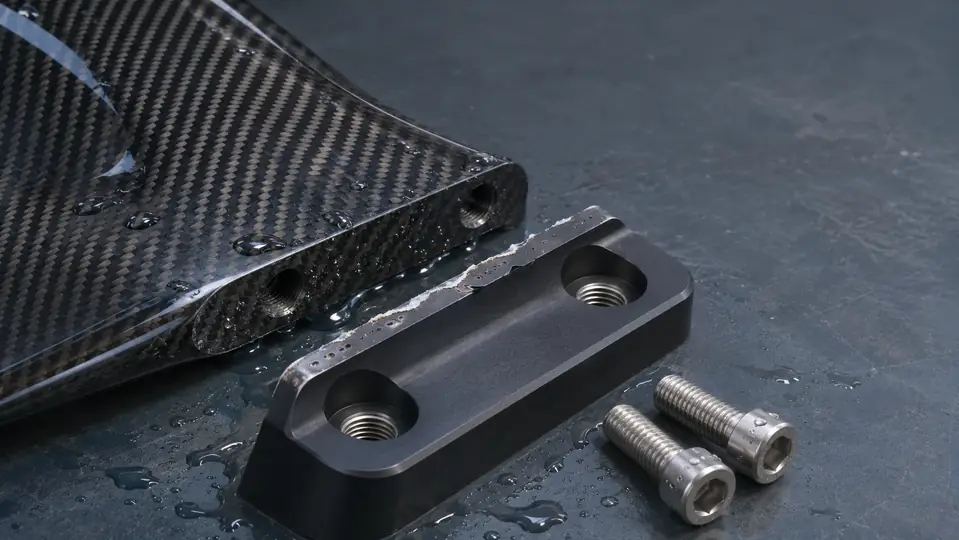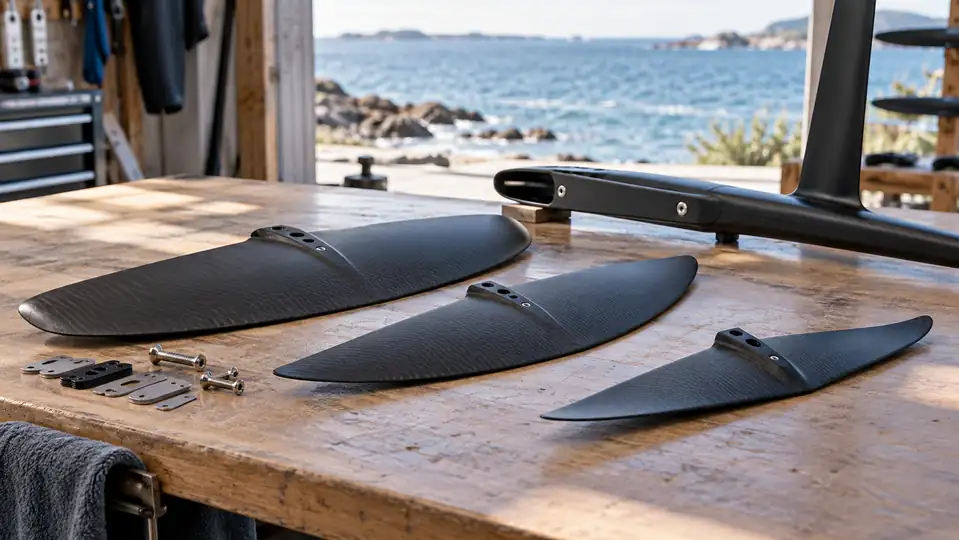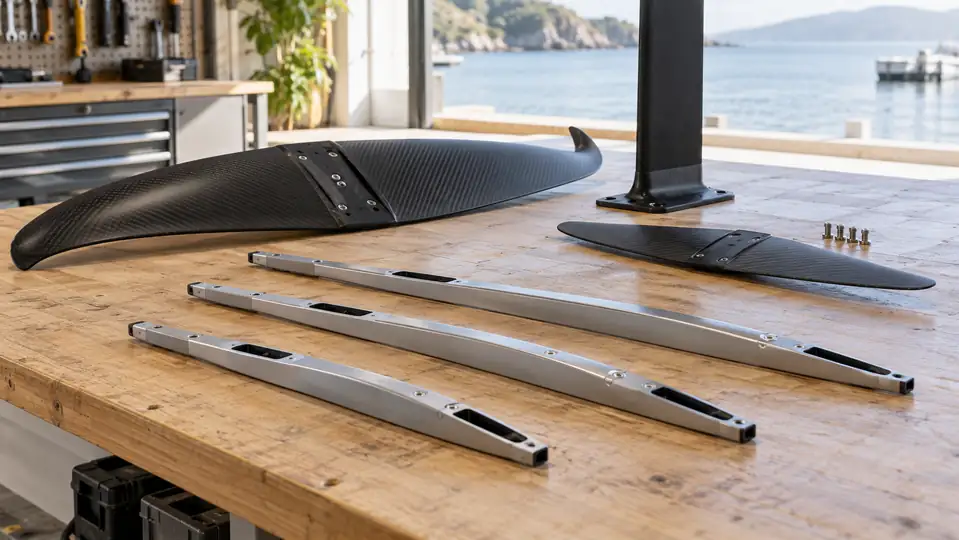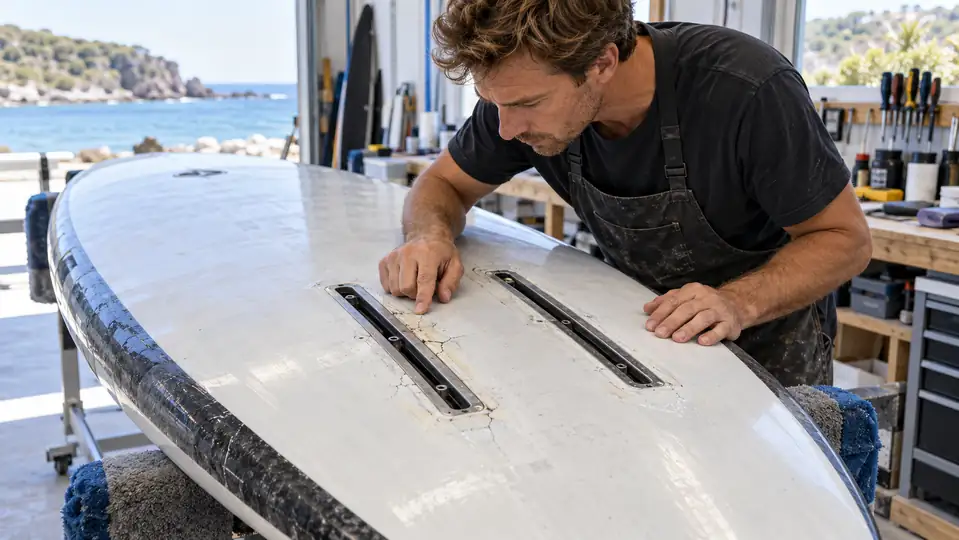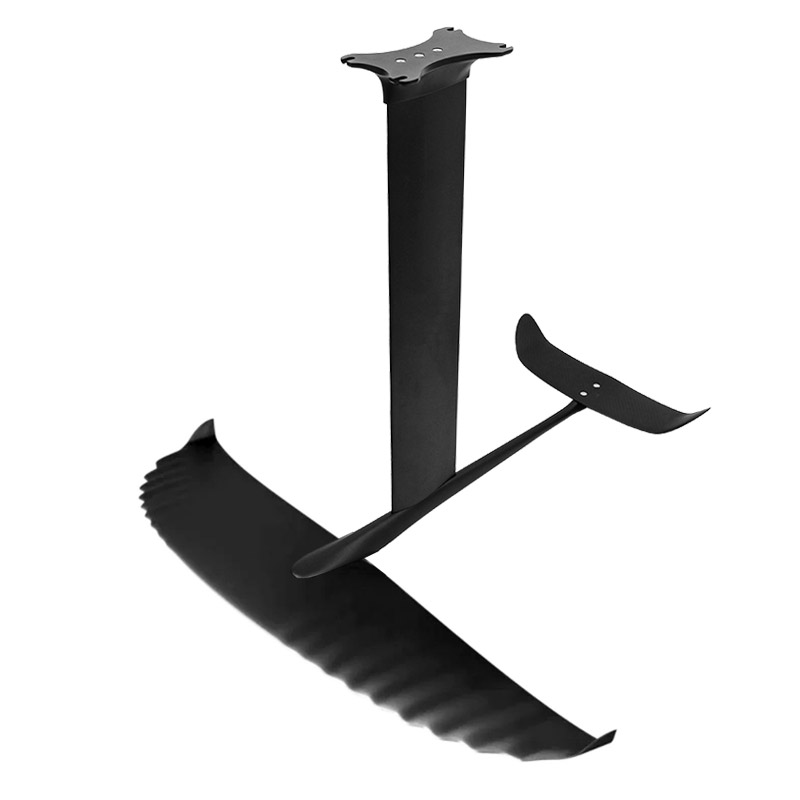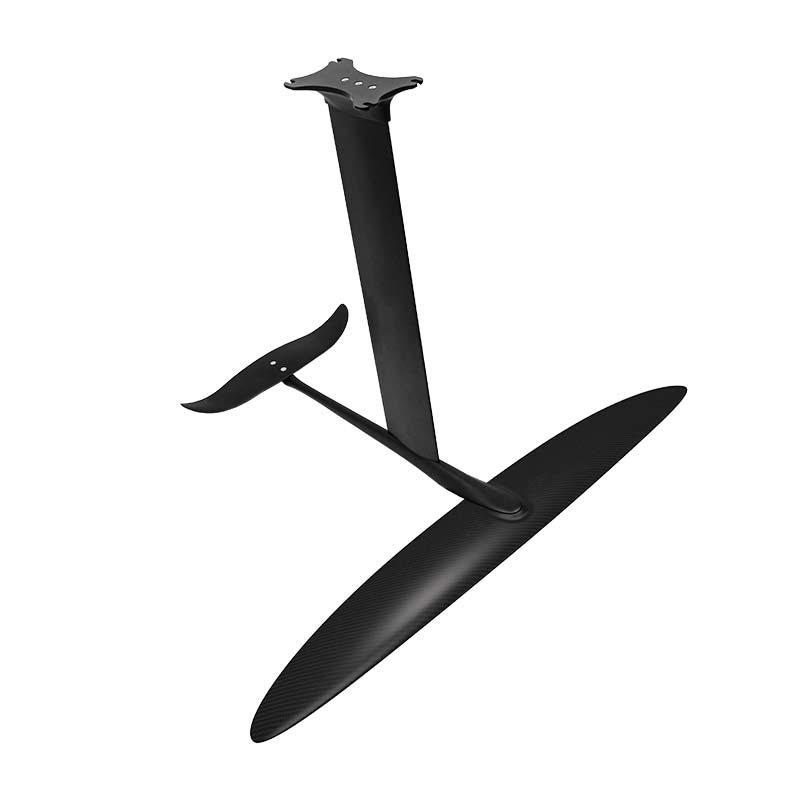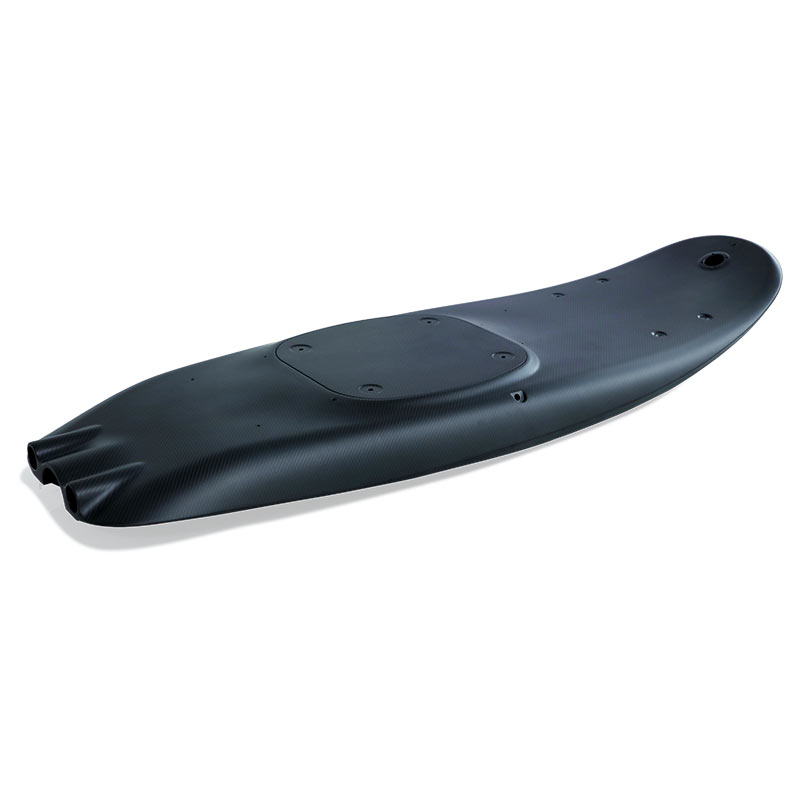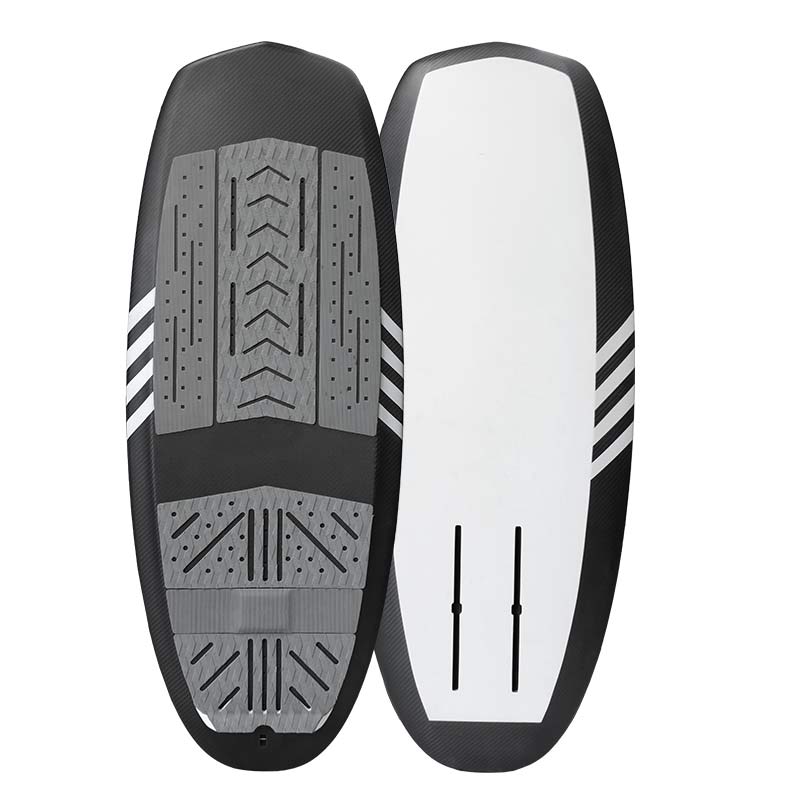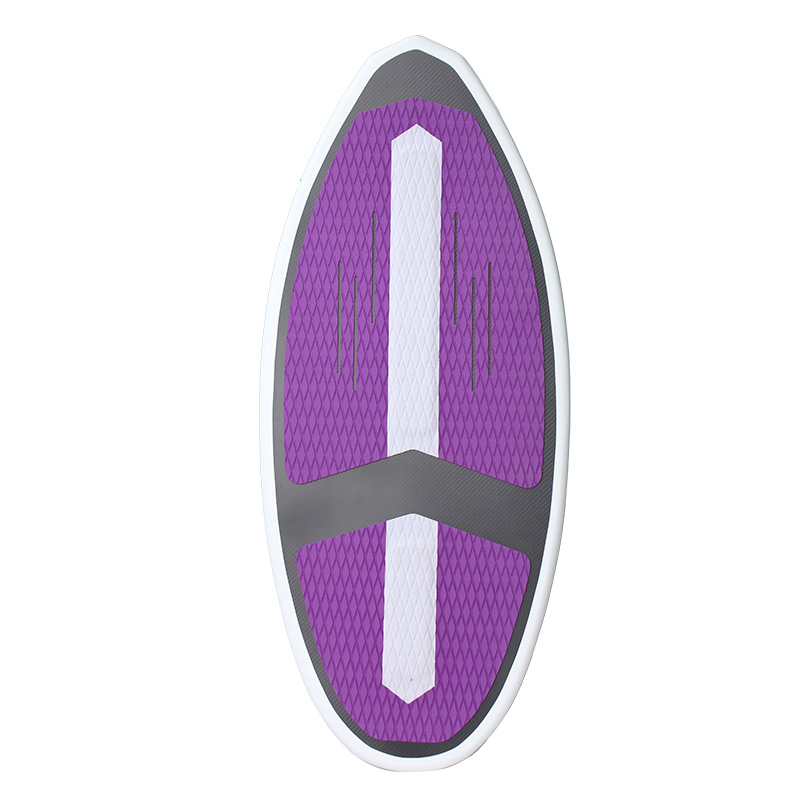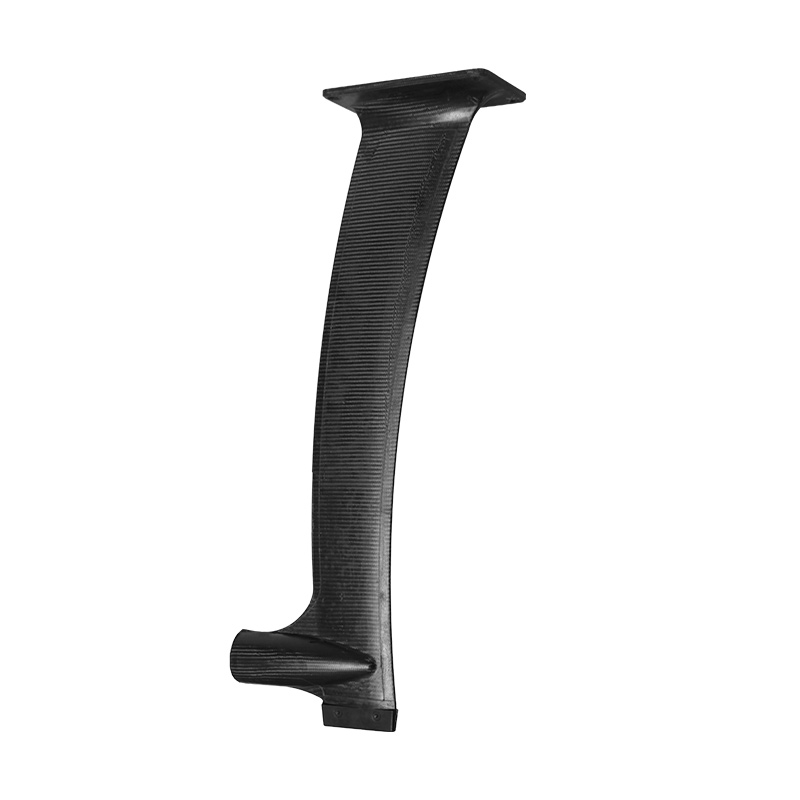
Water ingress in composite boards begins when liquid finds a continuous path through the outer skin, an insert, a vent, a track, a fastener hole or a damaged edge. Once inside, it may stay near the opening, move through connected voids, collect at the skin-to-core interface or reach another feature. The distance and speed depend on the construction, damage, pressure cycles, temperature and time—not simply on how small the visible ding looks.
The practical answer
A heavier board, a soft patch or a brown stain may support a moisture concern, but none proves the full extent by itself. Stop water exposure, document the condition and use an inspection method appropriate to the structure. Do not seal, heat or keep riding a structurally damaged board merely because the opening is small.
This article covers sandwich-composite surfboards, SUPs, wing boards and foil boards. It explains diagnosis and design prevention rather than giving a universal repair recipe. Core type, resin, skin, inserts and load paths vary too much for one drying time or one patch method to be safe for every board.
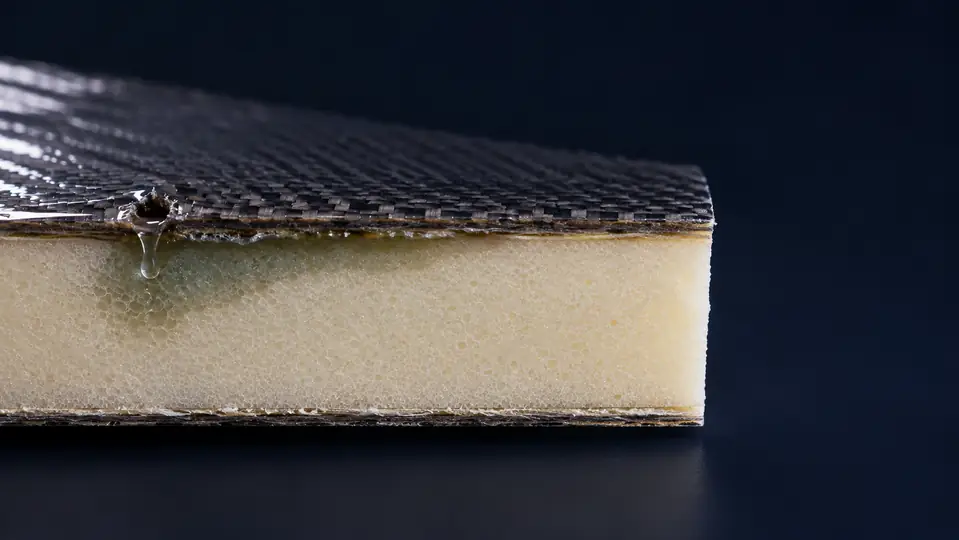
A sandwich board works because the layers act together
A typical sandwich board uses thin, stiff outer skins separated by a lightweight core. The skins carry much of the tension and compression created by bending; the core holds those skins apart, transfers shear and stabilizes the panel. Inserts, tracks, stringers or high-density blocks introduce concentrated loads into that sandwich.
That efficiency depends on continuity. A skin crack can admit water. A crushed core no longer supports the skin as intended. A skin-to-core disbond lets the skin buckle or flex locally. Moisture can worsen an existing defect, but water is not the only cause of softness or delamination: impact, heat, poor bonding, fatigue and concentrated foot or mast loads can create similar symptoms.
The FAA Pilot’s Handbook of Aeronautical Knowledge uses aircraft sandwich structures to make the same general point: thin skins over a core can hide damage, and a puncture creates a route for later water problems. The load level and acceptance rules differ from water-sports equipment, but the sandwich mechanics remain relevant.
Water does not need a dramatic crack to enter
Obvious rail splits and punctures deserve attention, yet smaller routes can matter:
- pinholes or porosity in a thin skin or repair;
- a cracked leash plug, handle, foot-strap insert or vent seat;
- damaged foil-track edges or fastener interfaces;
- an unsealed drilled hole or exposed foam at a cut edge;
- a bond-line void connected to the exterior;
- a vent that is damaged, contaminated, incorrectly installed or used outside its instructions;
- impact damage that leaves the surface apparently closed but fractures material underneath.
Pressure differences can help move water. A warm board cools, internal gas contracts and a partial pressure difference develops. Flexing can also pump a damaged area. That does not mean every board needs the same vent or that a vent fixes an open ding. Pressure equalization and waterproof structural continuity are separate design functions.
A GORE surfboard vent case study discusses how temperature-driven pressure change can contribute to skin delamination in sealed EPS and hollow constructions. It is a vendor case study, not proof that every board requires the same component.
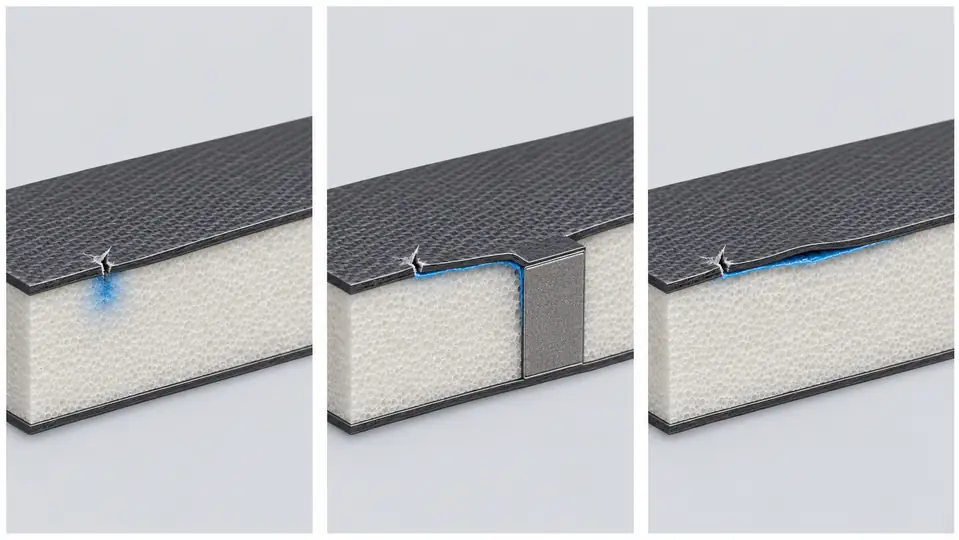
Closed-cell foam does not make the whole assembly invulnerable
“Closed cell” describes a foam morphology, not the integrity of the complete board. Water uptake can still be influenced by cut cells, bead boundaries, cracks, machining, density, damage, manufacturing voids, interfaces and penetrations. A high-density insert may absorb differently from the surrounding core; a bond line may create a separate path; a track cavity may retain water even when the bulk foam remains comparatively resistant.
Core families also behave differently. Expanded polystyrene, cross-linked PVC, PET, PMI, polyurethane and balsa cannot be grouped under one absorption rate. The BSEE-sponsored recommended standard for offshore composite components notes that water effects depend on cellular structure, treatment and whether the laminate protects the entire core and adhesive. Evaluating water ingress in composite boards therefore starts with the manufacturer’s actual material and construction records, not a generic foam label.
Where water can travel after it gets inside
| Possible path | What enables it | What may happen | What must be verified |
|---|---|---|---|
| Into the core near the opening | Cut, cracked or locally crushed cells | Local weight gain, softness or staining | Core type, moisture extent and remaining skin/core integrity |
| Along the skin–core interface | Disbond, impact damage or weak/voided adhesive region | Growing soft or hollow-sounding patch | Whether the skin is still structurally bonded |
| Toward an insert or track | Connected void, bond-line gap or fastener path | Corrosion, swelling, loss of bond or load-transfer damage | Insert material, isolation, track stability and hidden wet area |
| Through a hollow or channel | Unsealed cavity or internal communication path | Water appears far from the original opening | Internal geometry and all exits, vents and penetrations |
The key lesson is that the wet area cannot always be inferred from the visible opening. Conversely, a small surface stain does not prove that an entire board is saturated. Both overreaction and false reassurance come from guessing the hidden geometry.
What the common checks can and cannot tell you
When water ingress in composite boards is suspected, combine observations rather than letting one convenient reading become the verdict. Establish the instrument, baseline, location and construction before interpreting the result.
| Check | Useful observation | What it cannot establish alone |
|---|---|---|
| Visual inspection | Open cracks, pinholes, stains, coating lift, weeping, distorted skin or damaged features | Complete moisture boundary or internal bond strength |
| Weight comparison | Change from a documented dry baseline using the same setup | Where the water is, why weight changed or whether a local structure is safe |
| Gentle pressure | Local softness, skin movement or crackling | Whether the cause is wet core, crush, heat delamination or poor original bond |
| Tap comparison | A change in acoustic response that may indicate a near-surface disbond | Reliable moisture mapping in every core, thickness and geometry |
| Moisture meter | Relative readings under the instrument’s material-specific limitations | A universal percentage valid across carbon, glass, paint, foam and metal inserts |
| Thermography, radiography or other NDI | Potential mapping of hidden features when method and setup suit the part | Automatic structural acceptance without trained interpretation and reference standards |
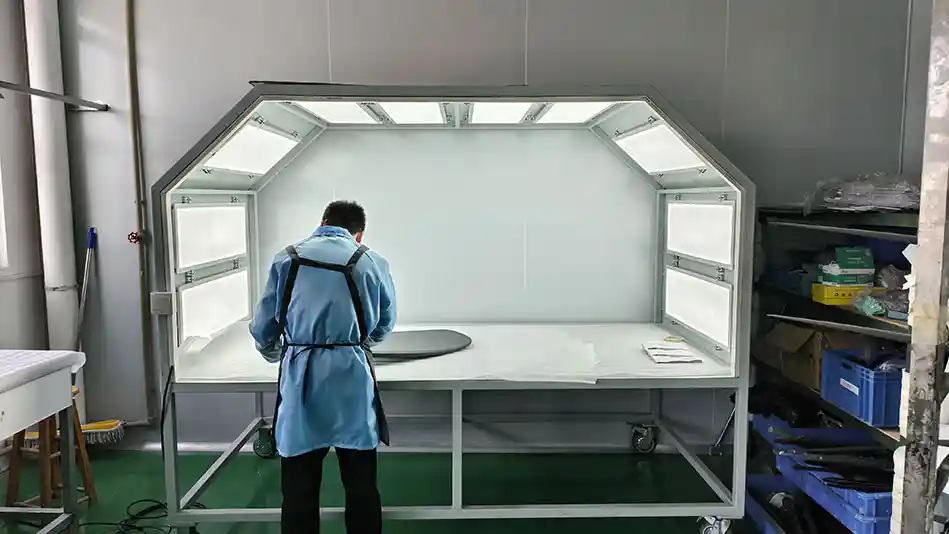
The Composites Knowledge Network sandwich-damage presentation compares inspection methods and shows that their capabilities differ: an ultrasonic technique that is effective for some disbonds may not be the best choice for water in a given core, while radiography or thermography may reveal different features.
Water ingress, delamination, dents and heat damage are different
| Condition | What changed | Typical clue | Important caution |
|---|---|---|---|
| Water ingress | Liquid entered through a path and is retained or migrating | Weeping, localized weight change, stain or moisture indication near damage | Extent may exceed the visible opening—or remain local |
| Pressure dent | Skin and core deform together but may remain bonded | Hard shallow depression in a high-use area | A severe dent can still include hidden core damage |
| Core crush / impact damage | Core loses shape or shear support beneath the skin | Softness, contour change or impact mark | The skin can look nearly intact over a wider crushed zone |
| Delamination or disbond | Layers or skin/core interface separate | Skin movement, a raised bubble, crackling or changed tap sound | Heat, impact, manufacturing defects and moisture can all contribute |
| Thermal pressure damage | Internal gas expands or trapped moisture vaporizes as temperature rises | Bulging or bond failure after hot storage | Forced heating of a wet board can worsen damage |
Unitysurf’s surfboard repair article covers repair workflow, while the foil-track installation guide focuses on load transfer around tracks. This article intentionally stops before prescribing a patch because the hidden condition must be established first.
When to stop using the board
Remove a board from service and seek product-specific assessment when any of the following appears:
- an opening exposes foam, core, fibers, an insert or an internal cavity;
- water actively enters or weeps from a structural area;
- a foil track, fin box, handle, leash plug or foot-strap insert moves;
- a soft, hollow-sounding or raised area grows;
- the skin is buckled, sharply creased or visibly separated;
- there is unexplained weight change from a reliable baseline;
- damage sits in a highly loaded rail, standing zone, track or attachment region.
A cosmetic cover can reduce further water exposure while a part awaits evaluation, but it is not proof of restored structure. The FAA makes the same distinction for aircraft composites: temporary protection over a puncture is not a structural repair. Water-sports products need their own approved repair criteria, not aircraft procedures, but the boundary between “covered” and “repaired” is universal.
Why forced heat can make a wet sandwich worse
Heat reduces air density and raises internal gas pressure. It also accelerates moisture diffusion and can turn retained water into vapor. At the same time, polymer matrices and adhesives may soften as temperature increases. The result can be a larger disbond or blister even if the owner’s intention was simply to dry the board faster.
NASA-STD-6016C requires water-entry and entrapment pathways to be considered in structural sandwich assemblies and discusses combined moisture and heating effects. A surfboard is not spacecraft hardware, but the physics supports a conservative rule: do not invent an uncontrolled high-temperature drying method for an unknown resin/core system.
Preventing water ingress in composite boards starts in the design
Durability depends on more than choosing a low-absorption foam. Designers and manufacturers should review the complete enclosure and every penetration:
- Define the water boundary. Identify which skin, bond line, seal or insert closes every route to the core.
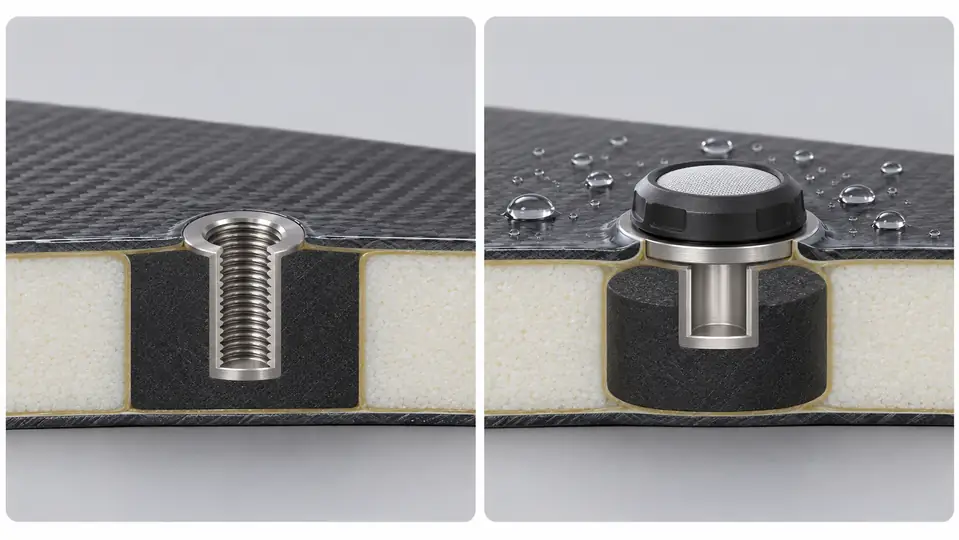
- Design penetrations as systems. Tracks, handles, leash plugs, vents and foot-strap inserts need load transfer, sealing, drainage and inspection requirements.
- Protect cut edges and drilled holes. A cosmetic finish is not automatically a durable core seal.
- Use local density intentionally. High-density inserts spread loads, but their interfaces still require complete bonding and moisture control.
- Separate venting from sealing. Specify the vent type, installation, contamination protection and user instructions without treating it as a substitute for intact skins.
- Control porosity and cure. Visual finish, vacuum records, mass, coupons or appropriate NDI may be part of project-specific quality evidence.
- Validate representative assemblies. Test tracks, inserts and repaired-like defects under environmental and load conditions agreed for the product.
- Make inspection possible. Provide baseline mass, service guidance and criteria for escalating cracks, softness or attachment movement.
Unitysurf’s carbon-fiber surfboard construction guide provides product context, while the foil board page describes configurable core, track and laminate features. For broader project development, see custom carbon fiber manufacturing.
Questions board owners and buyers ask
How do I know if a composite board is waterlogged?
No single home check proves it. Look for an open water path, weeping, staining, softness and change from a documented dry weight. A manufacturer or qualified composite repair specialist may need an appropriate inspection method to establish extent and structural condition.
Can a tiny ding really let in much water?
It can, but the outcome varies. Time in water, pressure cycling, temperature, core structure, connected voids and interface damage all matter. The visible opening does not set a reliable upper limit on the hidden wet area.
Does a soft spot always mean water damage?
No. Core crush, pressure denting, heat delamination, fatigue and poor original bonding can also create softness. Moisture can be present with or without those conditions.
Can I dry the board in direct sun?
Uncontrolled heat can expand internal gas or vapor and soften the resin/adhesive system. Follow the board maker’s method or a qualified repair specification instead of assuming hotter is faster and safer.
Is a temporary tape patch enough?
It may reduce additional exposure while arranging inspection, but it does not restore a cracked skin, crushed core, failed insert or disbond. Do not treat a temporary cover as structural approval.
A small opening deserves a proportionate investigation
Water ingress in composite boards is a pathway problem. The visible ding is only the entrance; the core architecture, interfaces, inserts, heat and flex determine what happens next. Good decisions come from documenting the baseline, stopping additional exposure and matching the inspection method to the construction.
For an OEM board review, send Unitysurf the board geometry, core and skin concept, inserts and tracks, vent strategy, intended environment, expected loads and validation requirements through the contact page. Those details make moisture prevention reviewable before the mold is frozen.
Technical note: This article provides general education about composite sandwich moisture and inspection. It does not authorize continued use, drying or structural repair of a specific board. Follow the product manufacturer’s instructions and obtain qualified assessment for loaded or safety-critical damage.