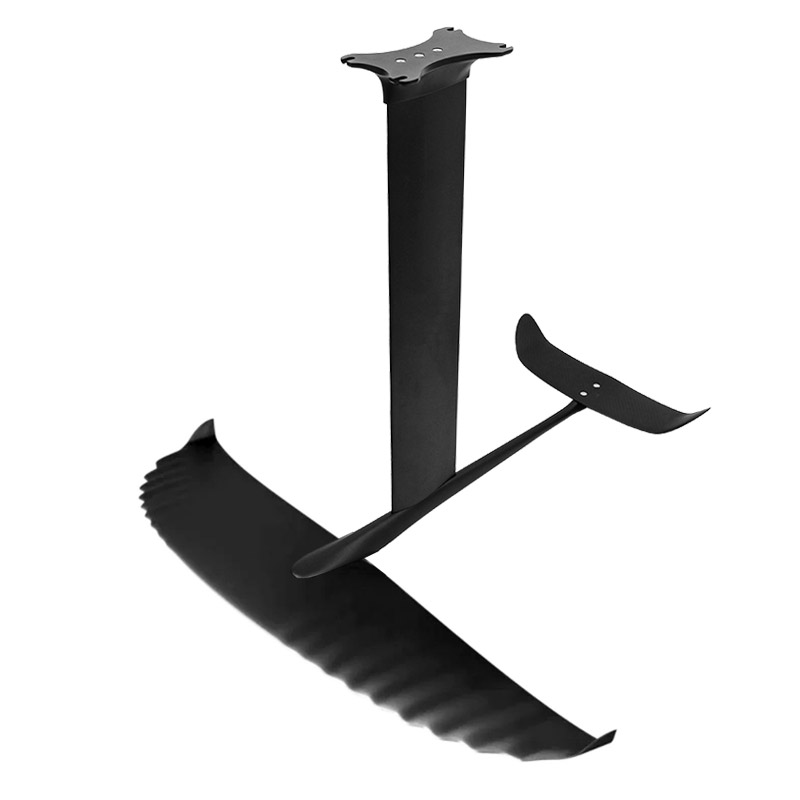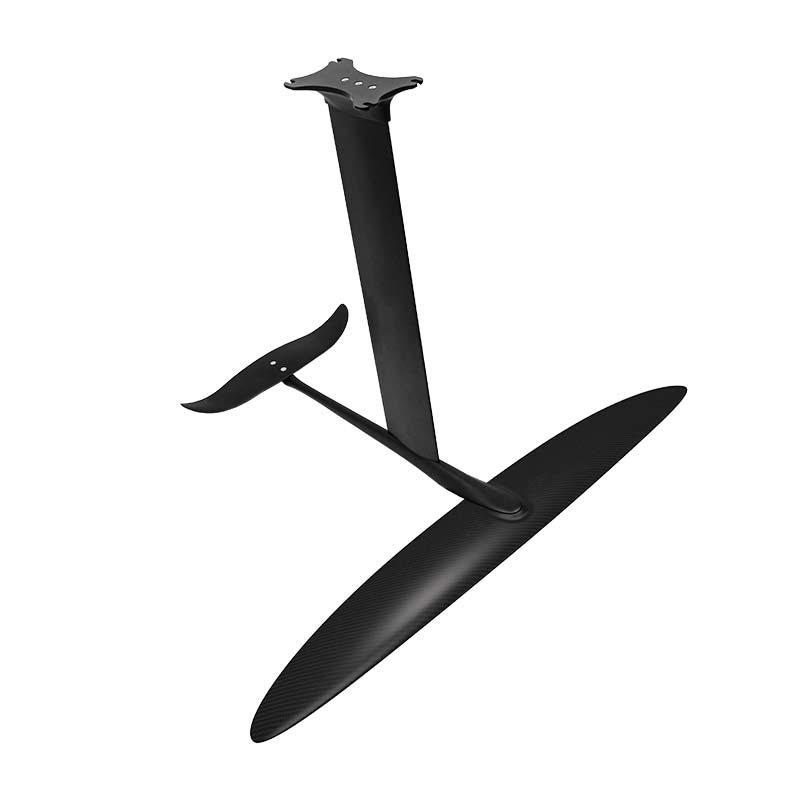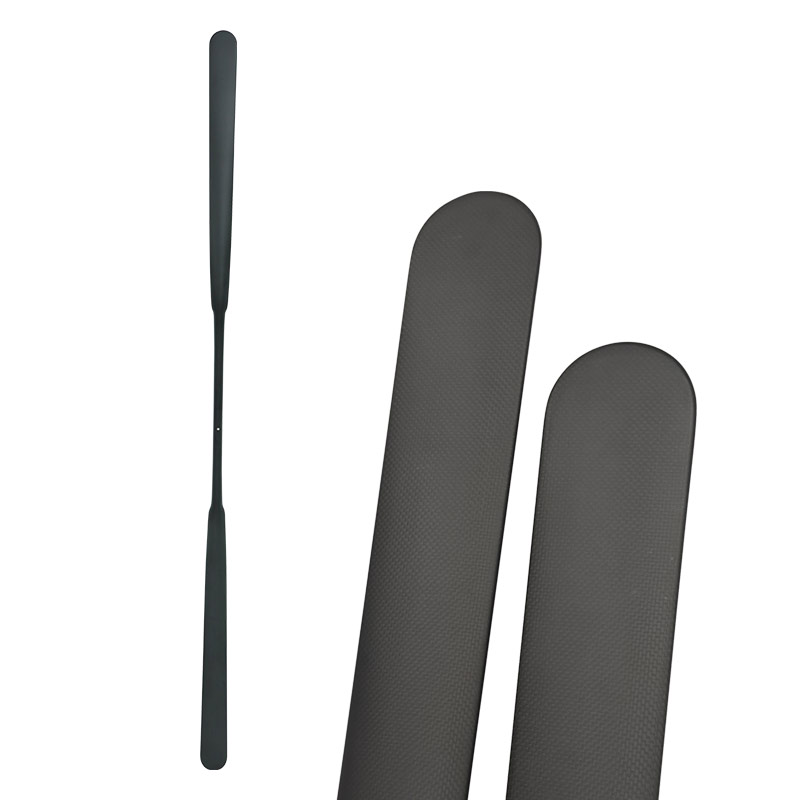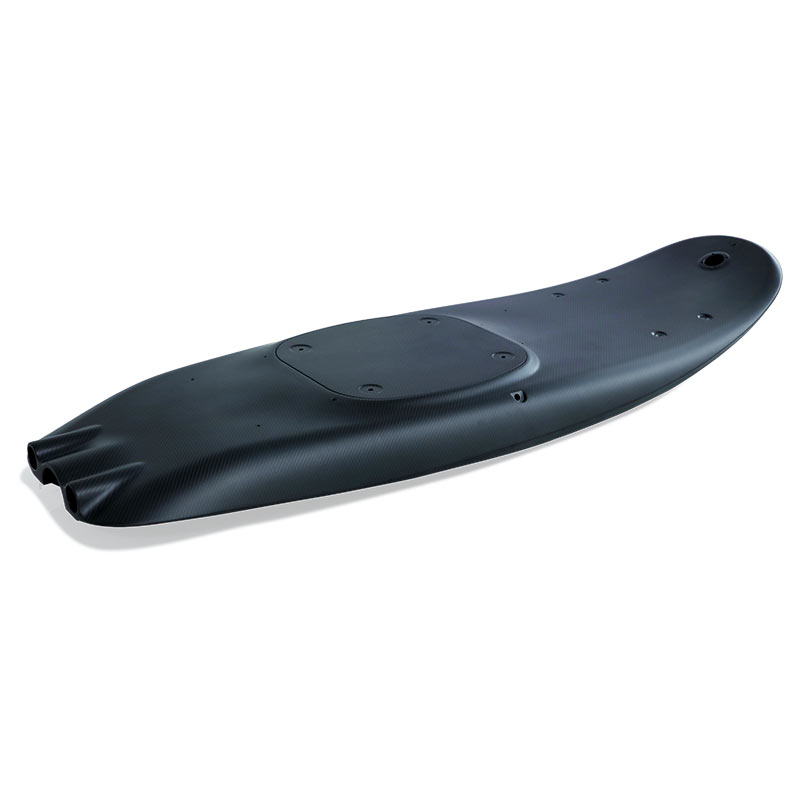
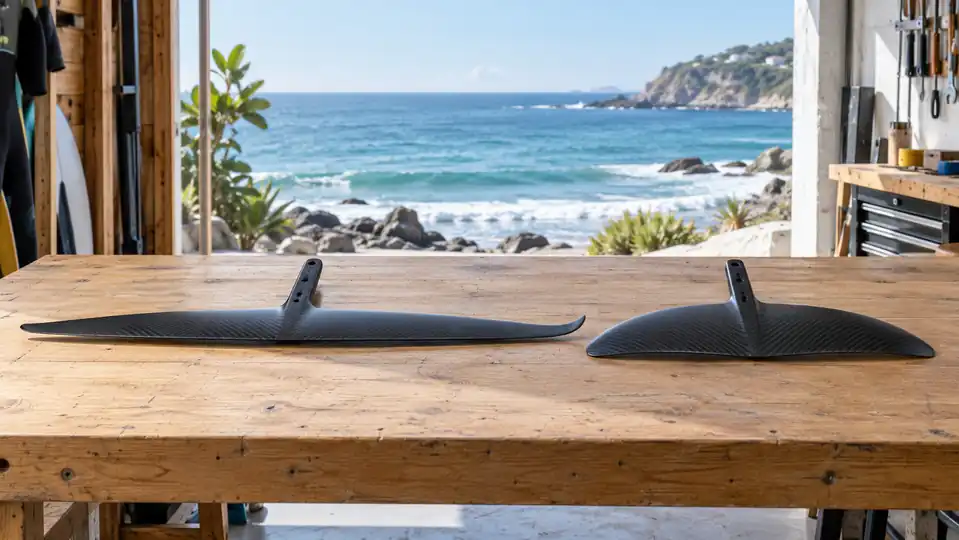
Choose a lower-aspect hydrofoil front wing when your priority is compact span, forgiving roll response, tight turning and accessible handling. Choose a higher-aspect wing when efficient glide, pumping distance and speed retention matter more—and you have the technique and space to manage a wider span. For many progressing riders, a modern mid-aspect front wing is the more honest starting point because it balances both behaviors.
This High Aspect vs Low Aspect Hydrofoil guide applies to non-motorized wing, surf, prone, SUP and pump foiling. It explains the geometry, separates aspect ratio from wing area, and shows why two wings with the same published ratio can ride very differently.
The 30-second decision
| Your dominant goal | Start by testing | Why |
|---|---|---|
| First flights and predictable progression | Low to mid aspect, adequate area | Compact span and accessible handling |
| Tight wave carving | Low to mid aspect | Faster roll response and shorter turning radius potential |
| Pumping and linking bumps | Mid to high aspect | Better glide efficiency when technique is sound |
| Downwind or distance glide | High aspect | Efficient lift distribution and speed retention |
| Gusty all-round wing foiling | Modern mid aspect | Useful compromise among takeoff, glide and turning |
| One foil for several disciplines | Mid aspect before either extreme | Fewer penalties when conditions and tasks change |
This table is a test order, not a promise. Rider mass, front-wing area, foil section, board, mast, stabilizer and conditions can reverse a simplistic category recommendation.
What aspect ratio actually measures
For a hydrofoil front wing, aspect ratio is commonly calculated as:
Aspect ratio = wingspan² ÷ planform area
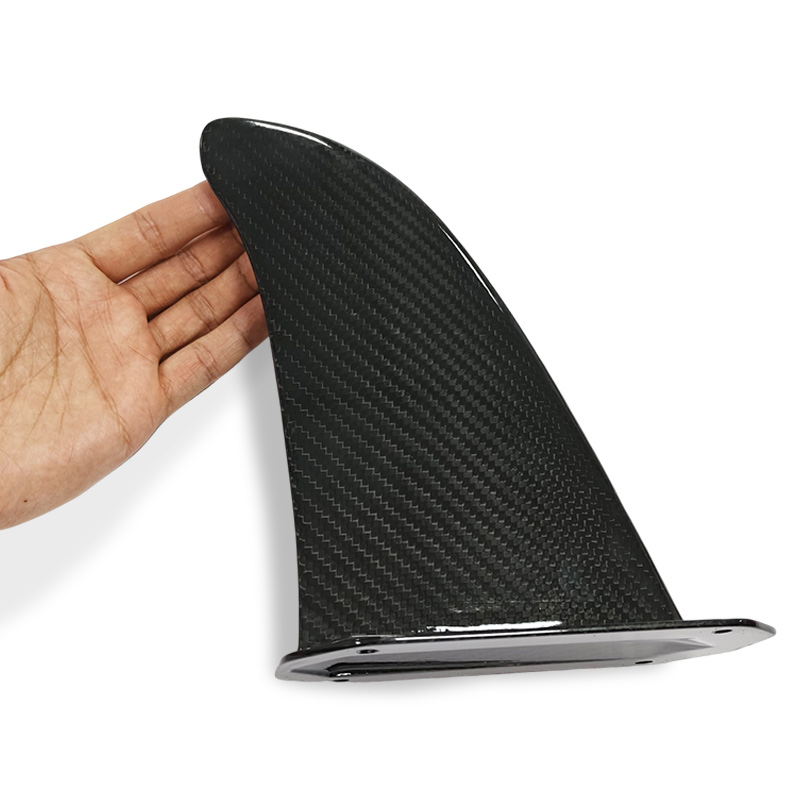
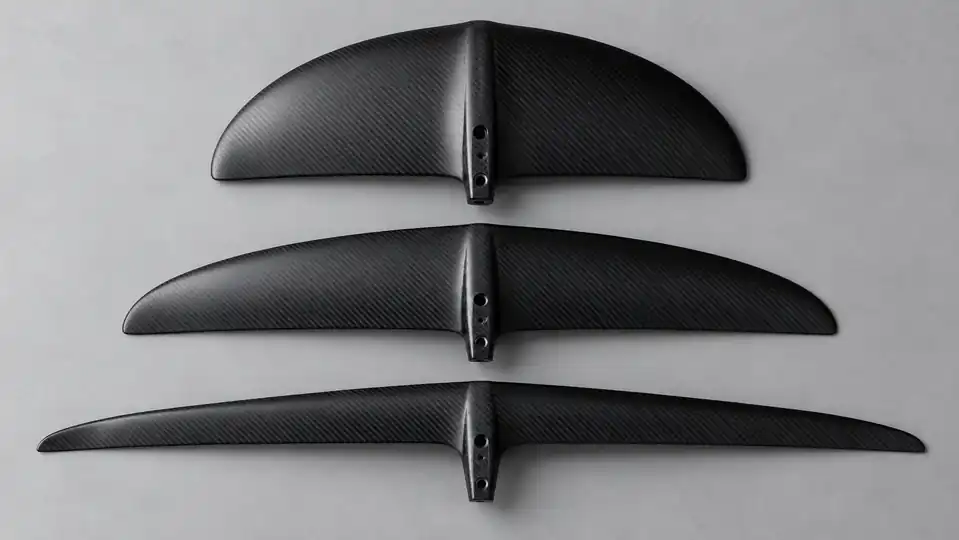
A wing becomes higher aspect when span increases relative to area, which usually creates a longer, narrower planform. A lower-aspect wing places more of its area into chord, producing a shorter, deeper outline. Always confirm how a manufacturer defines span and area before comparing numbers across catalogs.
A worked example
Suppose two wings both have 1,200 cm² of planform area. A 900 mm span produces an aspect ratio of about 6.75; a 1,100 mm span produces about 10.08. The second wing is higher aspect even though area is identical. It may glide more efficiently, but the number alone cannot tell you its takeoff speed, pitch behavior or turning feel.
Why catalog labels do not transfer cleanly
“Low,” “mid” and “high” are useful within a product range, not universal standards. One brand may call AR 7.5 mid aspect while another positions a similar ratio differently. Current products also blur old rules: designers combine higher aspect with cambered sections, swept tips and tuned twist to preserve low-speed lift or turning.
SURF Magazin’s explanation of high, mid and low foil aspect ratios makes the same important distinction: the ratio is a guide, not a substitute for evaluating the complete wing.
What changes when aspect ratio rises?
Holding area and other geometry approximately constant, increasing span can reduce induced drag and improve glide. That is why higher-aspect wings are strongly associated with pumping, downwind efficiency and sustained travel between energy sources.
The trade-off is not simply “harder.” A longer span increases the distance the tips travel during roll, can require more clearance in banked turns, and changes structural bending loads at the root. The rider may feel a slower or more deliberate roll response compared with a compact wing of similar area. Very wide wings can also be less convenient in shallow launches, crowded breaks and transport.
Likely strengths of a higher-aspect front wing
- efficient glide after the driving force fades;
- better speed retention between swells or pumping cycles;
- potentially lower induced drag at useful lift conditions;
- strong distance and downwind potential;
- ability to use less area once skill, speed and section design support it.
Likely trade-offs
- wider span and more tip clearance to manage;
- more deliberate roll response in some designs;
- greater sensitivity to poor ventilation recovery or tip breaches in certain outlines;
- higher root bending demand for the designer to manage;
- less tolerance for choosing by area alone.
Armstrong’s UHA front foil illustrates how a brand pairs a very high published aspect ratio with its own section, camber and turning concept. AXIS positions its ART v2 range between other families rather than treating “high aspect” as one fixed behavior.
What a lower-aspect wing gives back

A lower-aspect front wing uses shorter span and more chord for a given area. The compact outline can feel easier to roll, redirect and keep clear of the surface during steeper banks. It is often paired with thicker, higher-lift sections in beginner or surf-oriented designs, but that pairing is a design choice—not a mathematical consequence of aspect ratio.
Likely strengths of a lower-aspect front wing
- compact span for maneuvering and shallow handling;
- quick roll initiation and tighter carving potential;
- often predictable low-speed behavior when paired with an appropriate section;
- less leverage from tip to root at the same total load;
- accessible platform for learning control inputs.
Likely trade-offs
- more induced drag than a well-matched higher-aspect planform;
- less effortless glide when power disappears;
- more energy needed to connect long pumping intervals;
- larger area may be required for the same low-speed task;
- lower speed ceiling when combined with a thick, drag-oriented section.
Do not translate these tendencies into “low aspect is for beginners only.” Compact, maneuverable wings remain useful for wave-focused riding where roll rate and turning footprint matter more than maximum glide.
High Aspect vs Low Aspect Hydrofoil comparison: do not confuse ratio with area
Area answers “how much planform is present.” Aspect ratio answers “how that area is distributed between span and chord.” Neither number fully describes lift or stall behavior.
A large high-aspect wing can lift early and glide efficiently. A small low-aspect wing can be fast and highly maneuverable. A thick, highly cambered higher-aspect wing may lift earlier than a thin lower-aspect race wing. This is why statements such as “high aspect has a high stall speed” or “low aspect is always slow” are unreliable without the rest of the design.
A useful High Aspect vs Low Aspect Hydrofoil test holds area and the rest of the system as steady as possible. When comparing products, record at least:
- projected or planform area and the brand’s measurement convention;
- wingspan and mean chord;
- aspect ratio;
- maximum section thickness and thickness distribution;
- camber and intended lift range;
- sweep, taper, wingtip shape, anhedral or dihedral;
- front-wing mass and stiffness;
- compatible fuselage, mast and stabilizer.
Unitysurf’s broader water foil explanation provides the system context, while the beginner hydrofoil guide covers the other first-setup decisions.
Choose by discipline, then correct for conditions
Wing foiling
Beginners usually benefit from controllable lift, adequate area and predictable pitch before chasing maximum aspect ratio. Progressing riders can move toward mid or high aspect when they want more glide, upwind efficiency or smaller front-wing area. For a rider focused on waves and tight turns, a compact mid- or lower-aspect outline can remain the better choice. Match the front wing with the wind and rider variables in the wing foil size guide.
Surf and prone foiling
Wave shape decides more than labels. Steep, fast pockets reward control, tip clearance and turning response. Weak rolling swell rewards glide and pump connection. A rider who stays close to the breaking pocket may choose a different aspect ratio from someone linking multiple waves.
SUP and downwind foiling
Efficient glide and low-speed carry are valuable when connecting bumps, so mid-to-high aspect wings are common. Yet takeoff technique, board volume, paddle power and local swell period determine whether an extreme design is useful. The human-powered hydrofoil guide explains how the rider supplies initial and continuing energy.
Pump foiling
Higher aspect can reduce the energy lost between pump cycles, but timing and foil section remain decisive. A wide span also requires accurate roll control during dock starts and turns. Review hydrofoil pumping fundamentals before assuming a new wing will fix cadence or height control.

Why mid aspect is often the smarter answer
The search query asks for two opposites, but product development increasingly lives between them. A mid-aspect wing can preserve enough span efficiency for useful glide while remaining compact enough for intuitive roll and everyday conditions.
Armstrong states that its MA front foil uses a mid-aspect range to balance speed stability and roll rate. Slingshot’s guide to choosing a hydrofoil likewise moves the decision from larger, accessible wings toward smaller and more efficient options as rider goals progress.
Choose mid aspect when you cannot name a single dominant goal, regularly encounter mixed wind or wave conditions, or want one front wing to cover several non-motorized foil disciplines. Specialization makes sense after you can describe exactly what the current wing prevents you from doing.
A test method that reveals more than marketing labels
Compare wings within one compatible system where possible. Keep mast, fuselage, stabilizer, board and rider unchanged. If the two wings have very different area, acknowledge that aspect ratio is not the only variable.
- Takeoff: record wind or wave conditions and the effort needed to reach stable flight.
- Low-speed control: reduce power gradually and note pitch warning, roll stability and recovery.
- Acceleration: apply equal effort and observe whether lift builds smoothly or abruptly.
- Glide: stop driving briefly in safe water and compare speed retention.
- Turns: repeat broad and tighter turns on both sides; note roll initiation and tip clearance.
- Pumping: use the same number of cycles and compare distance without changing technique intentionally.
- Fatigue: reassess after a full session, not only during the first exciting run.
Do not test unfamiliar foils in crowded water, near hard objects or beyond your rescue ability. Published performance descriptions are starting hypotheses; controlled use decides whether they fit you.
OEM buyers should specify the wing, not a fashionable ratio
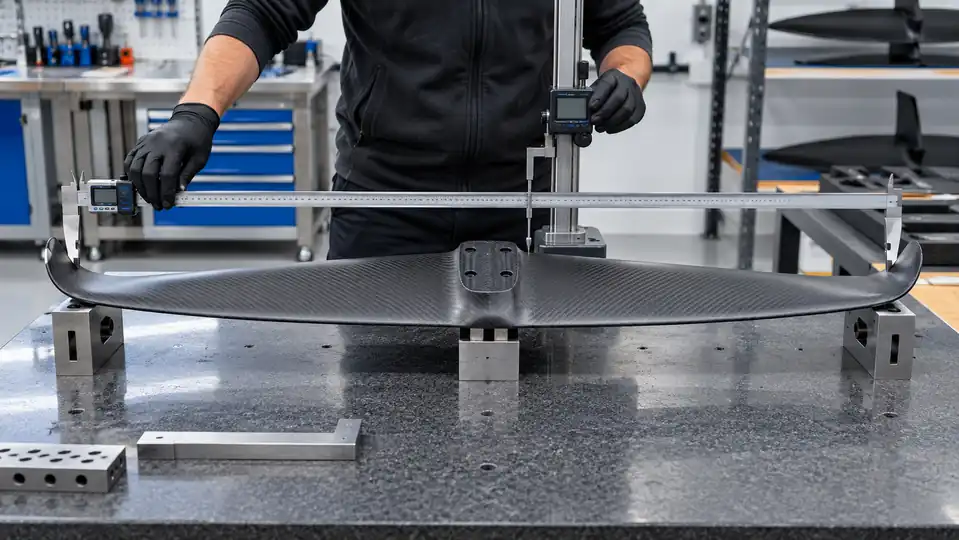
An RFQ that says “high-aspect carbon front wing” leaves most performance and quality decisions undefined. A useful design brief should include:
- target disciplines, rider range and operating conditions;
- span, planform area, projected area and calculation convention;
- target aspect ratio as a derived value, not the only geometry input;
- root and tip sections, camber, thickness and twist distribution;
- sweep, taper, tip geometry and anhedral or dihedral;
- fuselage interface, fasteners, datum scheme and interchangeability limits;
- mass, center of mass, bending and torsional stiffness targets;
- surface waviness, leading-edge profile and trailing-edge acceptance limits;
- proof load, fatigue, impact and environmental conditioning methods;
- prototype test matrix and approved golden sample.
A wider span increases the importance of stiffness distribution, mold symmetry and root load transfer. More carbon or higher-modulus fiber is not automatically better; laminate orientation, compaction, cure, local reinforcement and void control determine whether stiffness is achieved without unnecessary mass or brittle failure modes. Unitysurf’s hydrofoil manufacturing process and high-modulus carbon discussion provide related manufacturing context.
Red flags when comparing front-wing specifications
- Aspect ratio is listed without span and area.
- Two areas are compared without stating projected versus developed measurement.
- “Beginner,” “fast” or “low stall” appears without rider, setup or condition context.
- A chart changes front wing, stabilizer and fuselage simultaneously but attributes everything to aspect ratio.
- No compatible-system or hardware information is provided.
- Prototype claims are presented without production tolerances or validation criteria.
For custom carbon front wings or complete non-motorized hydrofoil component projects, review Unitysurf’s hydrofoil manufacturing capabilities and send the intended use, geometry and validation requirements.
Questions riders and buyers ask
Is a high-aspect hydrofoil always faster?
No. Higher aspect can improve efficiency, but maximum speed also depends on area, foil-section drag, thickness, surface finish, stabilizer, mast and rider control. A thin low-area mid-aspect wing can be faster than a large high-aspect wing designed for low-speed lift.
Is a low-aspect foil always best for beginners?
No. Beginners need predictable lift, adequate area, pitch stability and manageable speed. Many modern mid-aspect wings provide those qualities with better glide. Judge the complete system and the manufacturer’s intended rider range.
Does a larger front wing mean a lower stall speed?
Often, additional area supports more lift at a given speed, but section shape, camber, angle of attack, rider mass and setup also matter. Area alone does not specify stall speed or recovery behavior.
What aspect ratio is considered high?
There is no universal category boundary. Use a brand’s labels within its own range, then compare the actual ratio, span, area and intended use. Avoid treating a single threshold as an industry standard.
Can one high-aspect wing work for wing, prone and pump foiling?
Sometimes, but compatibility does not guarantee equal suitability. The area, section and span that feel efficient for pumping may be cumbersome in a steep surf pocket or demanding during early wing-foil progression.
Should I change the stabilizer when changing the front wing?
Follow the system designer’s compatibility guidance. A stabilizer changes pitch balance, turning and perceived front-foot pressure, so changing it at the same time can hide what the front wing actually changed. Test one major variable at a time.
Let the riding goal decide
The High Aspect vs Low Aspect Hydrofoil choice is not a ladder from beginner to expert. It is a geometry trade-off. Lower aspect favors compact, maneuverable behavior; higher aspect favors efficient glide; modern mid aspect occupies the valuable middle. Start with the discipline and conditions, compare complete designs at controlled area and setup, and demand measurable specifications before approving an OEM product.