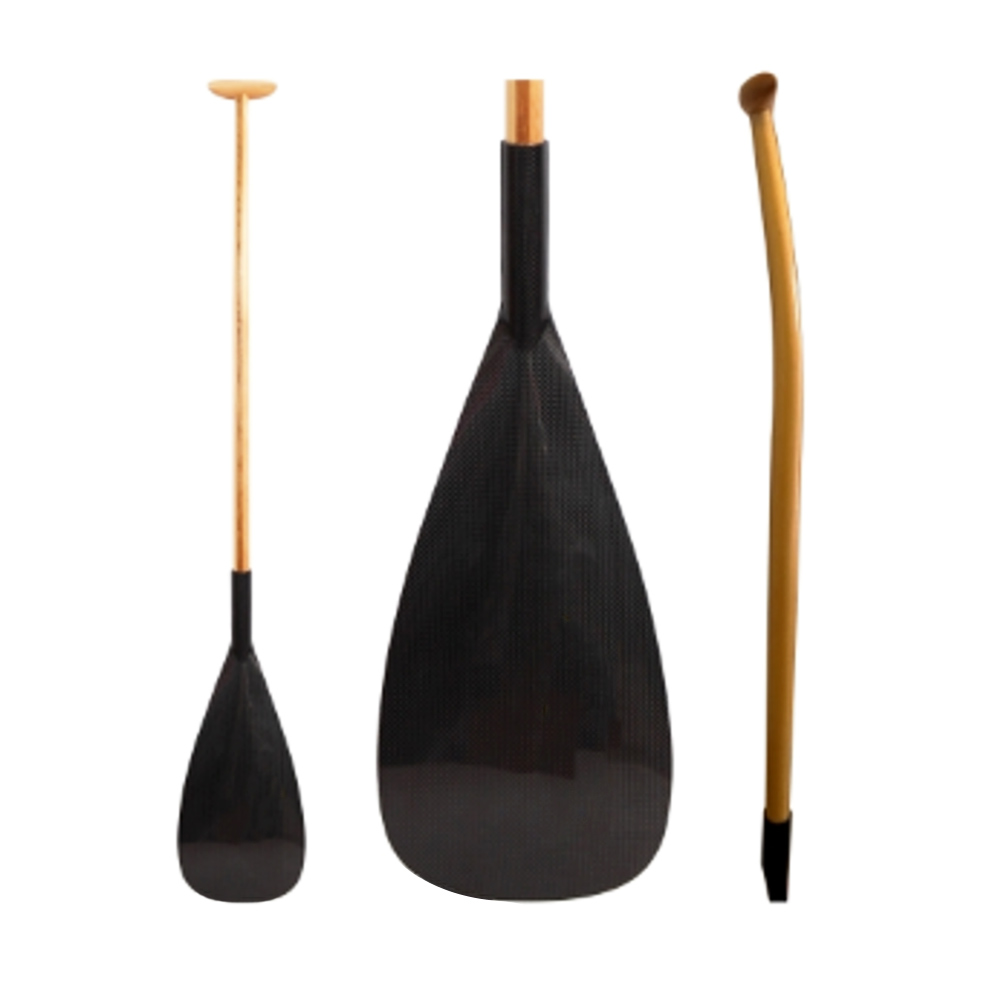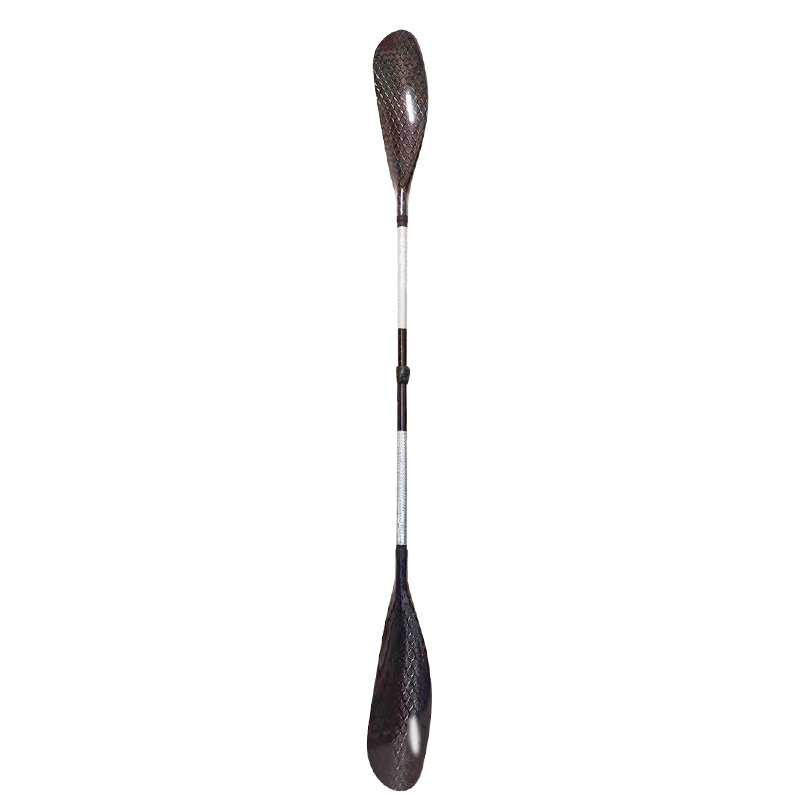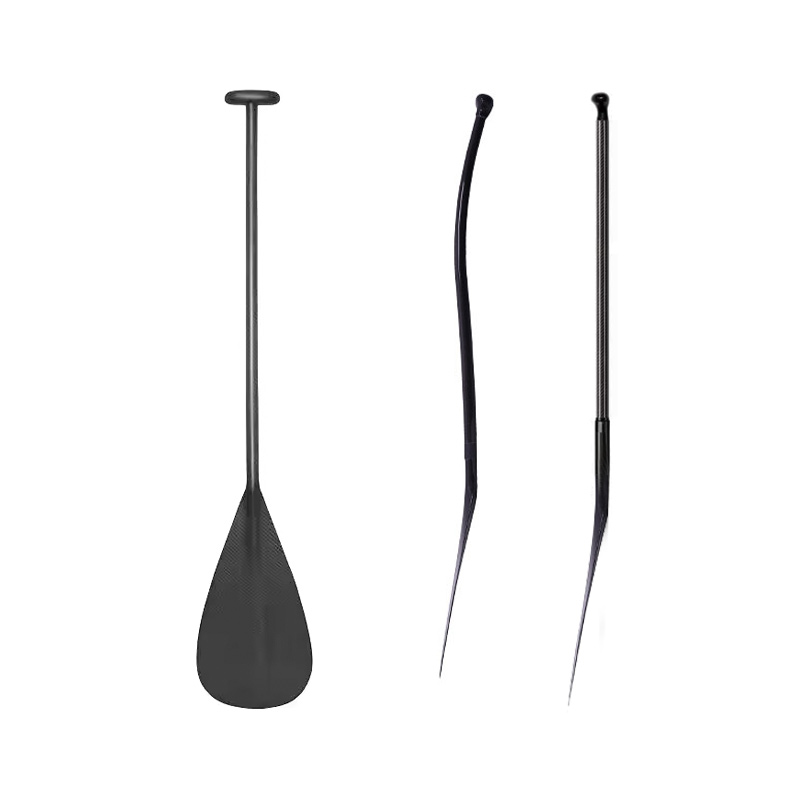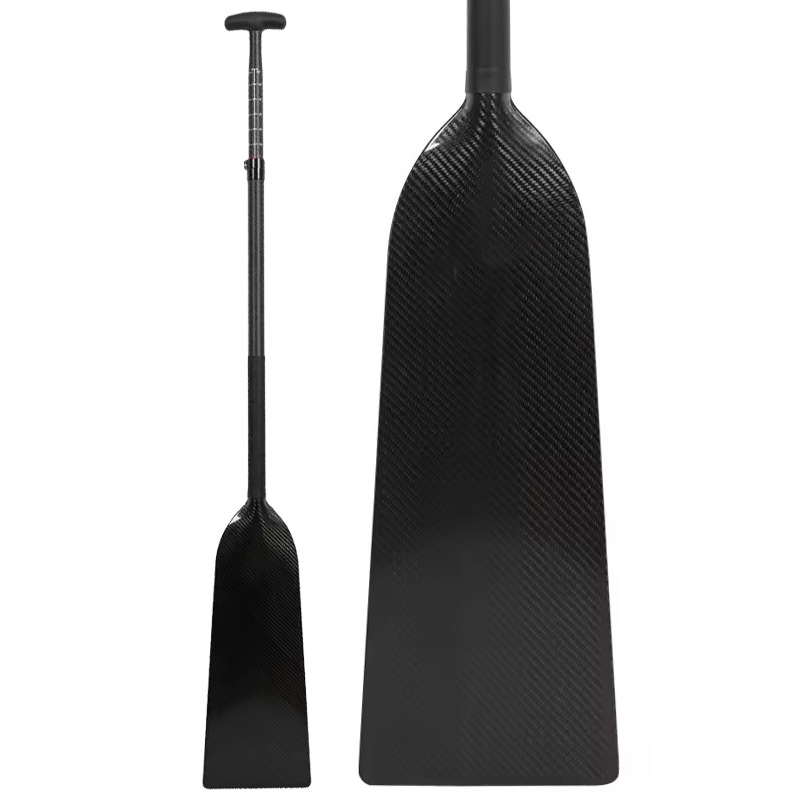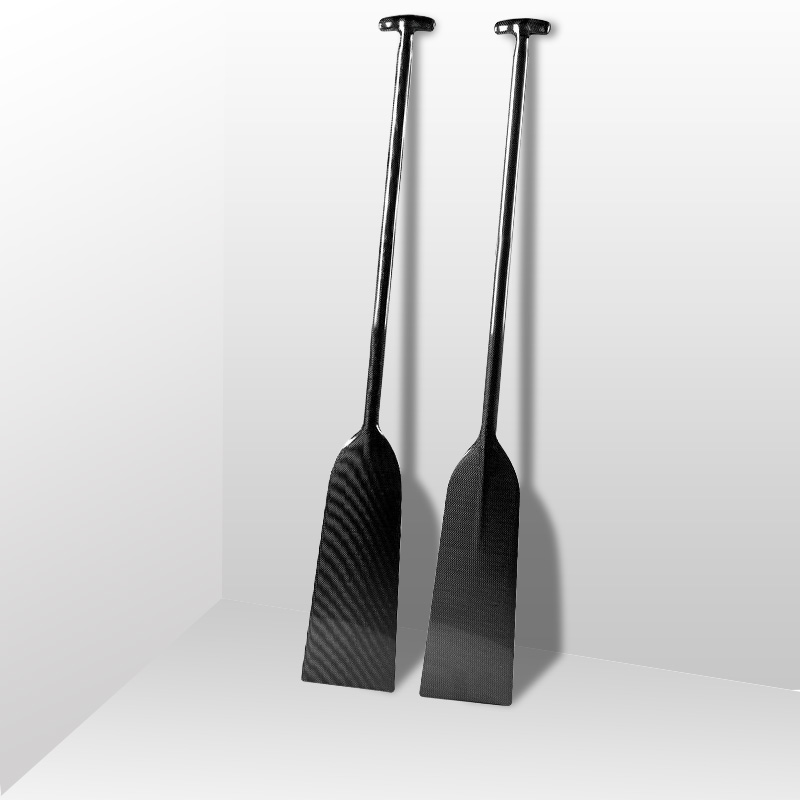
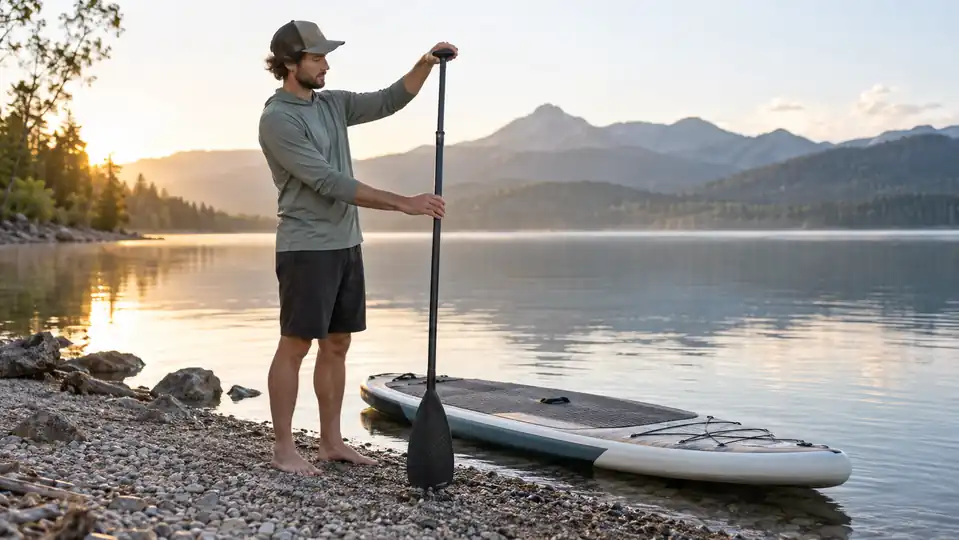
For a first setup, make a recreational SUP paddle about 6–10 in (15–25 cm) taller than the paddler. Then adjust for discipline, board height, stance and technique. Surf paddlers often go shorter; distance and race paddlers may go longer. The correct length is the one that lets you bury the blade cleanly, keep the shaft path efficient and maintain relaxed shoulders at your real pace.
This SUP Paddle Length Guide gives you a height chart, a practical formula and an on-water test. It also explains when a length problem is actually caused by blade area, shaft stiffness or technique.
SUP paddle length quick chart
Use this table as a starting point for general flat-water paddling. Measurements are overall paddle length from the blade tip to the top of the grip.
| Paddler height | Start around | Practical test range |
|---|---|---|
| 5 ft 0 in / 152 cm | 5 ft 8 in / 173 cm | 5 ft 6 in–5 ft 10 in / 168–178 cm |
| 5 ft 4 in / 163 cm | 6 ft 0 in / 183 cm | 5 ft 10 in–6 ft 2 in / 178–188 cm |
| 5 ft 8 in / 173 cm | 6 ft 4 in / 193 cm | 6 ft 2 in–6 ft 6 in / 188–198 cm |
| 6 ft 0 in / 183 cm | 6 ft 8 in / 203 cm | 6 ft 6 in–6 ft 10 in / 198–208 cm |
| 6 ft 4 in / 193 cm | 7 ft 0 in / 213 cm | 6 ft 10 in–7 ft 2 in / 208–218 cm |
A chart cannot account for every board and paddler. Start near the middle, then change in small increments. If two settings both work, choose according to the discipline and which one preserves better posture over the full session.
The basic SUP paddle length formula
A simple formula is:
Overall paddle length = paddler height + discipline allowance
| Use | Starting allowance above height | Why |
|---|---|---|
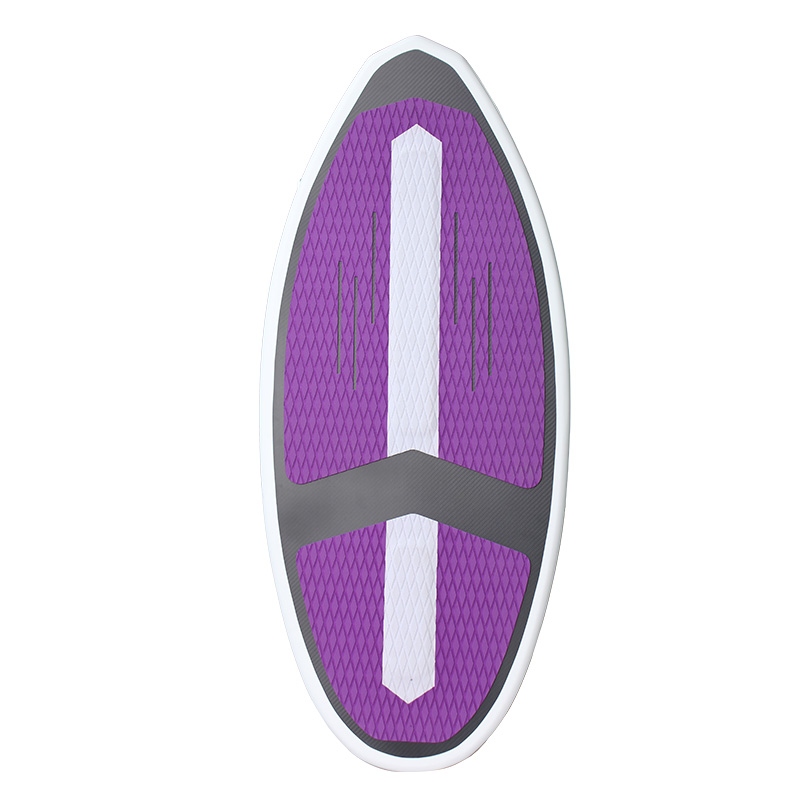
| Surf SUP | 0–6 in / 0–15 cm | Lower stance, fast side changes and maneuverability |
| General recreation | 6–10 in / 15–25 cm | Balanced reach and comfort |
| Touring / distance | 8–12 in / 20–30 cm | Supports reach and a more upright repeated stroke |
| Race | Technique-specific; often 6–12 in / 15–30 cm | Board, cadence, blade and athlete mechanics strongly affect the result |
| Whitewater / technical river | 0–8 in / 0–20 cm | Lower stance and rapid maneuvering may favor shorter settings |
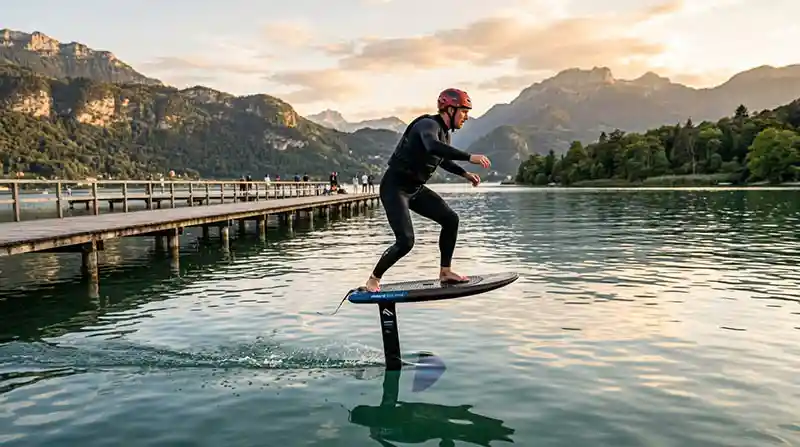
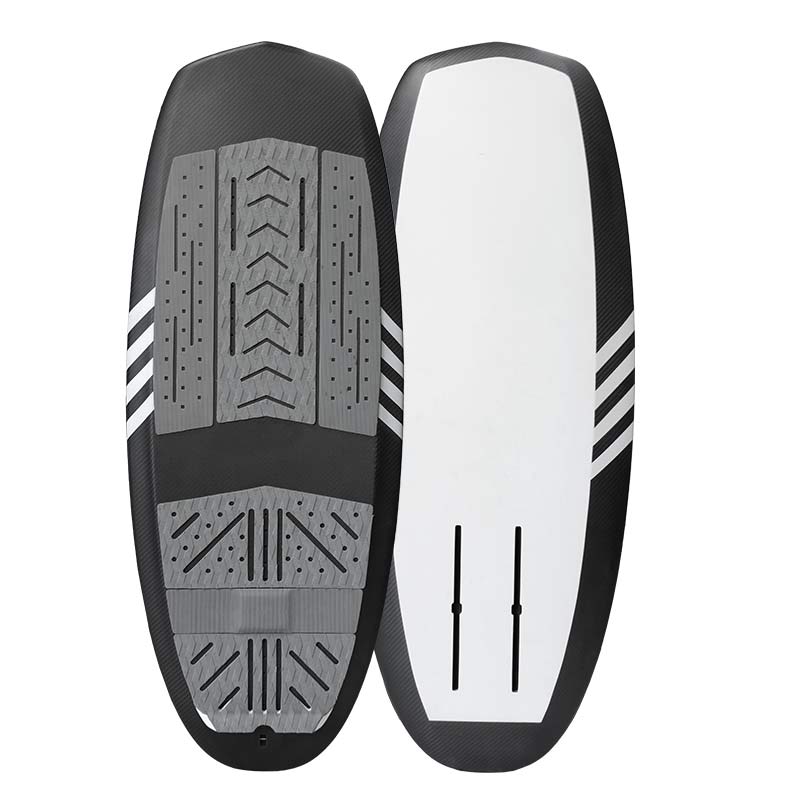
| SUP foil / downwind | Technique- and board-specific | Stance height, takeoff strokes and foil-board geometry vary |
These bands summarize common fitting practice, not a universal standard. Always check how a brand measures its paddle and whether its recommendation assumes barefoot flat water, a thick inflatable board or a particular blade family.
Measure overall length—not just the shaft
Length claims become confusing when one supplier lists the complete paddle while another refers to a shaft or component. For a useful comparison:
- Assemble the paddle in its normal operating configuration.
- Place the blade tip on a flat surface without forcing or bending it.
- Measure in a straight line to the highest point of the installed grip.
- Record whether the number is overall length, adjustment marking or exposed shaft length.
Blade length and grip insertion depth matter when converting a tested complete paddle into a cut-shaft specification. Do not assume that cutting a shaft to the desired overall length will produce the correct finished paddle.
Six factors that change the answer
1. Board deck height above the water
A paddler standing on a thick inflatable board starts higher above the water than the same paddler on a low-deck race board. A higher standing position can justify more paddle length, but the difference should be tested rather than copied blindly from board thickness.
2. Discipline and stance
Surf and whitewater paddlers use lower, more dynamic stances. Touring paddlers spend longer upright. Racers may change length to match board width, cadence and stroke mechanics.
3. Arm length and torso proportions
Two people of equal height can have different reach. The height formula is a starting proxy; comfortable shoulder position and full blade immersion are better final checks.
4. Blade length and area
A longer blade changes the relationship between shaft length, catch depth and total paddle length. A larger blade also creates more load, which can make an overly long lever harder to control. Review blade choice separately instead of fixing every issue with length.
5. Shaft flex
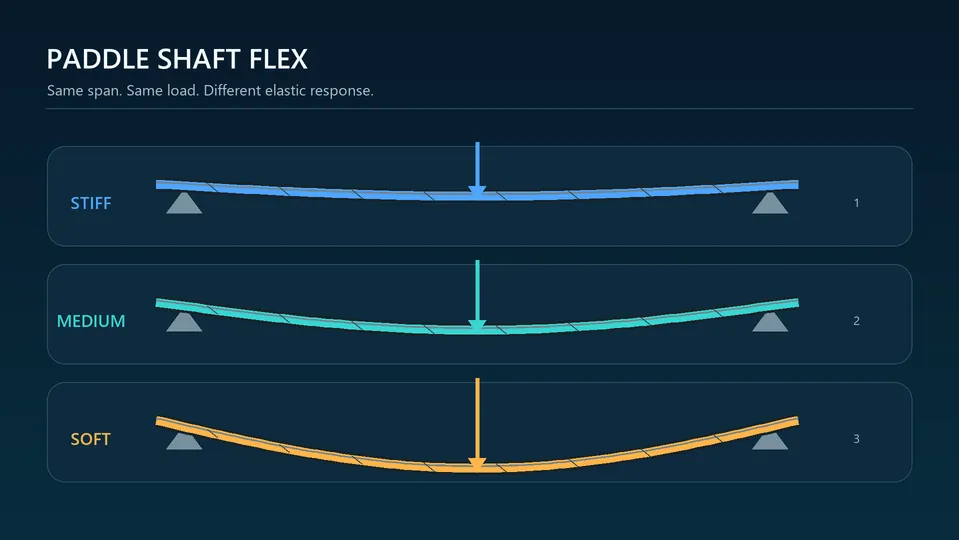
Length changes leverage, while flex changes how quickly load reaches the paddler. A long, stiff paddle with a large blade can feel demanding even when each component appears reasonable alone. See Unity Sports’ paddle shaft flex guide for the separate stiffness decision.
6. Footwear and posture
Boots, deck pads and stance alter effective reach slightly. More importantly, fatigue can cause crouching or shoulder elevation. Set length for the posture you can sustain, not an exaggerated shore-side reach.
What correct SUP paddle length looks like on the water
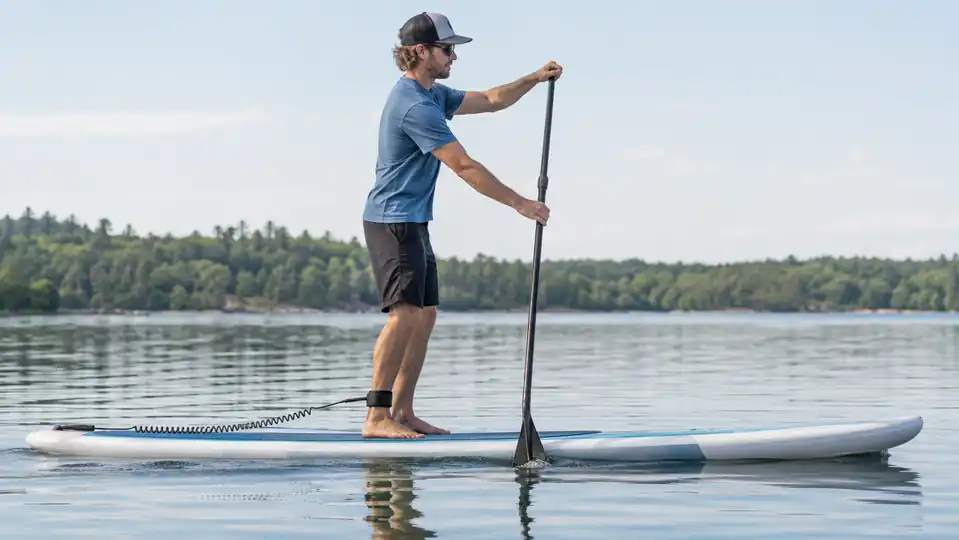
A workable length should let you:
- place the full blade in the water without excessive waist bending;
- keep the top shoulder controlled rather than shrugged toward the ear;
- stack the hands and shaft appropriately for your stroke style;
- keep the paddle close enough to the rail for directional control;
- exit cleanly without lifting the top hand unnecessarily;
- repeat the movement at your target cadence without losing posture.
No single still image proves a perfect fit. Video several strokes from the side and front, then compare posture, blade immersion, shaft angle and board tracking at adjacent settings.
Surf, touring and racing need different setups
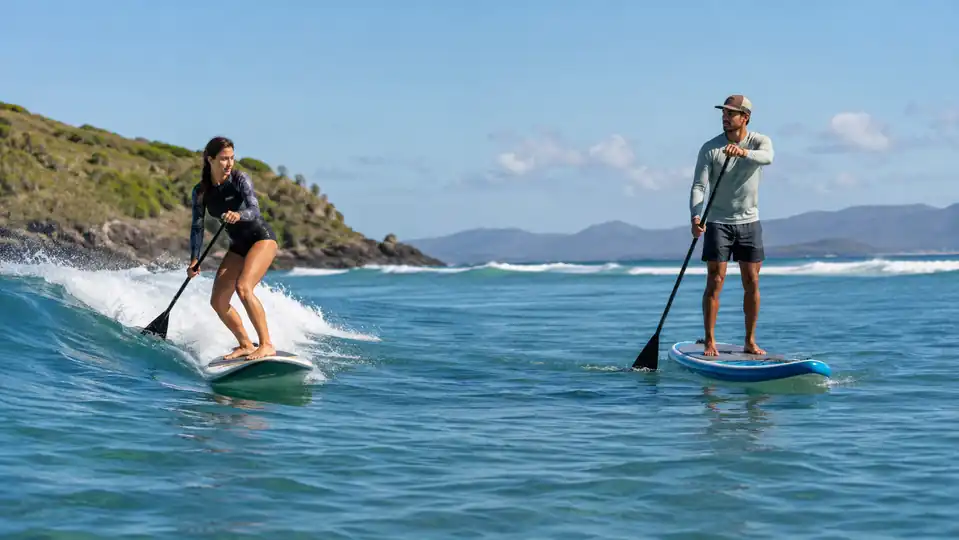
Surf SUP
A shorter paddle supports a lower stance, quick side changes and compact strokes near the wave. Too short, however, can force repeated bending during the paddle-out.
Touring and recreation
Start near height plus 6–10 inches. Prioritize comfort, full immersion and a clean exit over maximum reach. Loaded boards or thick inflatables may need a slightly different setting.
Race SUP
Race length is a system choice. Board width, stance, cadence, blade area and athlete technique matter. Copying an elite paddler’s number without matching the rest of the system is unlikely to help.
Whitewater and SUP foil
Both are equipment- and technique-specific. River paddlers need rapid corrections in a dynamic stance. Foil paddlers may prioritize acceleration and board clearance. Use an adjustable test paddle before committing to a fixed carbon shaft.
Signs your SUP paddle is too long
- The top shoulder repeatedly lifts or feels compressed.
- The grip hand travels unnecessarily high during the power phase.
- The paddle feels slow to switch sides or awkward in surf.
- The blade path drifts away from the board because the lever is hard to stack.
- You can generate leverage for a few strokes but lose cadence and posture over time.
These symptoms can also come from a blade that is too large, a shaft that is too stiff or technique that relies on the arms. Reduce length by a small step and retest with the same paddle before drawing a conclusion.
Signs your SUP paddle is too short
- You bend excessively at the waist just to bury the blade.
- The blade only becomes fully immersed late in the catch.
- Your lower back tires during steady flat-water paddling.
- The stroke becomes very short even when a longer reach is appropriate.
- You feel comfortable in a surf stance but cramped when touring upright.
Do not lengthen automatically if the blade is ventilating or fluttering. Check blade orientation, immersion timing and shaft path first.
How to tune an adjustable SUP paddle
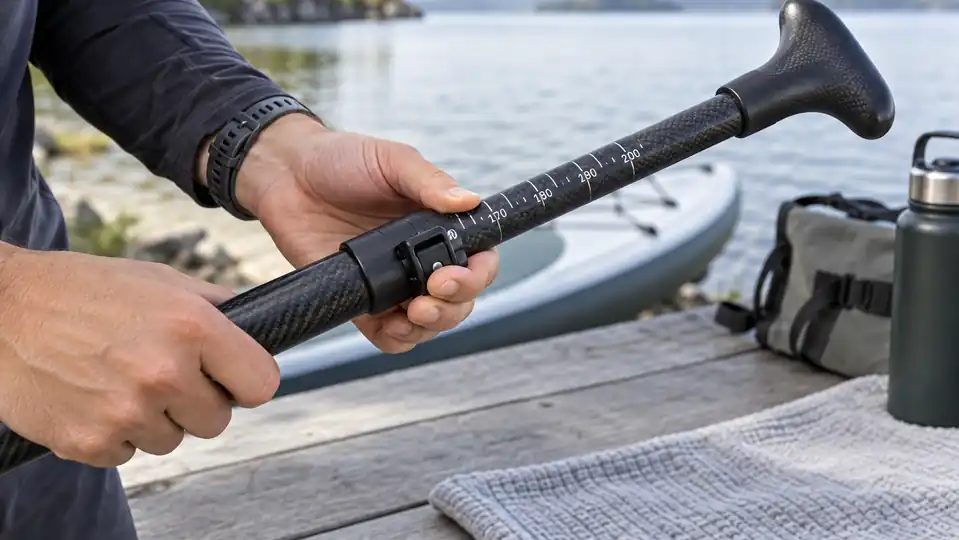
- Set the paddle to your height plus about 8 inches for general flat water.
- Warm up for at least 10 minutes before judging the setting.
- Paddle a repeatable section at easy and working pace.
- Change the length by about 1 inch / 2–3 cm.
- Repeat the same section and note cadence, tracking, shoulder position, immersion and perceived effort.
- Test turns, starts or small waves if they are part of your real use.
- Record the adjustment mark, overall measured length and conditions.
Keep blade, shaft, board and route unchanged during the comparison. A single fast effort is not enough; the winning setting should remain comfortable across the intended session duration.
Cutting a fixed-length carbon SUP paddle
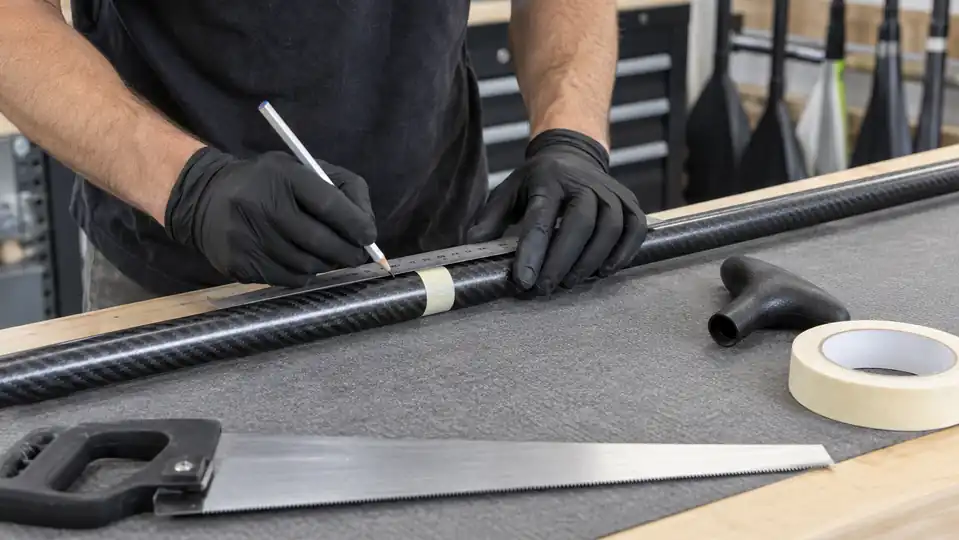
A fixed paddle can reduce weight and moving parts, but cutting is irreversible. Follow the paddle manufacturer’s instructions. A safe planning sequence is:
- Prove the intended overall length with an adjustable or temporarily fitted setup.
- Measure blade-to-shaft and grip insertion dimensions.
- Calculate the shaft cut length from the desired finished overall length.
- Dry-fit the grip and measure the complete paddle again.
- Confirm grip orientation, blade-face orientation and any offset.
- Use the specified cutting and bonding method, personal protection and cure time.
- Recheck alignment and finished length before use.
If the brand permits reversible hot-melt fitting, it can make later adjustment easier; not every handle, resin system or operating temperature is suitable. Follow the product-specific instruction rather than assuming one adhesive method fits every paddle.
Adjustable vs fixed-length SUP paddles
| Feature | Adjustable | Fixed length |
|---|---|---|
| Best for | Shared use, travel, learning and testing | Validated personal setup and performance use |
| Fit range | Multiple paddlers and disciplines | One chosen length |
| Weight / swing feel | Usually more hardware and overlap | Potentially lighter and cleaner |
| Maintenance | Clamp, pins and overlap need inspection and rinsing | Fewer moving parts; bonded grip still needs inspection |
| Main risk | Slippage, wear or poor clamp setup | Incorrect irreversible cut |
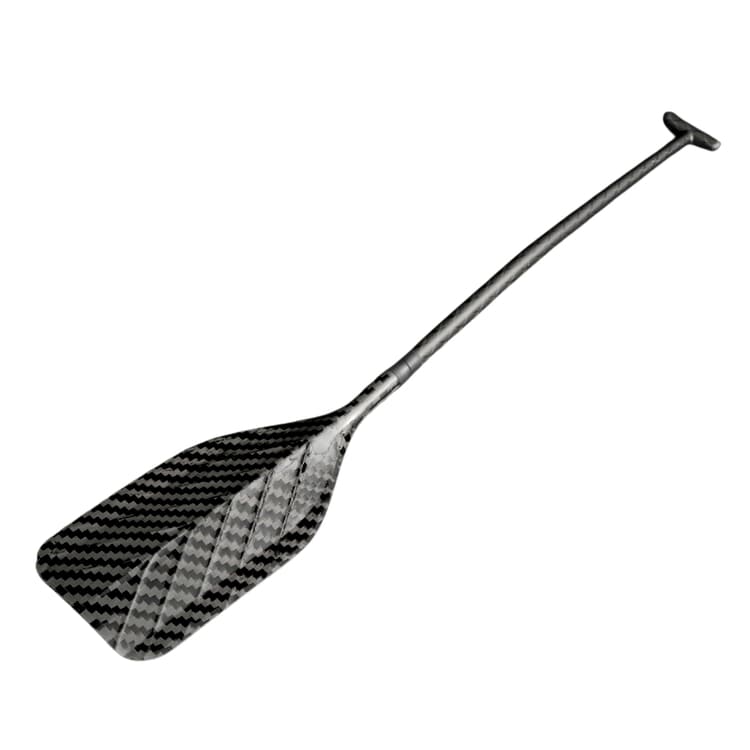
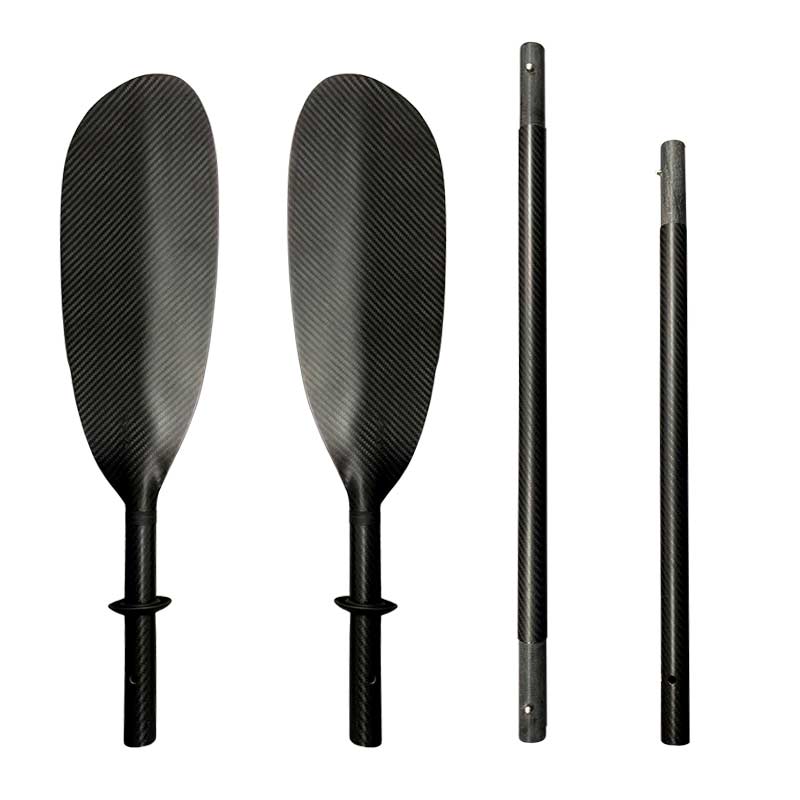
Unity Sports offers stand-up paddle manufacturing options and products such as an adjustable SUP paddle and one-piece carbon SUP paddle. Choose the architecture after the target users and length range are defined.
OEM specification checklist for SUP paddle length
“Fits adults” is not a production specification. Buyers should define:
- overall minimum and maximum length, with the exact measurement method;
- adjustment increment and usable overlap at maximum extension;
- target user height range and intended disciplines;
- shaft outside diameter, wall/layup concept and flex target;
- blade length, grip insertion depth and finished-length calculation;
- clamp or pin mechanism, operating force and anti-twist requirement;
- length-mark durability and numbering convention;
- slip, pull-out, torsion, fatigue, corrosion and rinse/contamination test plan;
- finished-length tolerance and inspection gauge;
- approved golden sample and engineering change control.
For custom projects, review Unity Sports’ broader paddle manufacturing capabilities or send the target user range and specification. Performance and tolerance claims should be confirmed in the approved drawing, sample and validation plan.
What the leading guides agree on
Leading guides agree that paddler height is only the starting point. Black Project discusses discipline, symptoms and fitting; Starboard combines length with blade size and shaft stiffness; Canoe Centre provides a fast reference chart; Paddle Round the Pier covers measurement, adjustment and common mistakes.
Compare the original resources from Black Project, Starboard, Starboard Shop, Canoe Centre and Paddle Round the Pier. Brand-specific numbers should be interpreted within that brand’s blade and shaft system.
SUP Paddle Length Guide FAQ
How long should my SUP paddle be?
For recreational flat water, start about 6–10 inches (15–25 cm) above your height. Then adjust for the board, discipline, posture and on-water stroke.
Should a SUP surf paddle be shorter?
Often yes. A lower stance, maneuvering and quick side changes commonly favor a shorter paddle than upright touring, but the blade must still immerse cleanly.
Does an inflatable SUP need a longer paddle?
Sometimes. A thick inflatable board can place the paddler higher above the water. Test a slightly longer setting instead of adding the full board-thickness difference automatically.
Can two people share one adjustable SUP paddle?
Yes, if its usable range, clamp strength and overlap suit both users. Record each person’s setting and inspect the mechanism regularly.
Can I shorten a carbon paddle myself?
Only if the manufacturer permits it and you follow its cutting, protection, alignment and bonding instructions. Confirm the finished-length calculation before cutting.
Is shoulder pain proof that the paddle is too long?
No. Length, blade area, shaft stiffness, training load and technique can all contribute. Persistent or sharp pain should be assessed by an appropriate health professional.
Final setup rule
Use this SUP Paddle Length Guide to choose a safe starting range, then let the complete stroke decide. The best setting supports full blade immersion, efficient tracking, relaxed shoulders and repeatable technique in the conditions you actually paddle.