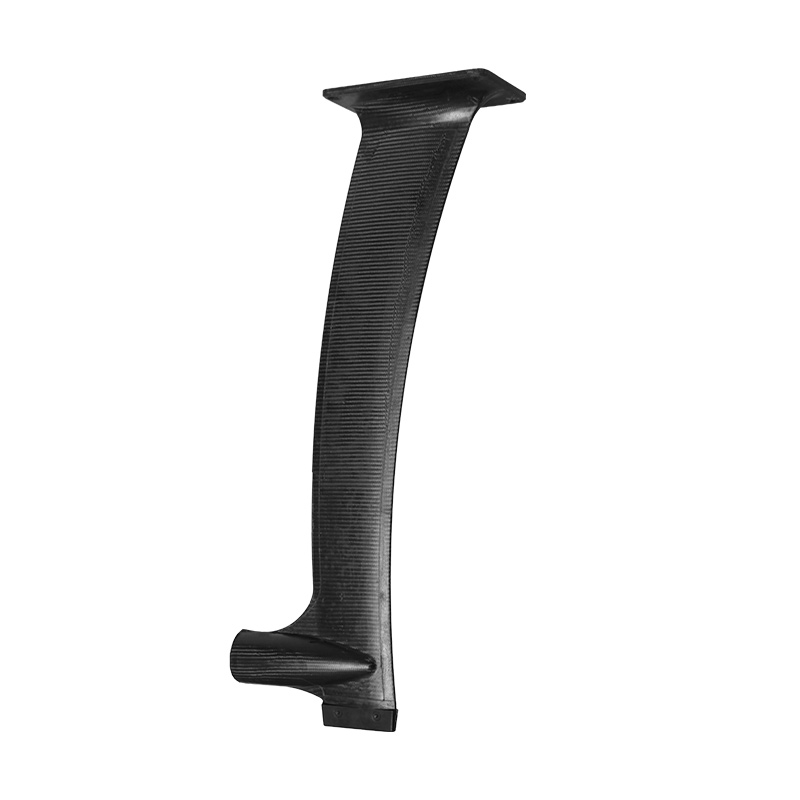
Pump foil wing size cannot be selected by rider weight or square centimeters alone. Use weight and skill to identify a starting range inside one manufacturer’s product family, then check span, aspect ratio, section, launch speed, tail, fuselage and board. A 1,700 cm² wing from one brand is not automatically equivalent to a 1,700 cm² wing from another.
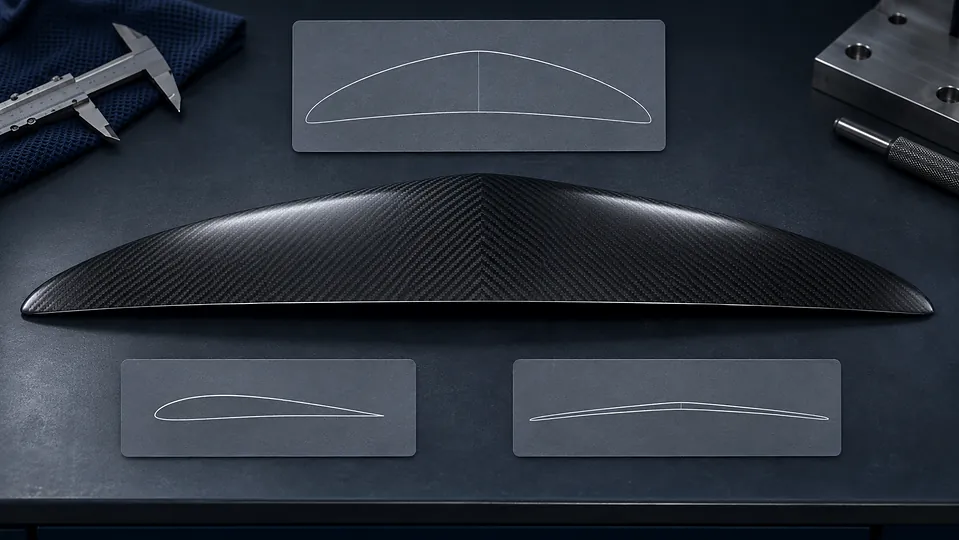
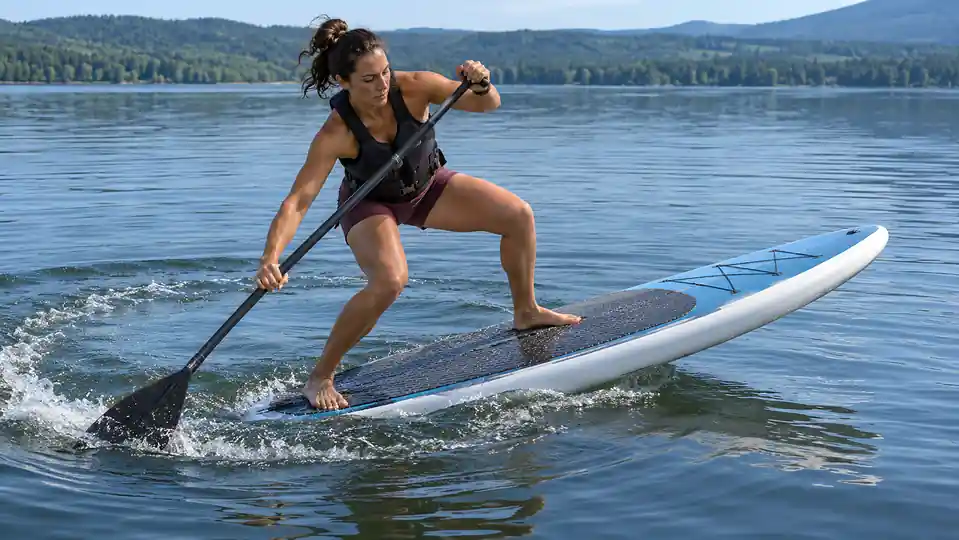
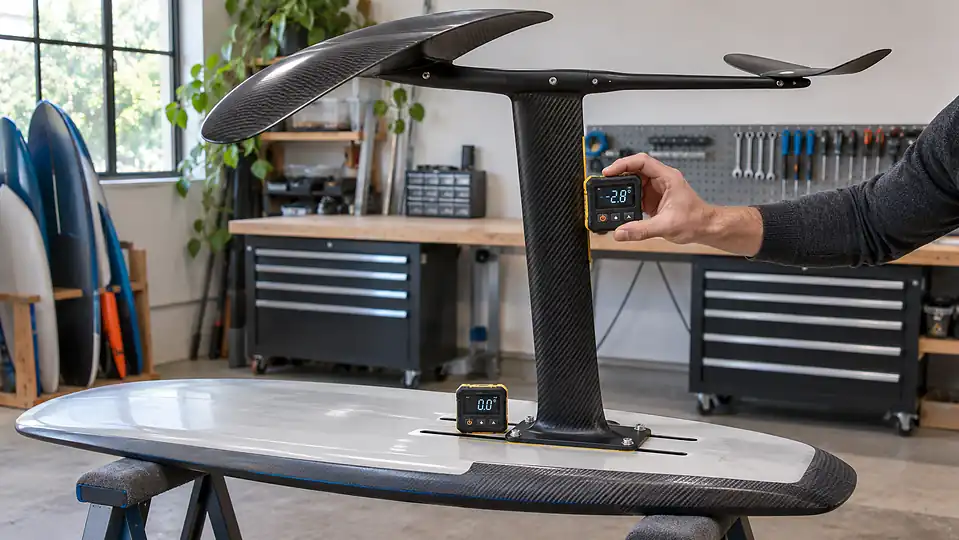
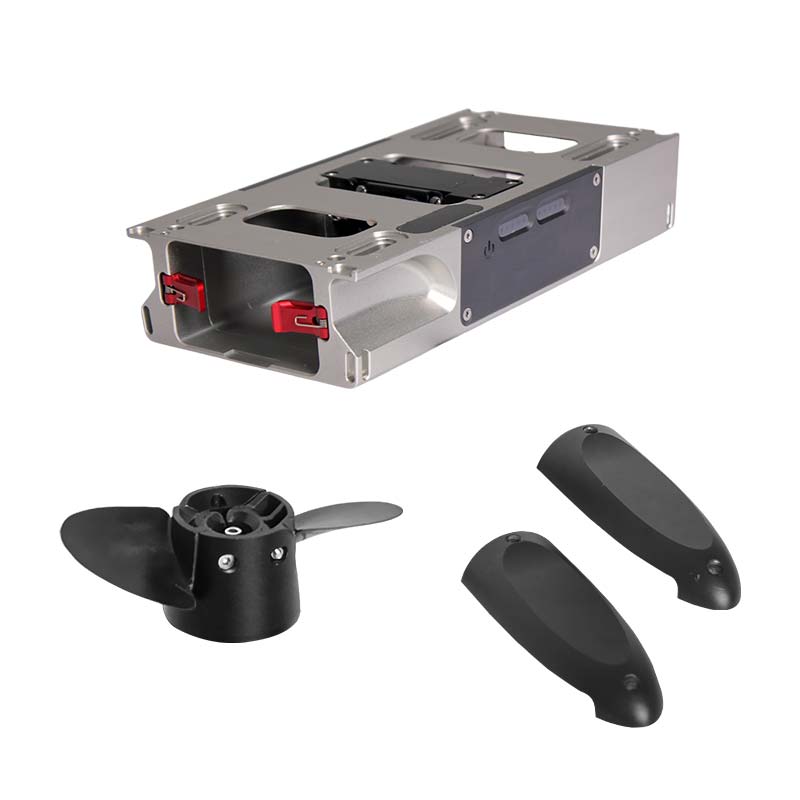
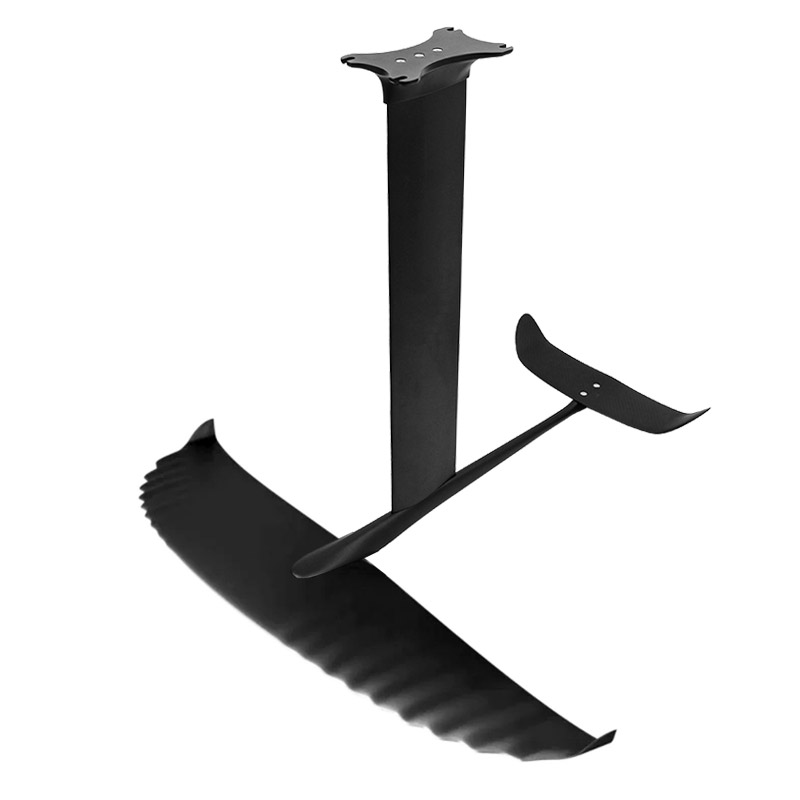
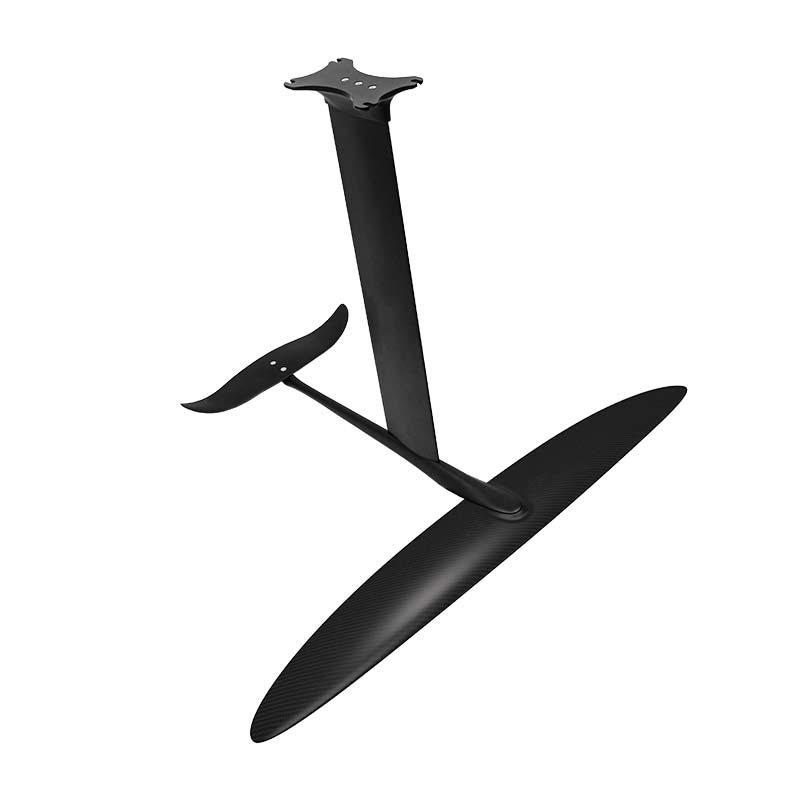
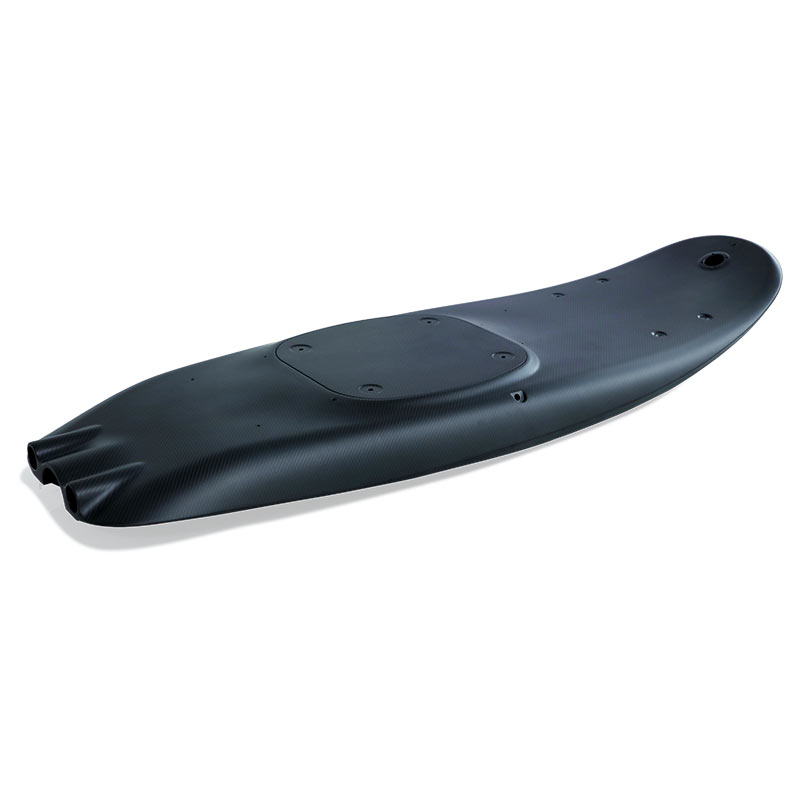
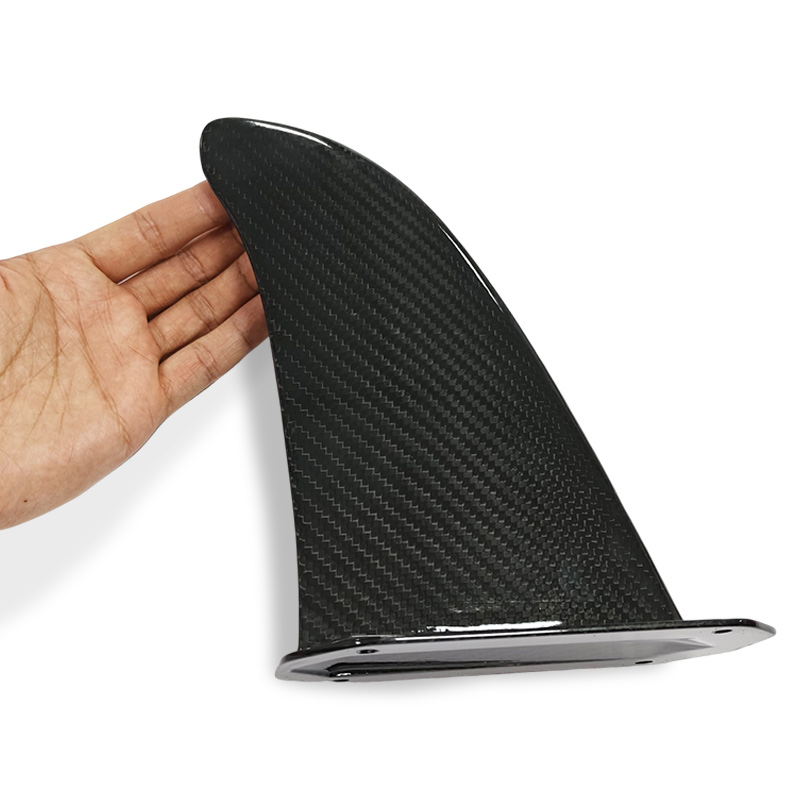
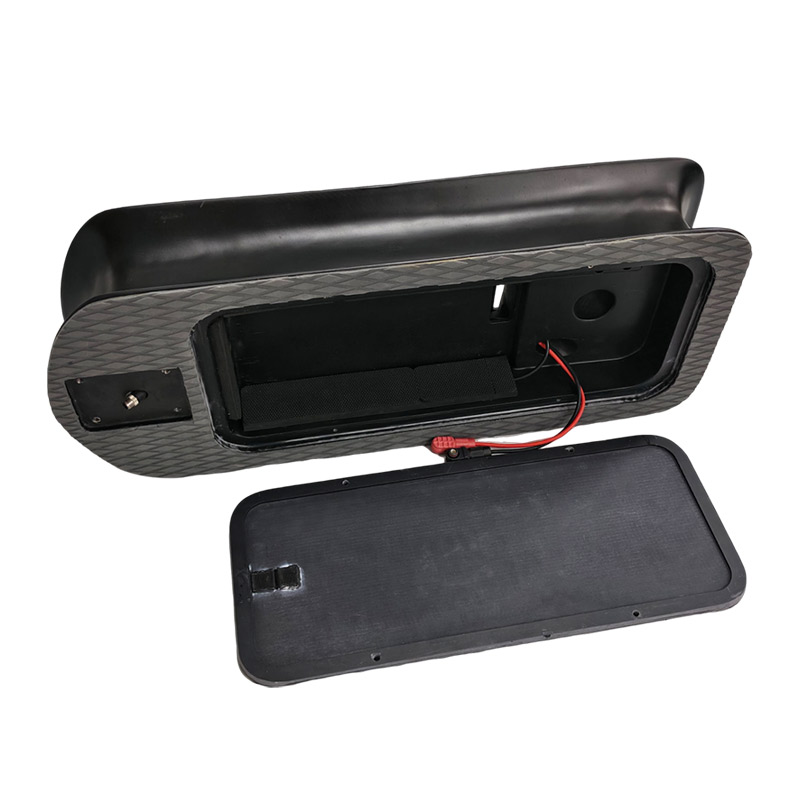
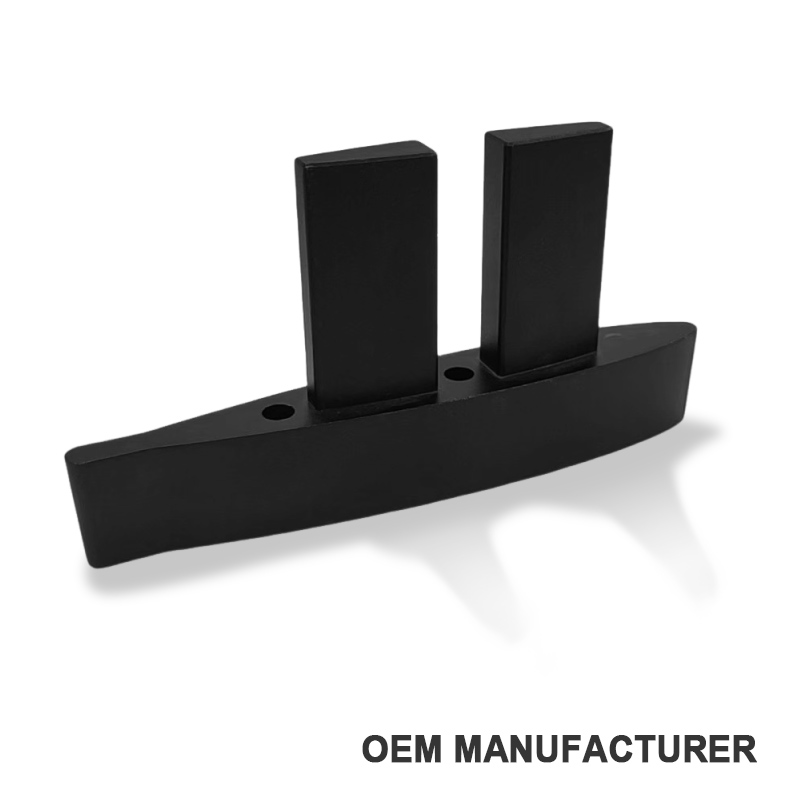
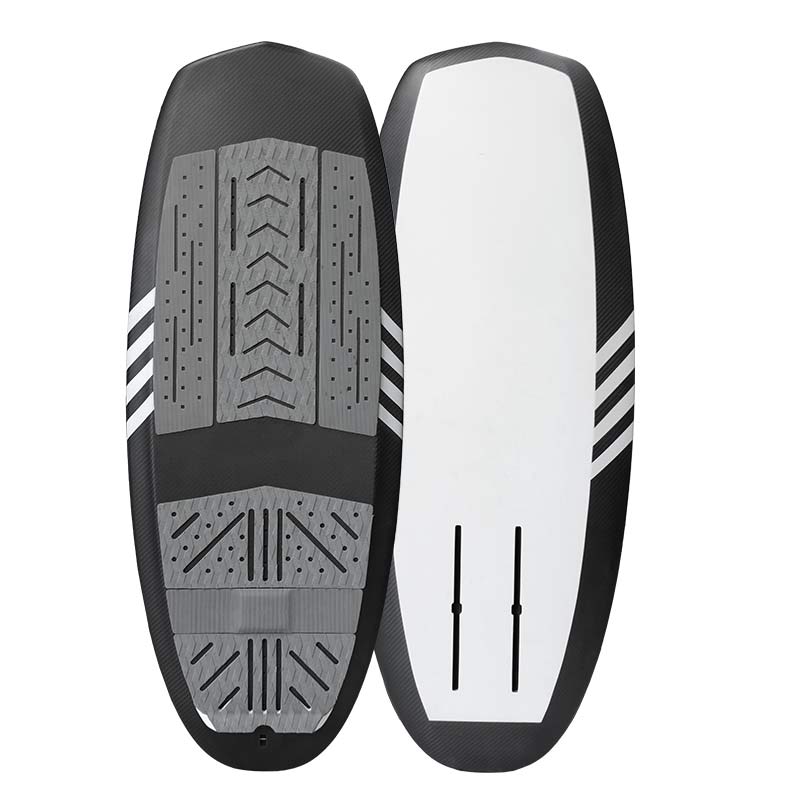
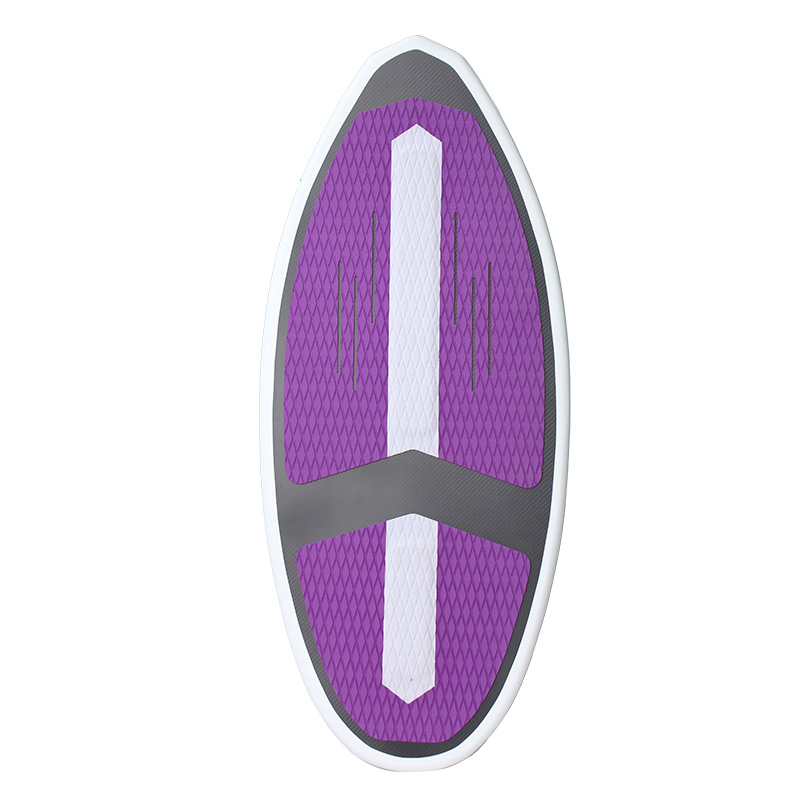
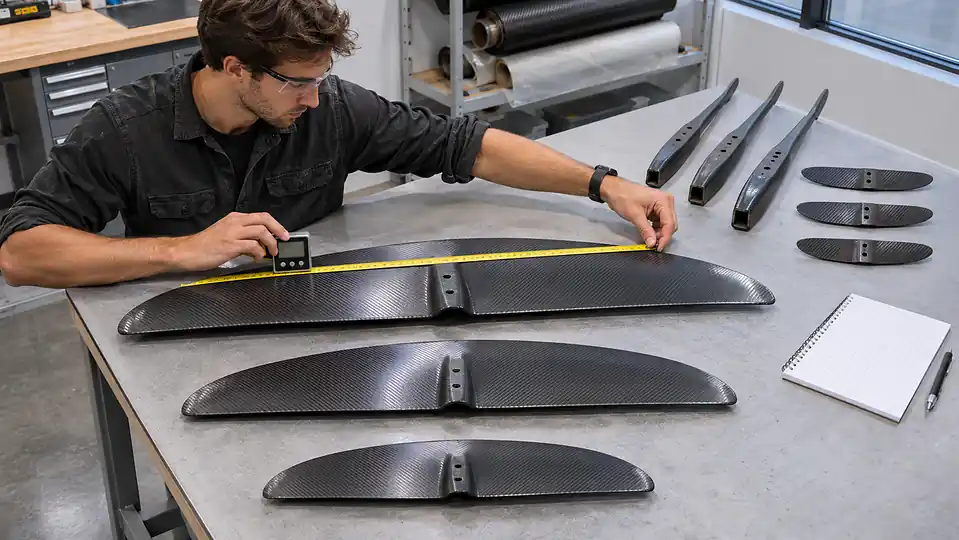
This guide addresses a buying and system-matching question that is different from our technique articles on hydrofoil pumping and pumping for longer. Manufacturer examples were checked on November 18, 2026 and apply only to the named product families. The images are generated concept photographs and engineering visuals, not Unity Sports test data.
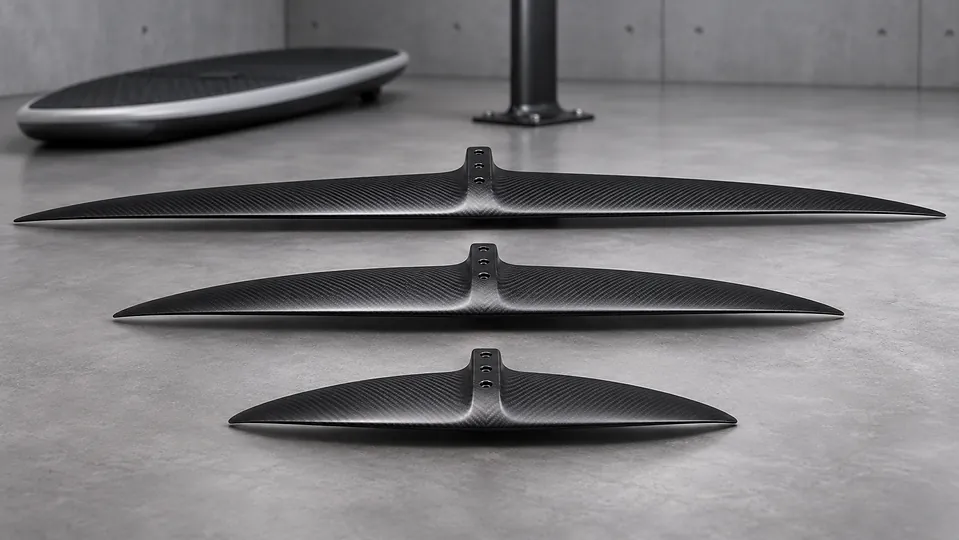
The quick pump foil wing size decision
| Your main constraint | Start by testing | Why | Do not ignore |
|---|---|---|---|
| First dock starts with limited entry speed | The more lift-oriented, forgiving option approved for your weight in the same brand family | Lower-speed support gives more time to stabilize | Span clearance, pitch control and dock geometry |
| Experienced foiler learning to pump | A moderate step below the brand’s absolute beginner option | Existing pitch and roll control may tolerate a faster wing | Dockstart skill is still a separate task |
| Longest possible glide | The brand’s distance-oriented wing and matched tail | Span and efficient section can preserve energy between pumps | Turning radius, breach recovery and structural loads |
| Higher speed and tighter turns | A smaller or performance-oriented option after consistent starts | Less area and drag can support speed and agility | Higher takeoff speed and smaller low-speed margin |
| One setup for several riders | A documented middle option plus an adjacent size | A controlled range is easier to validate than one universal wing | Heaviest rider, lightest rider and approved component combinations |
These are test directions, not universal size prescriptions. The correct starting point must come from the current maker’s chart for the actual wing family.
Why published pump foil wing size charts disagree
Current manufacturer guidance demonstrates the problem clearly. Takoon’s Pump front-wing family lists 1,500, 1,700 and 1,900 cm² options and maps them to rider-weight bands. Duotone states that beginners can benefit from areas over 2,000 cm², while advanced pump foilers may start around 1,750 cm². AXIS recommends model sizes PNG V2 1200 to 1400 for its pump and dock-start packages and combines them with a specific 600 mm fuselage, 75 cm mast and rear-wing choice.
| Source and product family | Published direction | What the number means | Safe interpretation |
|---|---|---|---|
| Takoon Foil Pump | 1,500 cm² below 60 kg; 1,500/1,700 at 60–75 kg; 1,700 at 75–85 kg; 1,900 at 85 kg and above | Actual area within one named family; the page also publishes span, chord and aspect ratio | Useful for selecting among those Takoon wings, not as a universal industry chart |
| Duotone Pump Foil | Over 2,000 cm² for beginners; about 1,750 cm² for advanced pump foilers | A skill-based direction across Duotone’s suitable pump range | Shows why experience can shift the starting area, but it does not convert another brand’s wing |
| AXIS PNG V2 package | PNG V2 1200–1400 recommended for dock start and pump; 1300 described as a common choice | Model-family size names supplied as part of a complete package | Do not assume every model number from every brand is a standardized square-centimeter area |
The charts do not prove that one brand is right and another is wrong. They describe different designs, ranges, skill assumptions and complete systems. The useful comparison is within each compatible family first.
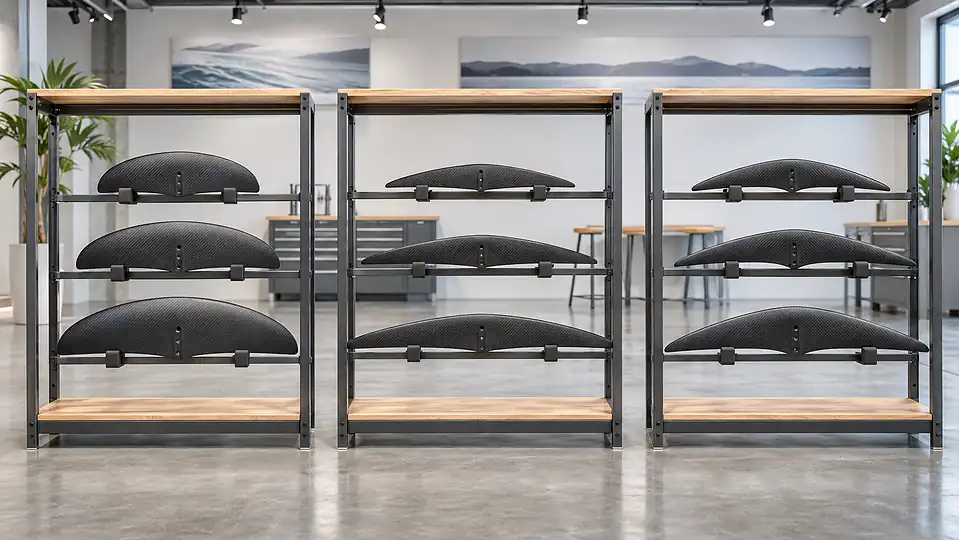
Area matters, but it does not describe the whole wing
The basic lift relationship includes fluid density, velocity squared, reference area and lift coefficient. NASA’s educational lift and drag reference presents this relationship for aerodynamics. The same broad fluid-dynamic variables help explain why a hydrofoil needs relative water speed and why area alone cannot predict lift: the lift coefficient incorporates shape and angle effects, while drag has its own coefficient. This is a conceptual explanation, not a direct performance calculator for a commercial pump wing.
Projected area
More area can increase low-speed load-carrying potential within a comparable design, but it can also add wetted surface and drag. The phrase “comparable design” matters. Increasing area while changing span, chord, section and thickness produces a different wing, not a scaled copy.
Span and aspect ratio
A longer span can improve glide efficiency, but it also changes roll response, turning clearance, bending load and how a wing behaves near a tip breach. Our high-aspect versus low-aspect hydrofoil guide explains why aspect ratio should be read with area and intended use rather than used as a quality score.
Section, thickness and stall behavior
Two equal-area wings can need different speeds because their foil sections, thickness distributions, camber and operating lift coefficients differ. A lift-oriented profile can be easier at the start but may not deliver the speed or low drag desired by an advanced distance rider.
Stiffness, surface finish and connection
Pumping loads cycle through the wing, connection, fuselage, mast, baseplate and board. Deflection, looseness or surface damage can change feedback and waste input. A larger carbon outline is not automatically better if the structure and interfaces do not hold the intended geometry under load.
Rider weight sets load—not the entire answer
Use total system load where practical: rider, wetsuit, protective equipment and board all contribute. A heavier load generally needs more lift at the same speed and lift coefficient, but the rider can also change entry speed, angle of attack and pumping input. That is why a body-weight table is a starting filter rather than a complete selection method.
Skill changes the usable range in three ways:
- an experienced rider may enter faster and place the feet more accurately;
- better pitch control can operate closer to stall without an abrupt correction;
- efficient unweighting can preserve speed between pump cycles instead of demanding lift from area alone.
A first-time foiler and an experienced wing foiler of the same weight should not automatically receive the same recommendation. The experienced rider still has to learn the launch, but already understands flight height, roll and pitch.
Launch method changes what “easy” means
Running dockstart
A clean run can create meaningful entry speed, so a skilled rider may use a faster wing. However, the dock must provide enough room, correct height and a clear foil path. Poor foot placement during a dockstart launch can make a suitable wing look too small because the rider stalls it on landing.
Dead start or low-speed assisted start
Lower initial speed places more demand on low-speed lift, timing and stability. A larger or more lift-oriented option in the approved system can provide margin, but span clearance and pitch sensitivity still matter.
Beach or rock start
Water depth, bottom clearance, entry angle and safe escape route can matter more than the area difference between two adjacent wings. Do not use a longer span or deeper mast where the launch zone cannot safely clear the foil.
Flatwater paddle-up
The board and paddle contribute to acceleration, so the complete takeoff system is different from a tiny dockstart board. Use the dedicated flatwater paddle-up guide instead of assuming the same wing choice will behave identically.

A seven-step selection process that survives brand changes
1. Define the primary task
Choose one: first dockstarts, repeatable short laps, long-distance glide, tight turns, speed or a multi-rider school setup. “Best pump wing” is not a testable task.
2. Record the real load and experience
Write down ready-to-ride weight, foiling background, successful launch methods and current pumping duration. Do not label someone “intermediate” without describing what they can consistently do.
3. Select a compatible manufacturer family
Confirm front wing, fuselage, stabilizer, mast, fasteners and board interface compatibility. Avoid assembling a recommendation from unrelated charts merely because the numbers look similar.
4. Use the maker’s current chart
Choose the starting band for that exact model generation. Save the chart date because ranges, names and compatible parts can change.
5. Compare complete geometry
Record actual area, span, aspect ratio, section purpose, published weight range and intended skill. If a value is not published, treat it as unknown rather than estimating it from a model name.
6. Choose the matched tail and fuselage
A supportive tail and longer fuselage can improve early pitch stability; a smaller tail or shorter fuselage can reduce drag or quicken response but demand more control. Read the separate guides to stabilizer size and fuselage length before attributing the whole ride to the front wing.
7. Validate one adjacent size at a time
Borrow, demo or prototype the recommended baseline and one adjacent size when possible. Keep the tail, fuselage, mast, board, track position and launch method constant. Record outcomes across several comparable attempts instead of choosing from one unusually good run.
How to recognize a mismatched pump foil wing size
| Repeated observation | Wing-size hypothesis | Check before changing size |
|---|---|---|
| Wing will not support controlled flight at realistic entry speed | Current option may be too small or too performance-oriented | Foot placement, mast tilt, loose parts, tail setup and actual entry speed |
| Wing lifts abruptly and repeatedly breaches | Current option may be too lift-oriented for the input | Rearward stance, excessive angle of attack, mast rake and first-pump timing |
| Starts are easy but cadence feels slow and turns resist roll | A smaller or more performance-oriented adjacent wing may suit progression | Whether stability and distance are still the main goals |
| Wing is fast but every small speed loss ends the run | Low-speed margin may be too small | Pumping technique, tail drag, flight height and surface condition |
| One rider succeeds and another cannot start | The shared size may not cover both loads and skills | Use the same controlled launch and document ready-to-ride weight |
A symptom is evidence for a test, not proof of a cause. Review pump foil technique errors before buying a larger wing to solve a late front foot, tilted mast or ineffective unweighting.
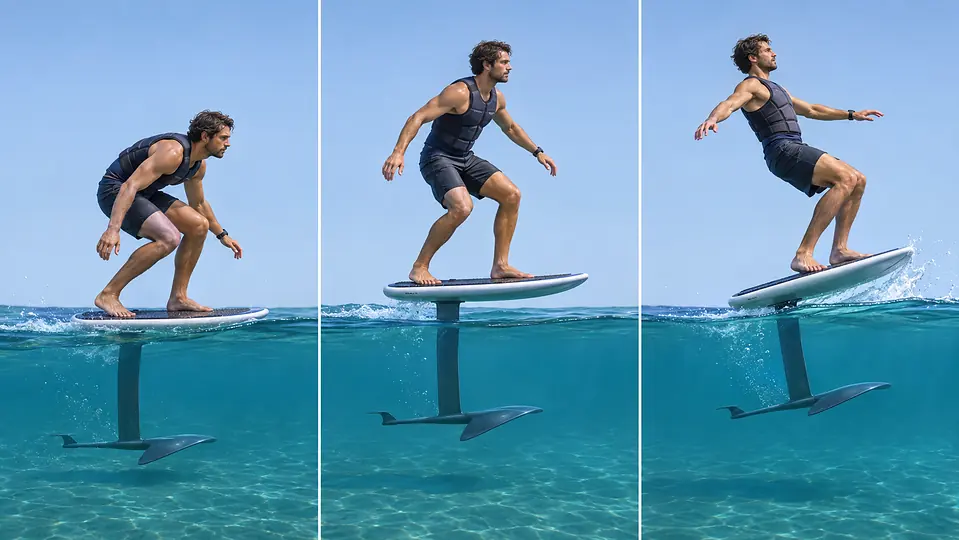
The rest of the system can reverse the impression
A front wing does not pump alone. Consider these interactions:
- Stabilizer: tail area, span, section and shim influence pitch support and drag.
- Fuselage: length changes the lever arm and the rate of pitch response.
- Mast: length, chord and stiffness influence drag, clearance and energy transfer. The existing pump foiling mast guide covers this decision separately.
- Mast rake and track position: these change board attitude and stance balance without changing the front wing.
- Board: weight, stiffness, outline and swing inertia affect how directly the rider’s movement reaches the foil. See Unity Sports’ foil board manufacturing page.
- Connection quality: play or flex can blur feedback and introduce cyclic loads.
When comparing two front wings, preserve these variables wherever possible. Otherwise the test answers “Which complete setup felt better?” rather than “Which front-wing size was better?”
What an OEM pump-wing brief should specify
A useful development brief contains more than three area labels. For each intended size, define:
- rider mass and skill ranges as test hypotheses;
- primary launch method and realistic entry-speed range;
- target area, span, aspect ratio, chord distribution and section family;
- matched fuselage, stabilizer, mast and board;
- connection geometry, fastener requirements and approved compatibility;
- stiffness and strength targets with load cases;
- prototype identifiers and manufacturing tolerances;
- test protocol for takeoff repeatability, glide, cadence, turns and breach recovery;
- conditions, rider, component settings and limitations recorded with every result.
Unity Sports manufactures composite hydrofoil components for brand projects. Final performance claims require the client’s validated geometry, prototypes and controlled on-water testing; they should not be inferred from area or carbon construction alone.
Common questions about pump-wing choice
Is a larger pump foil wing always easier?
No. More lift-oriented area can improve low-speed support within a suitable design, but excessive span, drag, slow roll response or a mismatched tail can make the complete setup harder for the intended task. “Easier” must specify takeoff, straight pumping, turning or recovery.
Can I choose by a cm²-per-kilogram formula?
Use such ratios only as informal comparisons within closely related designs, never as a universal rule. Equal area does not make equal span, section, lift coefficient, drag or stiffness. Current manufacturer charts already disagree because the wings and assumptions differ.
Should a beginner buy the biggest available wing?
Choose the maker’s beginner-appropriate option for the rider and system, not automatically the biggest catalog wing. Very large wings may target distance specialists, heavier riders or a different launch method. Confirm clearance, compatibility and control.
When should I move down a size?
After starts and pumping are repeatable, and only when the smaller option advances a defined goal such as speed, tighter turns or quicker cadence. Test the adjacent size with the rest of the system unchanged.
Choose a system, then prove the size
The best pump foil wing size is the one that meets a defined rider and launch task inside a compatible, validated system. Start with the current manufacturer range, compare geometry rather than labels, preserve the tail and fuselage during tests, and move only one adjacent size at a time. That process explains contradictory charts without inventing a universal table—and it produces better information for both riders and product developers.
For a custom pump-wing or complete hydrofoil development discussion, contact Unity Sports with the rider range, launch method, current component interfaces and target performance priorities.