
Choose a bent-shaft canoe paddle for efficient, repeated forward strokes on mostly flat water. Choose a straight shaft when control strokes, bracing, shallow water, river maneuvering or all-round versatility matter more. Neither design is universally better. Many experienced canoeists carry one of each because the trip—not the marketing label—decides which tool works best.
This Bent vs Straight Shaft Canoe Paddle guide focuses on real use: where you sit, what water you paddle, which strokes you rely on and how long you must sustain them.
Bent Shaft vs Straight Shaft Canoe Paddle: the difference in one stroke
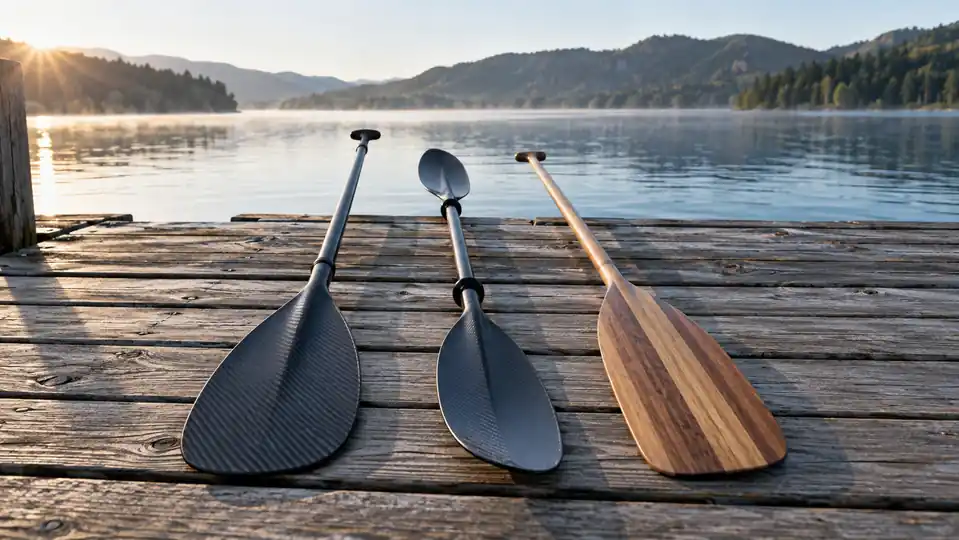
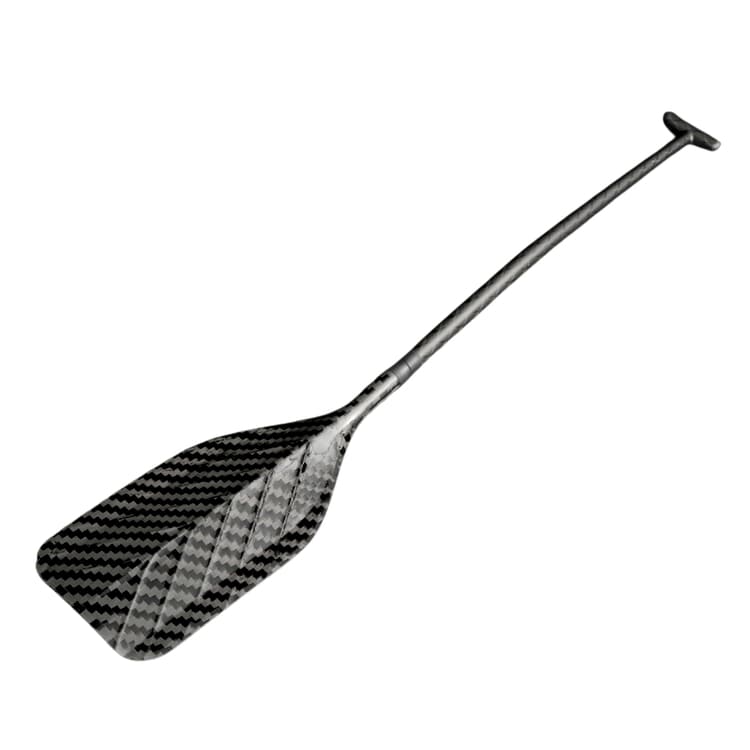
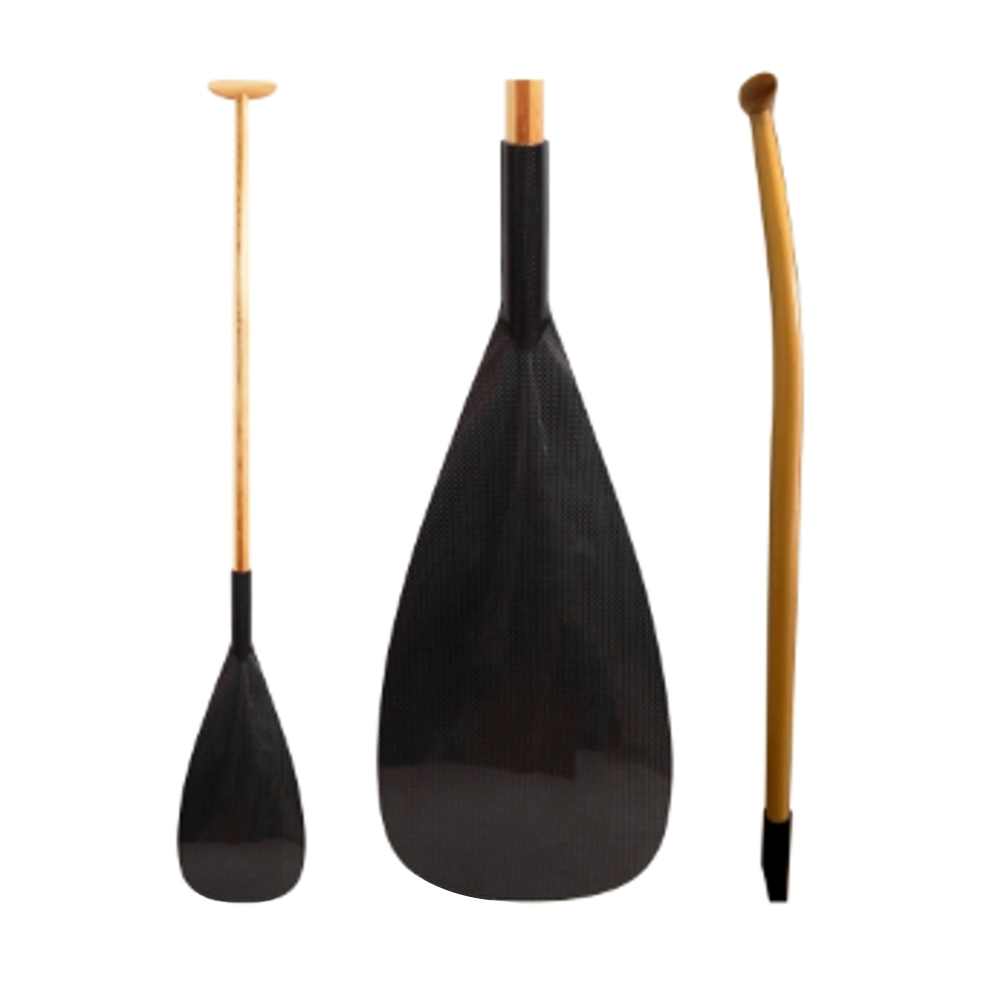
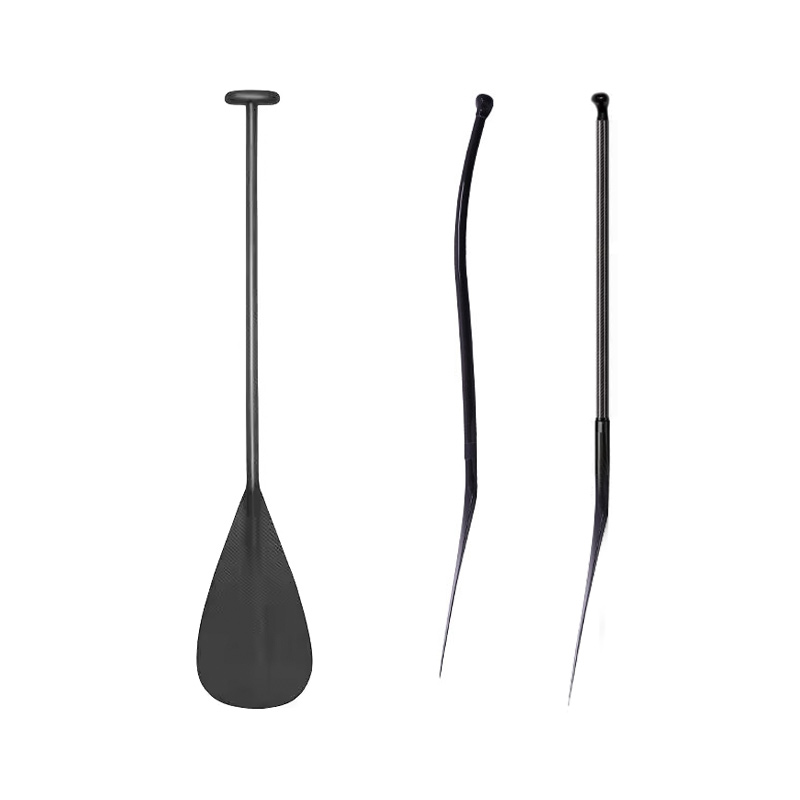
A straight paddle keeps the grip, shaft and blade on one continuous axis. A bent paddle introduces an angle near the blade—commonly around 10–14 degrees in recreational and touring designs—so the blade can remain better aligned during the strongest part of a forward stroke.
That bend changes the blade-to-grip relationship. It does not create free power. It favors a shorter, earlier forward power phase and cleaner exit, while the straight shaft remains intuitive when the blade must rotate, pry, brace, scull or work on either face.
| If your priority is… | Start with… | Reason |
|---|---|---|
| Flat-water distance | Bent shaft | Efficient repeated forward strokes |
| River control and correction | Straight shaft | Neutral geometry for varied blade angles |
| Tandem bow paddling on a lake | Bent shaft | Bow paddler can focus on cadence and propulsion |
| Tandem stern steering | Straight shaft or carefully tested bent shaft | Traditional correction strokes are more natural with a straight axis |
| Solo canoe, mixed conditions | Straight shaft | Greater versatility unless the route is mainly forward touring |
| One paddle for everything | Straight shaft | Broadest stroke vocabulary |
Choose by water, seat and trip
The most useful comparison begins with the paddling situation rather than the paddle label. The same canoeist may reasonably choose a bent shaft for an open-water crossing and a straight shaft for a rocky river the next day.
Loaded tandem canoes on flat water
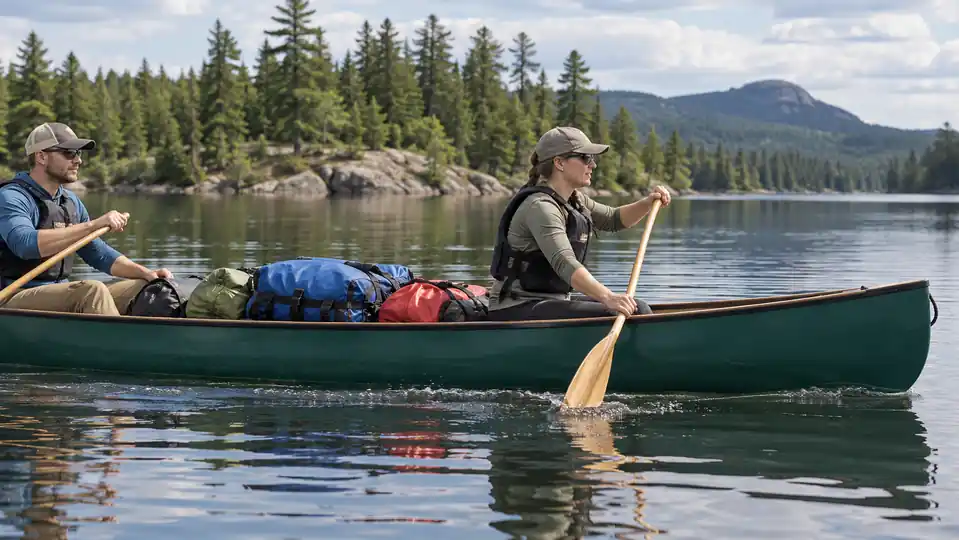
This is the strongest case for a bent shaft. The blade enters ahead of the paddler, loads during the useful forward phase and exits before it travels too far behind the hip. Over many thousands of strokes, a clean exit and repeatable cadence can matter more than the dramatic feel of a long pull.
In a well-coordinated tandem team, the bow paddler can use a bent shaft for propulsion while the stern paddler chooses either geometry based on steering needs. On open flat water, some teams use bent paddles in both seats and steer with efficient corrections. On a mixed route, carrying a straight spare preserves more options.
Rocks, eddies and constant corrections
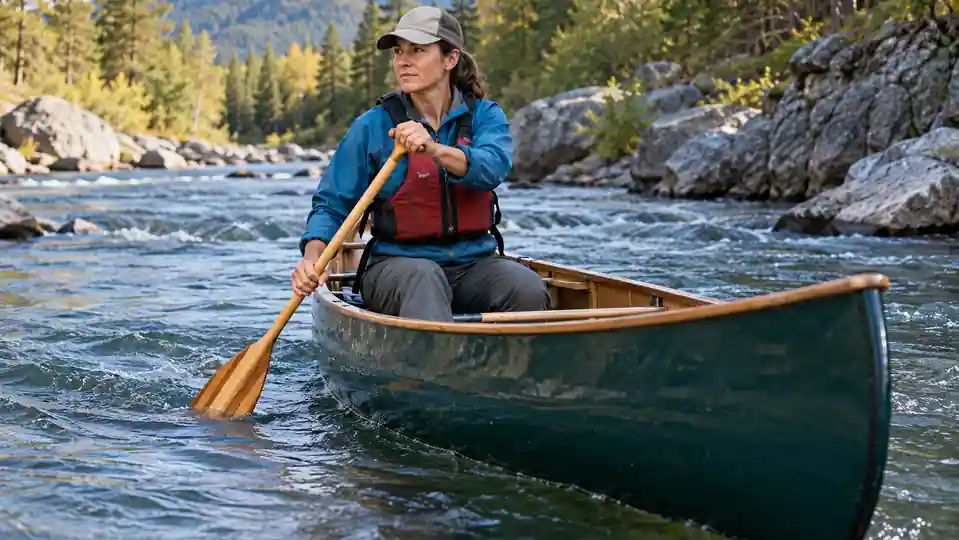
Technical water rewards versatility. Draws, pries, braces, sculling strokes and quick corrections ask the blade to work in several orientations. A straight shaft makes those changes predictable and avoids having to manage which way the bend is facing during a rapid sequence.
That does not mean a bent paddle cannot steer. Skilled paddlers can perform corrections with it. The question is whether the small forward-stroke advantage is worth the added orientation awareness in the water you actually paddle.
Bow paddler versus stern paddler
The bow seat primarily supplies power, watches the route and assists with draws or obstacle avoidance. The stern seat supplies power too, but usually carries more responsibility for direction. This makes a mixed setup logical:
- Bow: bent shaft for efficient cadence on open water.
- Stern: straight shaft when frequent J-strokes, pries and steering corrections are expected.
- Fast flat-water team: matching bent shafts after both paddlers have learned the timing and orientation.
- Instructional or rental fleet: straight shafts for simpler handling across many users and strokes.
Seat role is not a rule carved in wood. Wind, load balance, route and individual technique may change the answer.
One paddler, one canoe, one paddle
A solo canoeist often needs propulsion and correction in the same stroke cycle. If you carry only one paddle and expect mixed water, a straight shaft is the safer all-purpose choice. If the solo canoe has a forward-facing seat and the trip is mostly lake mileage, a bent shaft can be efficient after the length and angle are tested.
Do not confuse a pack-canoe double blade with this decision. Double-bladed paddles use a different stroke cycle, feathering choice and length logic. Review the craft, seat height and intended technique before transferring recommendations between categories.
Bent-shaft paddle technique and orientation
A bent shaft delivers its intended advantage only when its orientation and stroke timing match the design. Two mistakes—holding the bend backward and pulling too far behind the hip—account for much of the disappointment first-time users report.
Which way does a bent canoe paddle face?
With a conventional bent-shaft paddle, hold it so the blade is offset forward from the grip when viewed from the side during the forward stroke. Many beginners instinctively reverse it because the backward-facing position resembles a shovel. Reversing the bend changes the intended blade alignment and usually defeats the design.
Before launching, place the paddle beside you, identify the power face and rehearse the catch-to-exit movement. Product geometry differs, so follow the manufacturer’s face/orientation marking when supplied.
Where should the stroke end?
A common bent-shaft mistake is pulling well behind the hip. The design rewards a compact power phase: catch forward, connect through the torso, apply force while the blade is favorably aligned, then exit near the hip. Continuing far behind tends to lift water and slow recovery rather than add useful propulsion.
This is one reason a bent paddle can feel unimpressive when someone uses a long traditional stroke. The tool and technique must match.
Bend angle and paddle length
Does more bend mean more speed?
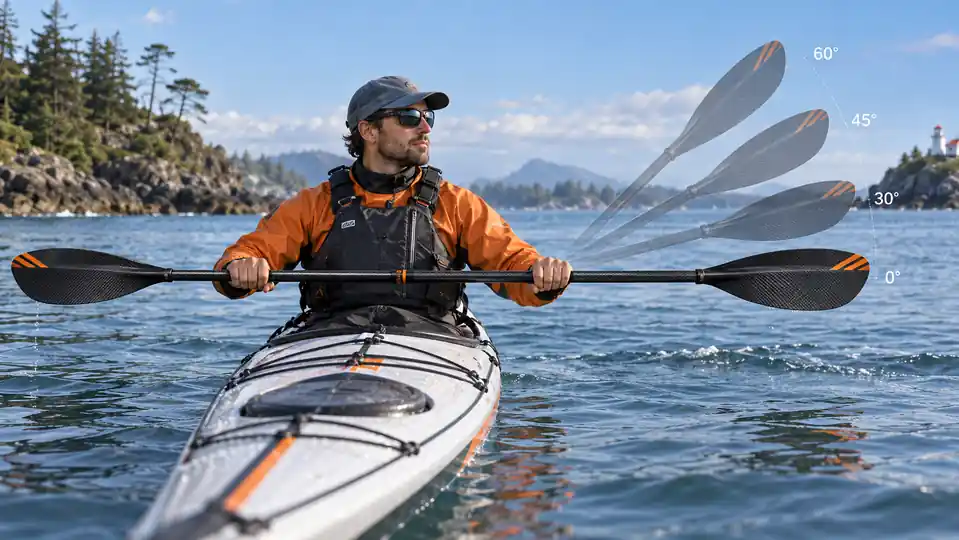
No. Bend angle changes when and how the blade aligns during the stroke, but more angle is not automatically faster. Too much bend for the paddler’s posture, seat height or timing can make the catch and exit awkward. Common commercial angles are useful reference points, not universal performance targets.
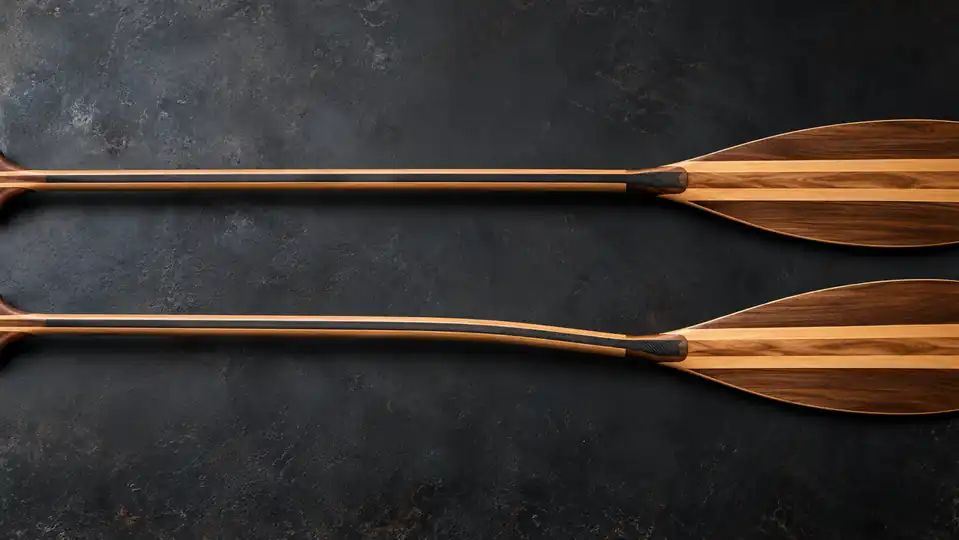
When comparing two paddles, control the other variables. A lighter carbon bent paddle may feel faster than a heavy wooden straight paddle, but the difference is not caused by the bend alone. Weight, balance, blade area, stiffness, length and grip all contribute.
Why bent paddles are often shorter
Bent-shaft paddles are commonly sized shorter than straight paddles for the same paddler because they are intended for a compact forward stroke and different blade alignment. Do not subtract a fixed number without considering canoe seat height, torso length and the brand’s measurement method.
Use an in-canoe fit or the manufacturer’s sizing method, then verify on the water. A paddle that is too long can raise the top shoulder and slow recovery; one that is too short can compromise immersion and posture. Unity Sports’ broader canoe paddle selection guide covers the other sizing variables.
Three myths worth dropping
Myth 1: bent shafts are only for racers
They are common in performance paddling, but recreational touring paddlers can also benefit from a compact, repeated forward stroke—especially on long flat-water trips.
Myth 2: straight shafts are inefficient
A well-sized straight paddle with clean technique is highly effective and often the better tool when steering, bracing and varied strokes dominate.
Myth 3: buying a bent paddle fixes poor technique
Geometry cannot replace blade immersion, torso connection, timing or a clean exit. It may reveal technique problems just as easily as it improves a suitable stroke.
A simple decision path
- Name the dominant water: flat/open or technical/moving.
- Name the dominant job: forward travel or control.
- Identify the seat: bow, stern or solo.
- Choose a starting geometry: bent for flat-water propulsion; straight for mixed control.
- Match length, blade and flex: do not change all variables at once.
- Test for at least 20 minutes: include cruising, acceleration, stopping, turns and wind correction.
- Keep the paddle that preserves technique: the winner should work late in the session, not only for ten fresh strokes.
If possible, borrow or demo both. A practical two-paddle kit—bent primary plus straight spare—often solves the false choice entirely.
What else matters besides shaft geometry?
- Blade area and outline: change load, catch and shallow-water clearance. See the paddle blade size guide.
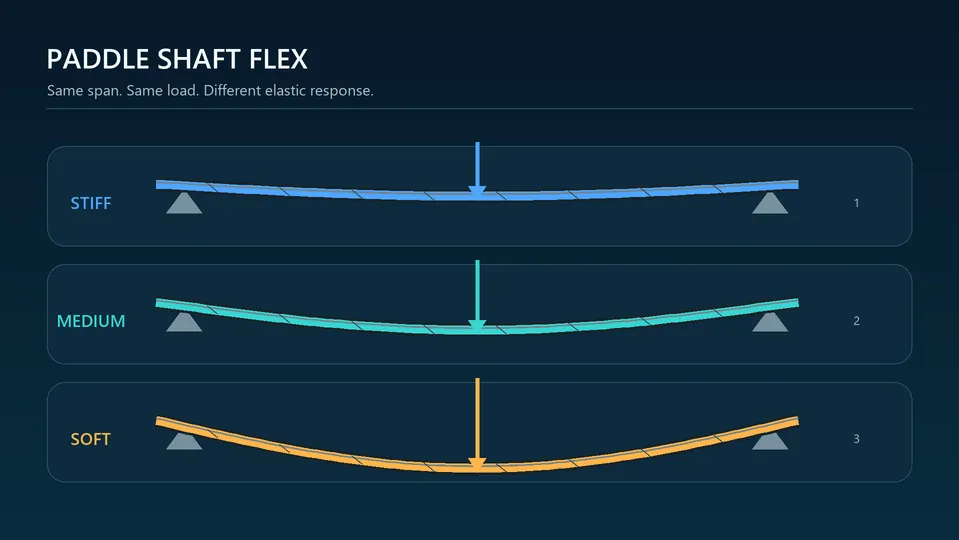
- Shaft flex: changes how quickly load reaches the paddler. Review the paddle shaft flex guide.
- Material and weight: affect swing feel, durability, repair and price.
- Grip: must support the intended control and hand comfort.
- Edge protection: matters for rocky landings and shallow routes.
- Balance: can matter more in repeated use than a small difference in total weight.
For existing options, review Unity Sports’ canoe paddle manufacturing page, carbon-fiber wood canoe paddle and solo canoe guide.
OEM and wholesale buyers: specify more than “12-degree bent shaft”
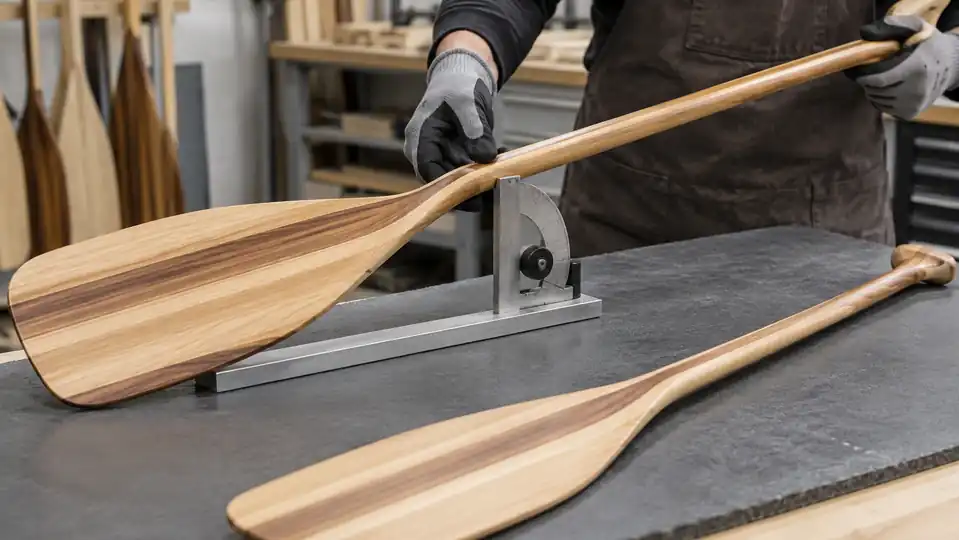
An OEM specification should define:
- finished overall length and measurement method;
- nominal bend angle, datum points and permitted tolerance;
- bend location relative to the blade shoulder and grip;
- blade-face orientation, grip orientation and allowable twist;
- shaft section, flex target, material layup or wood lamination concept;
- blade outline, area, edge profile and protection system;
- target mass, balance point and cosmetic standard;
- proof load, torsion, fatigue, moisture and impact validation;
- approved golden sample and change-control process.
The bent transition is a structural region, not just a styling feature. Loads must pass through the shaft-to-blade area without fiber wrinkles, weak glue lines or uncontrolled twist. Buyers can review Unity Sports’ custom paddle capabilities or send a target use case and specification. Final claims and tolerances should be confirmed in the approved drawing and validation plan.
What most canoe paddle comparisons leave out
Shaft geometry is only one part of the system. A recommendation that ignores seat height, paddle length, blade area, material, flex and paddling role can sound precise while producing the wrong choice. Useful background is available in Bending Branches’ resources on choosing a canoe paddle, using a bent-shaft paddle, canoe paddle sizing and wood versus carbon construction. Fishell’s canoe paddle styles page adds context on traditional blade profiles. Treat these as design-specific references, then compare complete paddles under the same conditions.
Frequently asked questions about Bent vs Straight Shaft Canoe Paddle
Is a bent-shaft canoe paddle faster?
It can be more efficient for repeated forward strokes on flat water because it favors a compact power phase and clean exit. That does not guarantee a higher speed: blade size, paddle length, swing weight, technique, canoe load, wind and water conditions can outweigh the effect of shaft geometry.
Can I do a J-stroke with a bent paddle?
Yes. Skilled paddlers perform J-strokes and other corrections with bent paddles, especially in efficient flat-water tandem teams. A straight shaft generally feels more neutral when corrections are frequent, when the blade must change face quickly or when a developing paddler is learning a broad stroke vocabulary.
Should the bow and stern paddler use the same shaft?
Not necessarily. A bent bow paddle and straight stern paddle can be a sensible touring combination because the bow paddler emphasizes propulsion while the stern paddler manages more steering. Coordinated flat-water teams may prefer matching bent shafts after both paddlers have tested their timing and corrections.
Is a bent-shaft paddle good for beginners?
It can be, particularly when instruction focuses on an efficient forward stroke and a clean exit. A straight paddle is usually the simpler first choice when a beginner needs one tool for forward paddling, steering, bracing and mixed conditions. Correct orientation should be demonstrated before using a bent shaft.
What bend angle should I choose?
Common recreational and touring designs often fall around 10–14 degrees, but no single angle is best for every paddler. Posture, seat height, stroke timing, blade shape and bend location all affect the result. Test a complete paddle and compare technique and comfort rather than buying by the angle number alone.
Which should I carry on a wilderness trip?
For a mostly flat-water route, a bent primary and durable straight spare create a versatile combination. The straight spare covers steering, shallow water and damage to the primary paddle. For technical rivers, frequent maneuvering or one-paddle simplicity, a well-sized straight shaft is usually the safer starting choice.
Final recommendation: choose for your dominant stroke
The Bent Shaft vs Straight Shaft Canoe Paddle decision is not a contest with one winner. Bent shafts specialize in compact forward efficiency; straight shafts remain the adaptable control tool. Choose for the strokes you perform most, then test the complete paddle in the canoe and water you actually use.