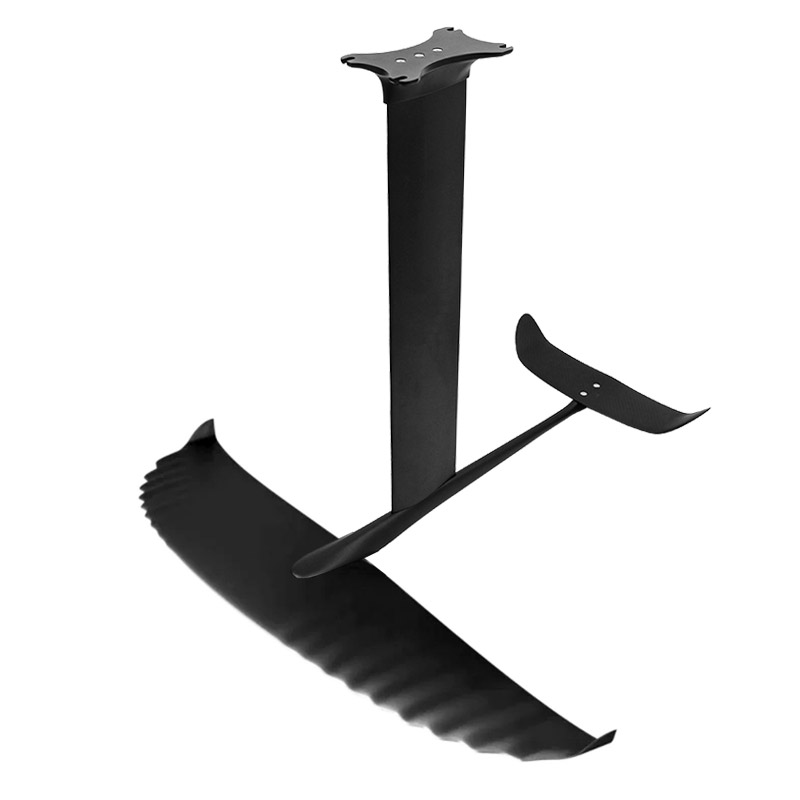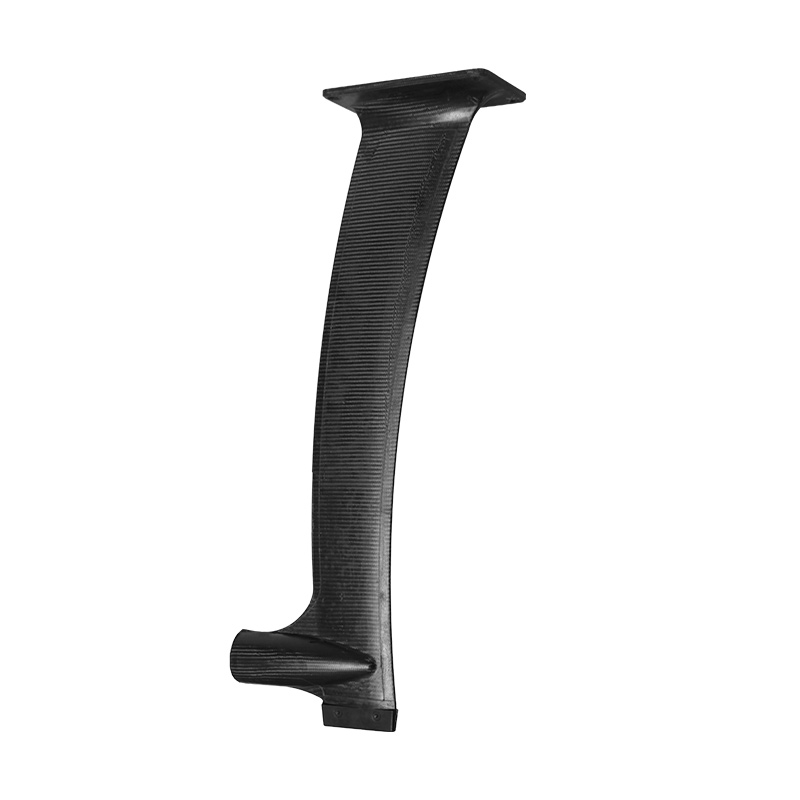
Hydrofoil ventilation happens when atmospheric air finds a path from the water surface to a submerged mast or wing and disrupts the water flow that was producing lift. For recreational wing, surf, SUP and pump foiling, a sudden “the foil let go” moment near the surface is often ventilation or a direct wingtip breach—not cavitation.
The distinction matters because the fixes are different. Ventilation calls for more immersion, cleaner control through turns, sound surfaces and geometry that resists an air path. Cavitation is vapor forming because local water pressure falls extremely low, generally a much higher-speed or heavily loaded problem.
The first five seconds tell you more than the splash
| What happened immediately before lift loss? | Most useful first hypothesis | Evidence to look for |
|---|---|---|
| Wingtip touched or nearly touched the surface in a bank | Tip breach / ventilation | One-sided drop, air trail, instant recovery after submerging |
| Board rode unusually high over a trough | Mast or wing ventilation | Surface connection down the mast, sudden full-system release |
| Hard turn at moderate speed, foil stayed submerged | Flow separation or spin-out | Sideways slide without a visible air path |
| Repeatable buzzing only near maximum speed | Damage, loose hardware, flutter or possible cavitation | Speed threshold, vibration, surface condition and joint play |
| Loss occurs at many speeds after an impact | Damage or misalignment | Chips, twist, loose fasteners, asymmetric geometry |
Do not name the phenomenon from the fall alone. Record the speed, bank angle, ride height, water texture, which side released and whether it repeats at the same condition.
Hydrofoil ventilation needs an air path
MIT’s Hydrofoil Basics describes ventilation as air being drawn onto a lifting surface after part of the foil system connects with the water surface. Because air is far less dense than water, the affected surface can no longer produce the same force and lift drops sharply.
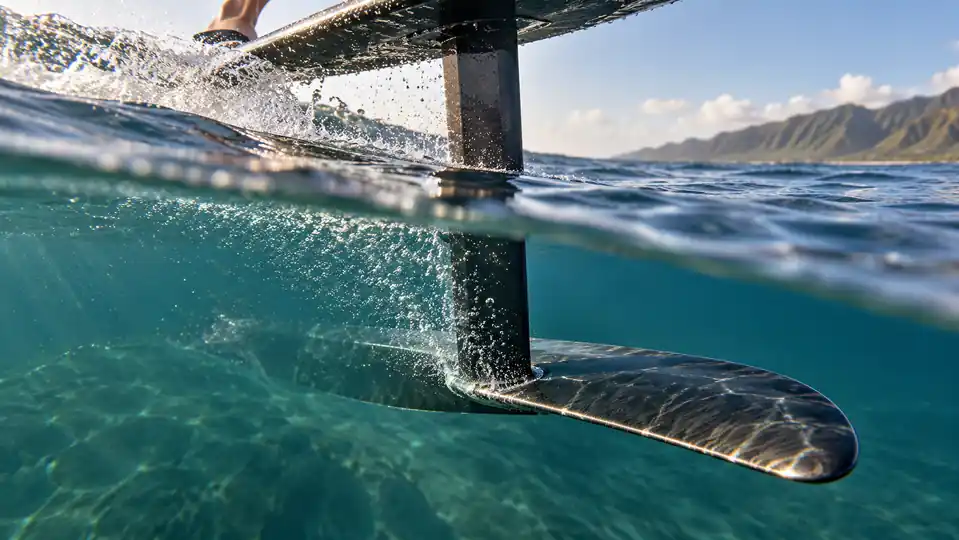
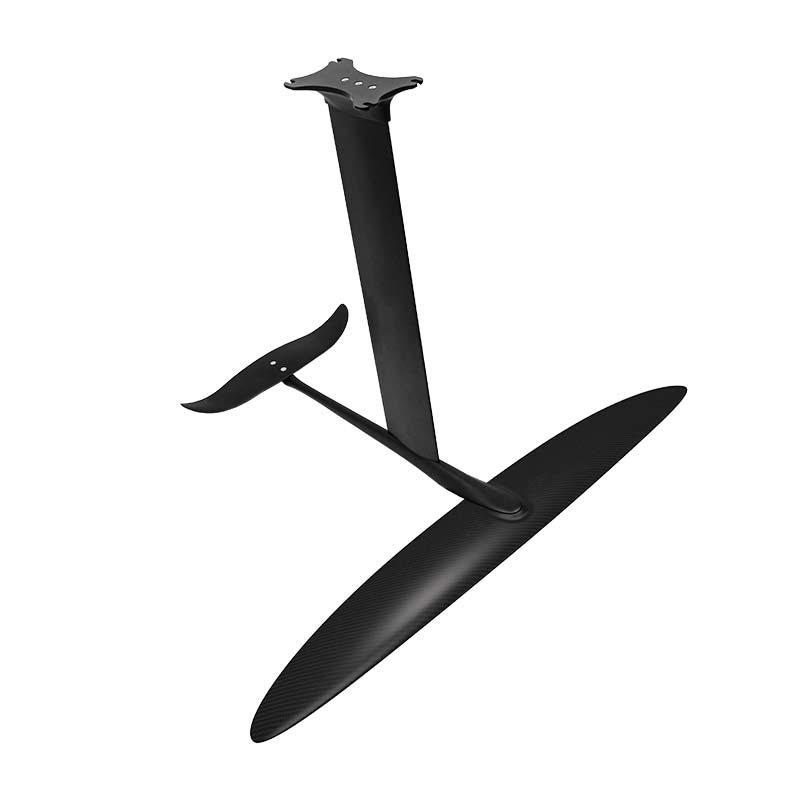
The path may begin at a front-wing tip, the stabilizer, or along the mast. Low pressure on the suction side helps draw the air along. Once a continuous cavity forms, it can persist briefly even after the initial trigger changes; this is why the foil may not recover the instant the rider corrects height.
The International Hydrofoil Society glossary calls a sudden surface break followed by air over the upper surface “foil broaching.” That observable event can trigger ventilation, but the two terms are not exact synonyms: the breach is the surface event; ventilation is the air affecting submerged flow.
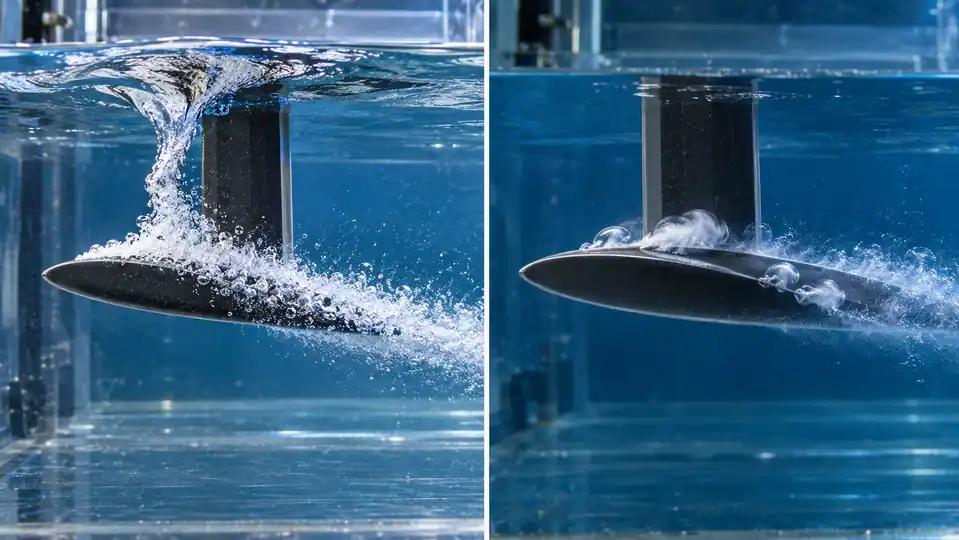
Ventilation is not cavitation
| Ventilation | Cavitation | |
|---|---|---|
| Gas source | Atmospheric air | Water vapor created by very low local pressure |
| Required connection | A path to the free surface | No atmospheric path required |
| Common trigger | Wingtip breach, shallow flight, waves or air traveling down a strut | Very high local velocity/loading or unfavorable geometry |
| Typical rider clue | Abrupt release near surface or during a bank | Repeatable high-speed threshold, noise/vibration possible |
| First response | Ride deeper, reduce bank/height, inspect surfaces and geometry | Stop assuming a technique-only issue; obtain engineering diagnosis |
The 69F Foiling Basics explicitly notes that cavitation is often misused to describe ventilation. Cambridge’s marine-hydrodynamics excerpt makes the same physical distinction: ventilation needs an air tunnel, while cavitation begins when pressure reaches vapor pressure.
Four common paths to a sudden release
1. The front-wing tip breaches in a turn
A wide wing needs more depth when banked. The high-side tip rises toward the surface; if it exits or draws air onto the suction side, lift can collapse on that side. The rider feels an abrupt roll or drop. Review span and turning trade-offs in our high- versus low-aspect guide.
2. The whole foil flies too close to the surface
A gust, pump or wave trough reduces immersion. The mast provides a direct surface connection and the wing has little margin. The first fix is not a new foil: lower the flight height, soften the pitch input and reproduce the run deeper.
3. A damaged or contaminated edge destabilizes flow
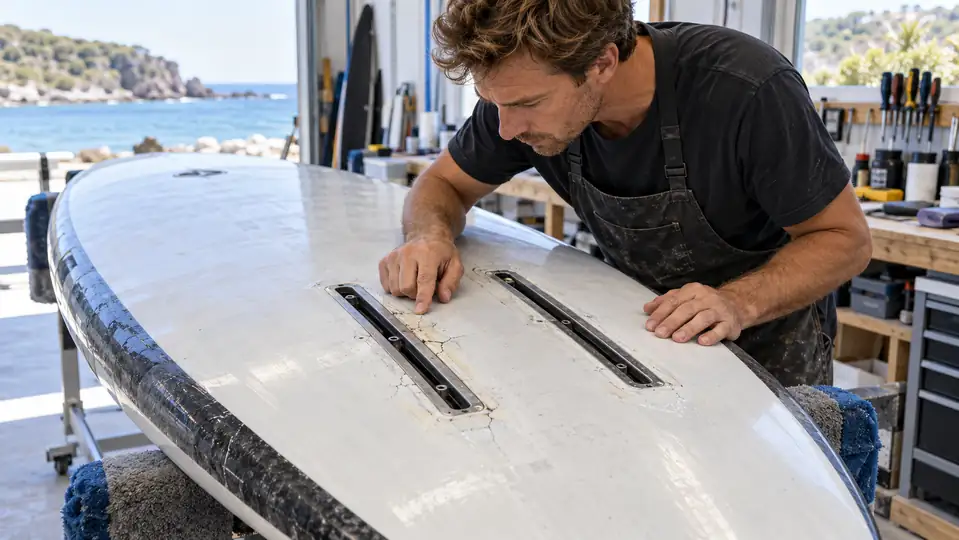
Chips, scratches, salt, grease, repair steps and asymmetric finish can promote early separation or provide a repeatable initiation point. These defects do not prove ventilation, but they make the flow less tolerant and can mimic it.
4. Geometry makes one side vulnerable
Wing twist, mast-wing misalignment, poor symmetry or an uneven repair changes loading. If the same side releases in both turn directions, inspect equipment before blaming technique.
What to do during the event
- Reduce height: use a controlled front-foot input rather than a violent correction.
- Flatten the bank: return both tips deeper below the surface.
- Reduce load: ease the turn or drive until flow reattaches.
- Expect a touchdown: keep stance centered and do not force immediate takeoff.
- Stop after abnormal vibration or impact: inspect before another run.
A larger stabilizer or longer fuselage may calm pitch, but neither fixes an air path by itself. Use the stabilizer-size guide and fuselage-length guide only after identifying the trigger.
A 10-minute shore inspection
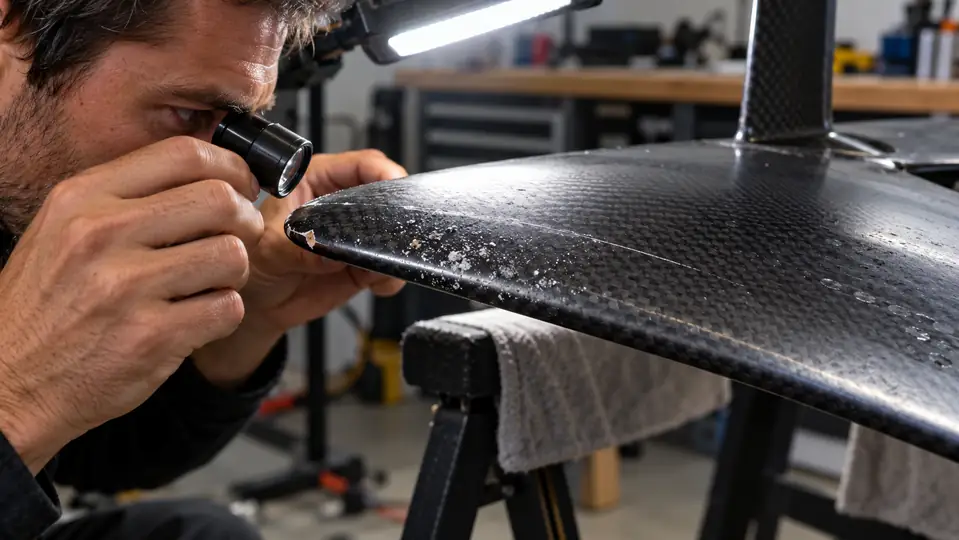
- Rinse, dry and inspect front wing, stabilizer and mast under angled light.
- Feel for leading-edge chips, repair steps and roughness; never run fingers along a sharp edge.
- Check wingtip damage and compare left/right shape visually.
- Verify every mating face is seated and all approved fasteners are secure.
- Check mast-to-wing and mast-to-fuselage play without exceeding service guidance.
- Confirm shims, wings and stabilizer are installed in the documented orientation.
- Do not sand an engineered foil section blindly; obtain the maker’s repair limit.
Reproduce the cause without reproducing the crash
Start in flat, deep, uncrowded water with protective equipment and an escape route. Use the same setup at a lower flight height and moderate speed. If the event disappears, increase only one variable—height, bank or speed—within a safe range. A phone video from shore can reveal which tip approached the surface and whether the board was pitching before release.
Stop the test if the event occurs at low load, repeats on one side, produces vibration, or follows an impact. Those patterns justify dimensional and structural inspection rather than further rider experimentation.
Design choices that influence ventilation margin
More mast length can provide ride-height margin in chop, while more front-wing span needs more tip clearance in a bank. Wing sweep, tip geometry, section pressure distribution and mast profile influence whether air is encouraged to travel toward a lifting surface. Surface finish and smooth mast-wing transitions help the real part behave like the intended geometry.
No single feature makes a foil “ventilation-proof.” Claims require controlled tests across speed, depth, angle, surface disturbance, and representative production samples.
What an OEM should inspect and validate
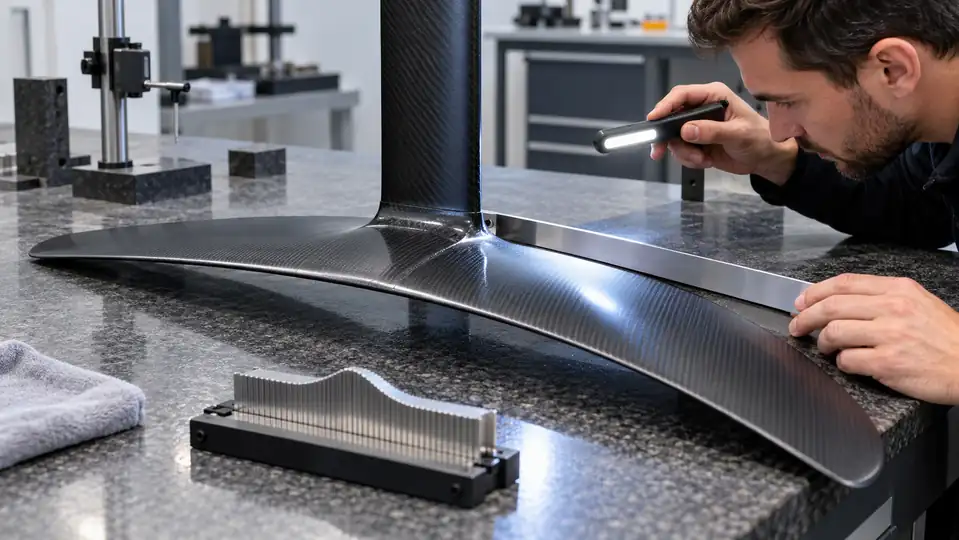
- leading-edge radius and section profile at controlled span stations;
- left/right symmetry, twist, sweep and tip geometry;
- mast profile, straightness and mast-wing transition alignment;
- surface waviness, pinholes, print-through, repair and edge-defect limits;
- interface seating, insert location, fastener engagement and assembly repeatability;
- water testing with defined speed, depth, load, turn direction and surface conditions;
- sample count, production traceability and comparison to an approved golden sample.
A video of one clean run cannot validate a design or production process. Pair dimensional records with representative testing and clear failure criteria. See our hydrofoil manufacturing overview for the broader composite workflow and the front-wing product page for component context.
Short answers to the questions riders ask
Is every wingtip breach ventilation?
No. A tip may briefly leave the water and re-enter without a sustained air cavity. Ventilation describes air disrupting submerged flow; a breach is the surface event that may initiate it.
Can roughness cause hydrofoil ventilation?
Roughness or damage can destabilize flow and lower the margin, but ventilation still requires atmospheric air to reach the affected surface. Inspect defects as contributing evidence, not automatic proof.
Why does the foil sometimes recover only after touchdown?
The air cavity and separated flow may persist briefly. Reducing load and fully re-submerging the surface helps water reattach; forcing height immediately can maintain the problem.
Should I add a ventilation fence?
Not as an improvised repair. Fences change drag and pressure distribution and must be designed for the mast/foil. Diagnose ride height, surface defects and geometry first.
When should a brand investigate cavitation?
When loss, noise or surface effects repeat at a high-speed/load threshold while the foil remains fully submerged and other defects are excluded. That requires hydrodynamic engineering and controlled evidence, not a rider nickname.
The diagnosis in one sentence
If atmospheric air had a credible path to the foil, investigate Hydrofoil Ventilation first; if no path existed and the problem is strictly speed/load dependent, cavitation becomes a separate engineering hypothesis. Record the moment, ride deeper, inspect the hardware and surfaces, then change one variable at a time.
Brands developing a non-electric foil system can contact Unity Sports with target discipline, speed range, wing geometry, mast depth and validation requirements.