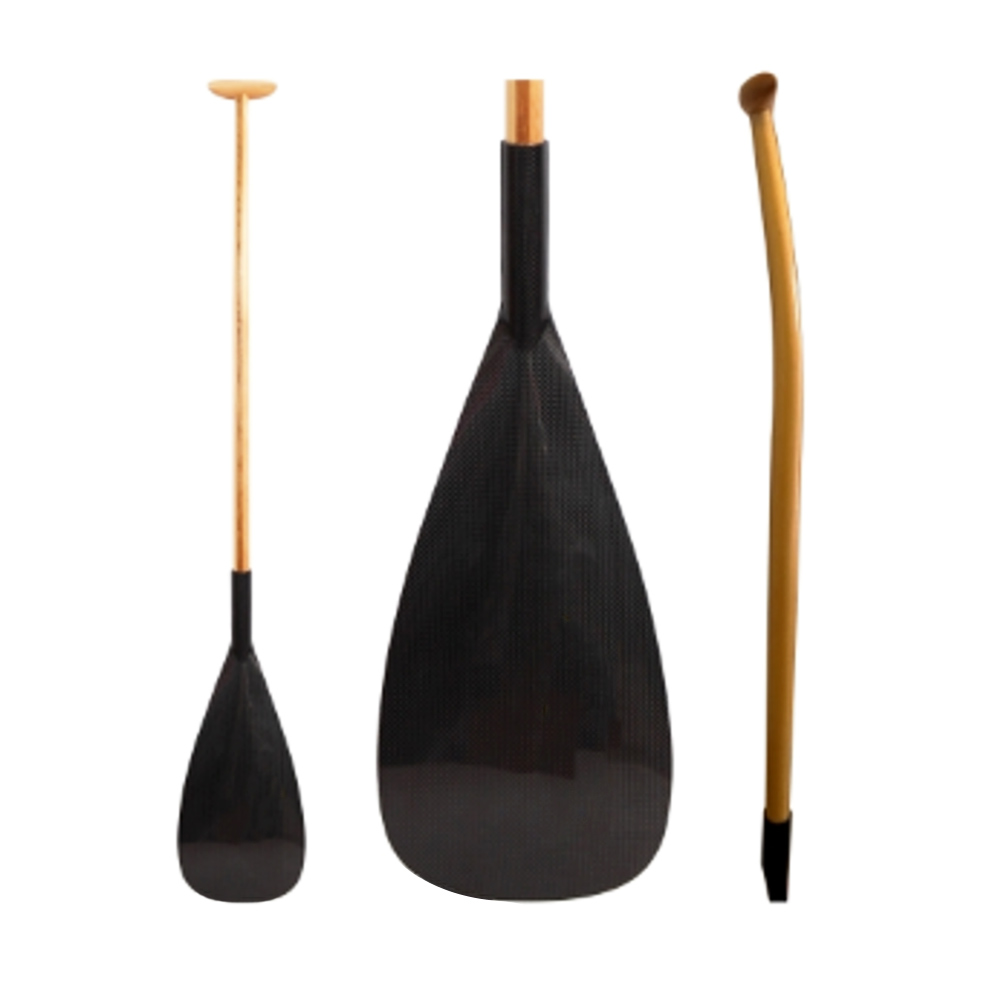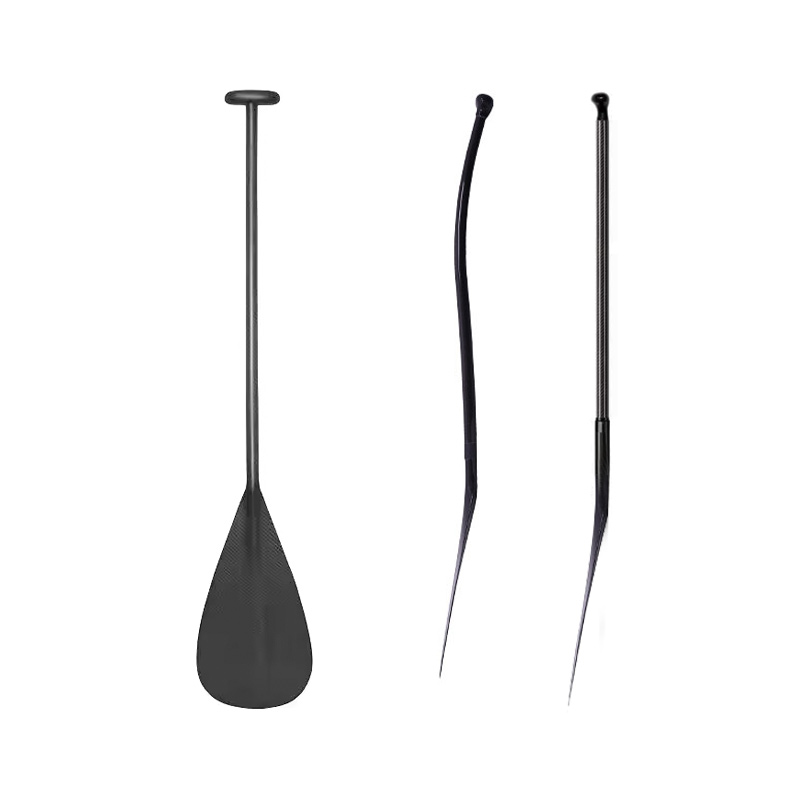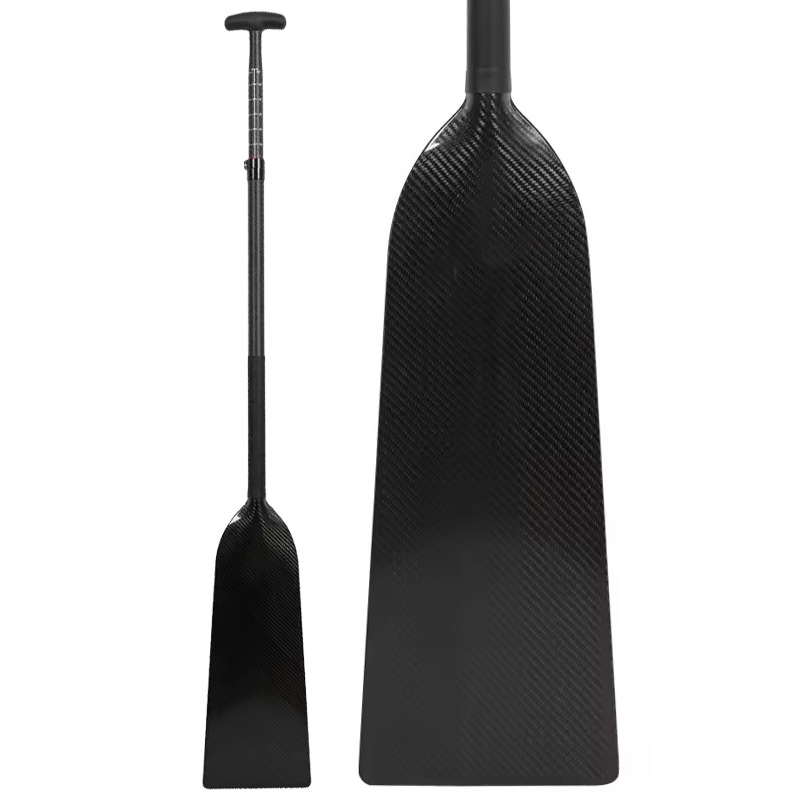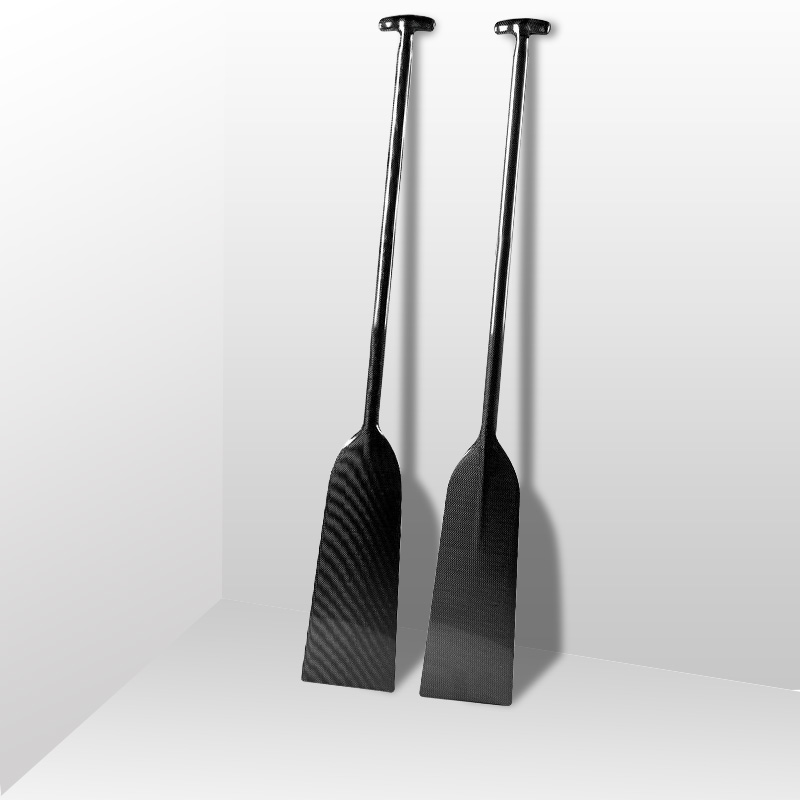
If you’re searching for dragon boat paddle length, you’re already asking the right question: paddle length is one of the biggest “small changes” that can improve efficiency, comfort, and consistency. The tricky part is that dragon boat paddle length is not just about your height—boat freeboard, seat position, stroke style, flexibility, and even water conditions can change what “ideal” means.
As a carbon fiber product Manufacturer for water sports, if you need to custom a carbon dragon boat paddle, please click the link or contact us to get details.
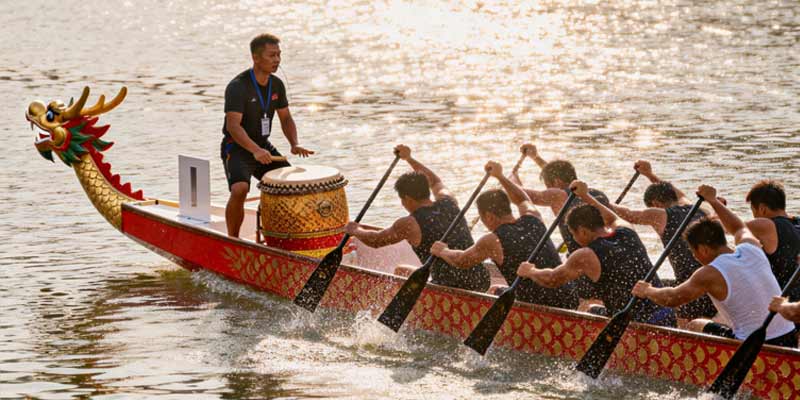
1) What Is Dragon Boat Paddle Length?
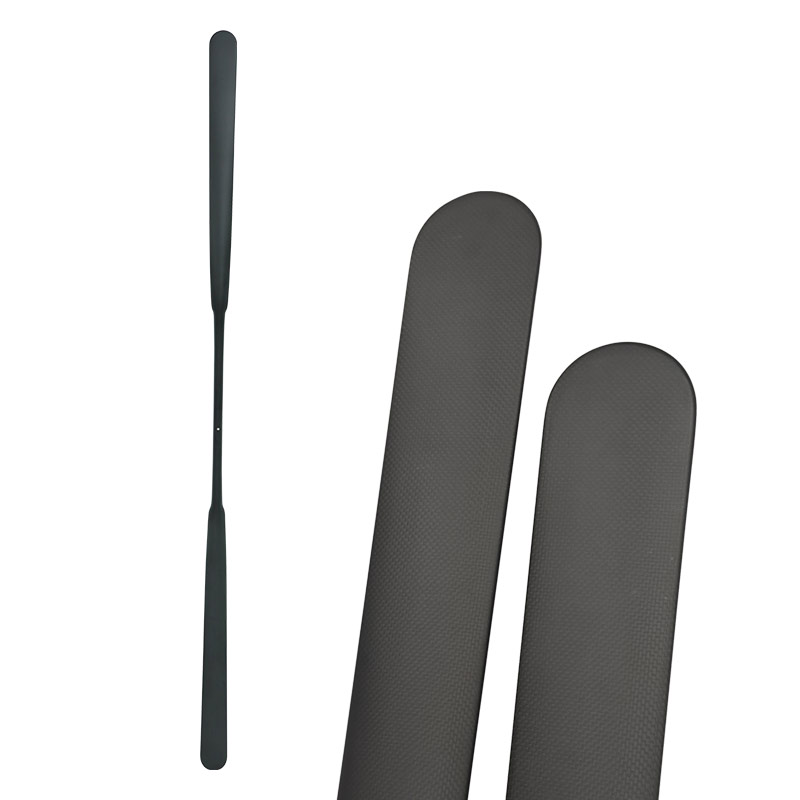
In dragon boating, dragon boat paddle length almost always refers to the overall paddle length, measured from the top of the handle to the bottom tip of the blade. This full-length measurement is the primary standard used by athletes, coaches, and governing bodies when discussing paddle sizing and compliance.
At first glance, paddle length may appear to be a straightforward specification. However, in practice, two paddles with the same overall length can feel very different in the water due to several interacting design and usage factors, including:
- Handle shape and height (such as T-grip versus palm grip), which affect hand position and effective reach
- Shaft diameter and stiffness, influencing leverage, load transfer, and fatigue
- Blade shape and surface area, which change how resistance builds during the pull
- Blade immersion depth at the catch, determining how much of the paddle actually engages with the water
Because of these variables, paddle length should be viewed as a baseline reference rather than a standalone solution. Proper sizing requires considering how length works together with technique, body mechanics, and paddle design, rather than treating length as an isolated number.
2) Why Dragon Boat Paddle Length Matters?
Choosing the right length affects:
A. Catch quality and connection
A paddle that’s too long often forces you to reach and “drop” your shoulder, making your catch less stable. Too short may reduce water engagement at the front unless your technique compensates.
B. Power transfer and stroke mechanics
Length changes the lever. More length can increase leverage if you can hold form. If you can’t, you lose effective power and fatigue faster.
C. Injury risk (especially shoulder and lower back)
Many overuse issues in dragon boat come from repeated poor positions at the catch (overreaching) or during pull-through (too much shoulder elevation). Length is a frequent hidden cause.
3) IDBF Dragon Boat Paddle Length Rules
For races governed by IDBF (International Dragon Boat Federation) equipment standards, dragon boat paddles are regulated under the IDBF Racing Paddle Specification 202a, commonly referred to as “Spec 202a.”
This specification follows a one-design principle, meaning that paddle dimensions are standardized to ensure fairness, consistency, and equal conditions across international competition.
According to explanations widely cited by manufacturers and industry sources referencing Spec 202a, the official overall paddle length must fall within a clearly defined range:
- Minimum overall length: 105 cm (approximately 41 inches)
- Maximum overall length: 130 cm (approximately 51 inches)
These limits are consistently reiterated by suppliers of IDBF 202a–approved paddles, with 51 inches (130 cm) commonly stated as the maximum legal length allowed under IDBF rules.
Practical takeaway:
If you participate in IDBF-style or IDBF-sanctioned races, your paddle must comply with the 105–130 cm overall length range. Within this window, selecting the optimal paddle length remains a personal decision based on body mechanics, technique, and racing conditions—but any paddle outside this range would be considered non-compliant.
4) Dragon Boat Paddle Blade Size Standards
The IDBF handbook you can access publicly describes the licensing scheme and confirms Spec 202a exists, but the most detailed dimension drawings and tolerances are typically managed through the licensing/spec documents process (the handbook itself notes that exact manufacturing guidance is controlled). International Dragon Boat Federation
So in public product listings, you’ll often see “IDBF 202a approved” plus blade dimensions that reflect common manufacturing targets.
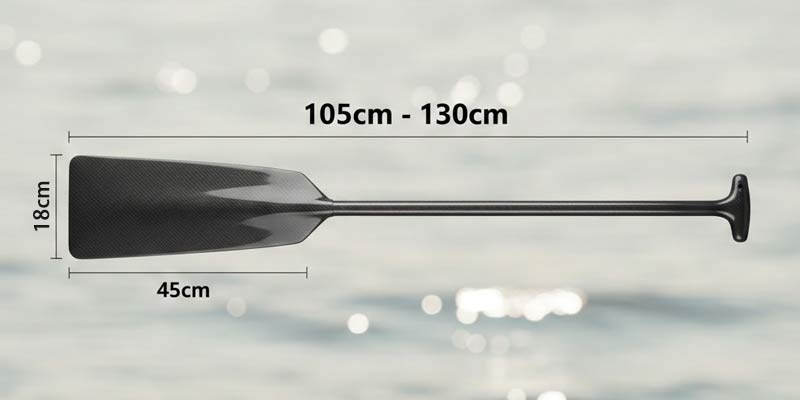
Common “202a-style” blade dimensions shown by 202a-licensed vendors
For example, one retailer selling an IDBF Spec 202a paddle lists:
- Blade length: ~45 cm
- Max blade width: ~18 cm
Other listings commonly show blade sizes around 48 × 18 cm, which is consistent across many market references for “202a-style” paddles.
How to use this responsibly:
- Treat the IDBF length range (105–130 cm) as the hard rule for overall length.
- Treat blade size numbers from vendors as practical reference points for what “202a-approved” paddles look like in the real world.
5) Dragon Boat Paddle Length Chart
There isn’t one perfect chart, so below are three that work together: a fast-start chart, a technique-based chart, and an adjustment chart.
A) Quick-start length chart
Use this as an initial selection, then refine using the measuring method in Section 6.
| Paddler height | Typical starting paddle length (overall) |
|---|---|
| 150–160 cm | 111–116 cm |
| 160–170 cm | 114–120 cm |
| 170–180 cm | 117–124 cm |
| 180–190 cm | 120–127 cm |
| 190+ cm | 123–130 cm (stay ≤ 130 cm for IDBF) |
Why this chart works: it places most paddlers in the middle of the legal range while leaving room for personal adjustments.
B) Technique-based chart (choose by stroke style)
| Stroke style | Suggested direction |
|---|---|
| High reach / high setup (top hand travels higher) | Slightly longer |
| Compact recovery and fast rate | Slightly shorter |
| Deep catch emphasis / strong forward hinge | Neutral to slightly longer (only if mobility supports it) |
| Shoulder-sensitive paddler | Neutral to slightly shorter |
This matches common coaching logic: higher reach can “use” length, while higher rate and shoulder management often benefit from shorter setups.
C) Adjustment chart (environment + boat + seat)
A well-known dragon boat paddle sizing matrix document recommends adjustments based on body proportions, boat freeboard, seat position, water conditions, and stroke rate (examples below).
Use these as add/subtract rules after you pick a baseline:
- Long arms / long torso: add ~1–2 inches
- Short arms / short torso: subtract ~1–2 inches
- High freeboard boats: add ~1–2 inches
- Very low freeboard boats: subtract ~1 inch
- Very fast stroke rates (e.g., struggling at high SPM): subtract ~1 inch pittsburghpaddlefish.org
6) How to Measure Dragon Boat Paddle Length
If you only read one section, read this one. “Measuring Dragon Boat Paddle Length” is how you turn charts into a personal fit.
What you need to measure Dragon Boat Paddle Length
- A flat wall
- A measuring tape
- Your paddle (or a stick/broom handle for simulation)
- Optional: a friend to help
Method 1: Standing reference (fast and common)
- Stand straight on flat ground.
- Place the paddle vertically with the blade tip on the floor.
- Position the paddle close to your body as it would be in a boat.
- A common starting reference is having the top of the grip somewhere around forehead height (varies by style).
- Record the measurement (overall length).
Why it’s limited: you paddle seated, not standing—so use this only as a rough start.
Method 2: Seated “catch position” measurement (best practical method)
- Sit on a bench or chair that approximates your dragon boat seat height.
- Mimic your real posture: slight forward hinge, neutral spine, shoulders relaxed.
- Hold the paddle as you would at the catch:
-
Top hand forward (not shrugged)
-
Bottom arm comfortably extended (not locked)
-
- The blade should be able to enter near full depth without you collapsing your shoulder or rounding your back.
- If your shoulder elevates or you “reach by shrugging,” the paddle is likely too long.
What you’re checking: can you achieve a clean, repeatable catch position for hundreds of strokes.
Method 3: On-water confirmation (the truth test)
A sizing matrix guide emphasizes “try before you buy,” recommending swapping paddles during practice and having a coach evaluate stroke changes.
Even 5–10 minutes with a paddle +1 inch and –1 inch from your current length can reveal what your body likes.
7) How Paddlers Choose the Length?
Here’s a practical, no-drama framework that works for beginners and experienced paddlers.
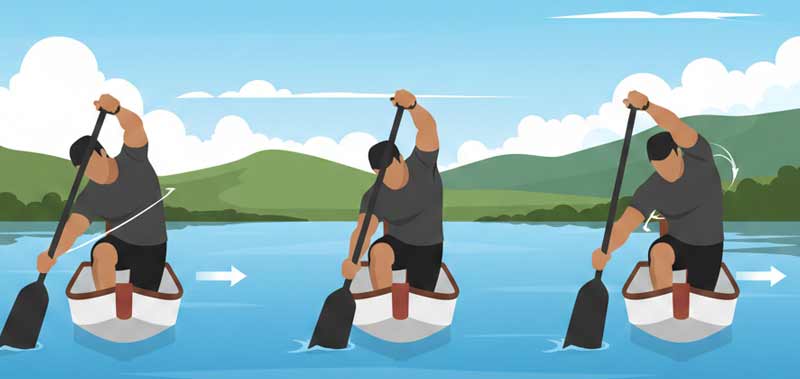
Step 1: Start within IDBF legal range (if you race)
Stay within ~105–130 cm overall, and treat 130 cm (51″) as the top ceiling for IDBF contexts.
Step 2: Pick a baseline using height (Section 5A)
Step 3: Decide your priority
Choose one main priority:
- Higher stroke rate & endurance → slightly shorter
- Max power per stroke (and you can hold form) → neutral to slightly longer
- Shoulder health / consistency → neutral to slightly shorter
Step 4: Apply adjustments
Use the “add/subtract” factors (arms/torso, freeboard, seat, water, rate).
Step 5: Lock it in with a test session
If you’re between two sizes, many coaches follow a simple logic: choose the longer one only if you can maintain posture without shoulder lift—otherwise go shorter.
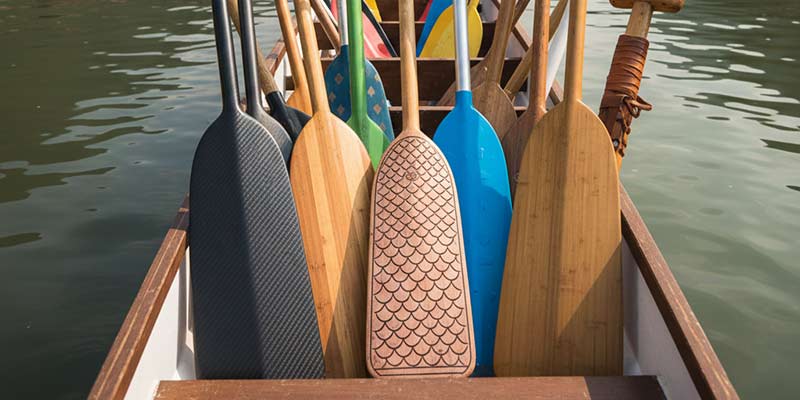
8) Factors That Affect Paddle Length Choice
A) Boat freeboard
More freeboard means the water is farther away, which often supports a longer paddle. The sizing matrix explicitly notes higher freeboard boats may require adding length.
B) Seat position in the boat
Waterline and feel change across benches. The matrix suggests that paddlers who sit consistently in certain benches may adjust up or down accordingly.
C) Water conditions
Rough water can punish long paddles because the catch becomes inconsistent. The matrix suggests subtracting length in rough/windy conditions.
High rates reward compact movement. If you struggle to keep up at high stroke rates, shortening by about an inch is a common recommendation.
9) Long vs Short Dragon Boat Paddle
| Comparison Item | Longer Dragon Boat Paddle | Shorter Dragon Boat Paddle |
|---|---|---|
| Reach & Leverage | Provides greater reach and leverage at the catch | Shorter reach, relies more on timing and precision |
| Catch Position | Can achieve deeper front-end connection if technique is solid | Easier to achieve a stable catch without overreaching |
| Stroke Rate | Harder to maintain at high stroke rates | Better suited for high stroke rates and fast transitions |
| Shoulder Load | Higher risk of shoulder elevation and overuse | Easier to keep shoulders down and relaxed |
| Technique Demand | Requires good mobility and clean technique | More forgiving of minor technical errors |
| Fatigue Over Time | Can cause faster fatigue if form breaks down | Often more sustainable over long distances |
| Injury Risk | Higher if paddler overreaches or shrugs shoulders | Lower, especially for beginners or injury-prone paddlers |
| Learning Curve | Steeper learning curve | Easier to adapt and control |
| Typical User Profile | Strong, mobile, technically consistent paddlers | Beginners, high-rate paddlers, or those prioritizing consistency |
Bottom line:
A “better” paddle length is the one that lets you hit a stable catch and repeat it for the whole piece—without form breakdown.
10) FAQ: dragon boat paddle length
Q1: What is the maximum dragon boat paddle length allowed in international racing?
Many IDBF 202a references state a maximum overall paddle length of 130 cm (51″).
Q2: What is the minimum paddle length?
Common Spec 202a guidance cites 105 cm (~41″) minimum overall length.
Q3: Is blade size standardized internationally?
IDBF competition paddles follow Spec 202a’s “one design” intent for standardization.
Public retail listings for 202a-approved paddles commonly show blade sizes around 45 cm long and ~18 cm max width (or roughly 48 × 18 cm depending on how the brand measures).
Q4: I’m between two sizes—should I go longer or shorter?
If your shoulders rise at the catch, or your back rounds to reach, go shorter. If your form stays clean and you feel you’re missing water at the front, go longer—then re-test at race pace.
A practical guideline from a sizing matrix: if unsure, selecting the longer can work because paddles can often be shortened, but not lengthened.
Q5: Does paddle material (wood vs carbon) change the length choice?
It can. Stiffer paddles can feel “bigger” because they transmit load faster. If you switch from wood to stiff carbon and suddenly feel shoulder load, consider reducing length slightly or adjusting technique.
Q6: Can two paddlers of the same height need different lengths?
Yes. The matrix explicitly calls out arm length and torso length as key modifiers.
Flexibility, hip hinge ability, and stroke style also matter.
Q7: How do I know my dragon boat paddle is definitely too long?
- Shoulder shrugging at the catch
- Elbow flaring early
- Lower back rounding to reach
- Feeling powerful for 30 strokes but falling apart later
Q8: How do I know my dragon boat paddle is too short?
- You can’t fully bury the blade without collapsing forward
- Catch feels like it “slips”
- You feel you’re pulling mostly from the arms rather than connecting through torso/legs (as much as dragon boat allows)
Conclusion
Choosing the right dragon boat paddle length is less about chasing a number and more about understanding how your body, technique, and the boat work together. A paddle that truly fits allows you to connect with the water naturally, stay relaxed under pressure, and repeat good strokes without forcing your body into awkward positions. When length, rules, and personal feel come into balance, paddling becomes more efficient, more sustainable, and ultimately more enjoyable—whether in training or on race day.